


The Taiwanese government and political parties have not become involved in Hong Kongers’ struggle for democracy and freedom, although they have expressed support and offered assistance, Hong Kong democracy activist Joshua Wong (黃之鋒) said yesterday in Taipei.
Wong and fellow Hong Kong activists Eddie Chu (朱凱迪) and Lester Shum (岑敖暉) met with the Democratic Progressive Party (DPP) legislative caucus for more than an hour.
“Hong Kong is being oppressed by Beijing, but Taiwan has free democratic elections and has successfully passed power between political parties,” Wong said, adding that he wishes for Hong Kong to have such a democracy while reiterating the slogan “Today’s Taiwan, Tomorrow’s Hong Kong.”
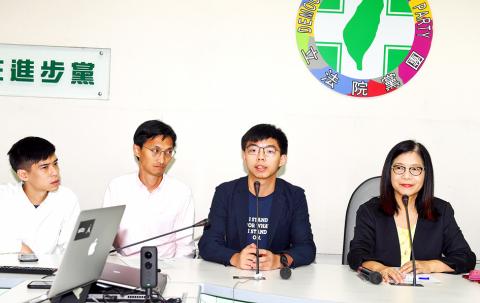
Photo: CNA
Chu agreed with President Tsai Ing-wen’s (蔡英文) denial that the government has intervened in Hong Kong’s affairs, as Beijing has claimed.
“It is clear that the Taiwanese government and political parties have not interfered with Hong Kong’s struggles for democracy,” Chu said. “Now that Hong Kong is striving for democracy, it is natural that we will interact with Taiwan.”
Chu urged Taiwanese to attend a rally in support of Hong Kong the weekend before Oct. 1, the 70th anniversary of the founding of the People’s Republic of China.
“With our struggles at this crucial juncture, we are closely bound with Taiwan, so we hope that more people will come out for the rally,” he said.
Shum said that Hong Kong is facing a crisis, “but for people struggling in Hong Kong or those who have visited Taiwan, they have all expressed the wish that those in power should not exploit the situation to gain political advantages by interfering under the guise of providing humanitarian aid.”
“We hope that those in power in Taiwan will help solve our humanitarian crisis — this is how to help their friends in Hong Kong,” Shum said.
“Taiwanese empathize with Hong Kongers, as their story is filled with blood and tears. We have not yet seen the ending of this story,” DPP Legislator Kuan Bi-ling (管碧玲) said.
“If some political parties launch smear campaigns expressing Taiwan’s concern for Hong Kong, it would be manipulation for political benefit,” Kuan added.
DPP caucus secretary-general Lee Chun-yi (李俊俋) read out the party’s draft statement, which said that the DPP has always supported Hong Kongers’ struggle for democracy, freedom, human rights and other universal values.
“We have urged the Hong Kong Government to respond to the people’s demands, engage in dialogue instead of violence and uphold democratic institutions,” Lee said.
The DPP caucus also assured Hong Kongers that Taiwanese law contains sufficient measures to allow them to come to Taiwan, Lee said, adding that the party would try to protect them.

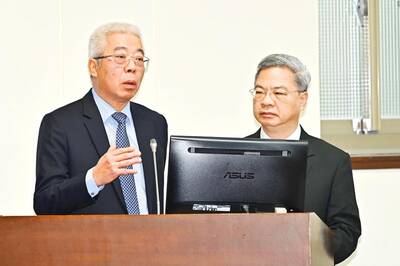
Taiwan has arranged for about 8 million barrels of crude oil, or about one-third of its monthly needs, to be shipped from the Red Sea this month to bypass the Strait of Hormuz and ease domestic supply pressures, CPC Corp, Taiwan (CPC, 台灣中油) said yesterday. The state-run oil company has worked with Middle Eastern suppliers to secure routes other than the Strait of Hormuz, through which about 20 percent of the world’s oil and liquefied natural gas typically passes, CPC chairman Fang Jeng-zen (方振仁) said at a meeting of the legislature’s Economics Committee in Taipei. Suppliers in Saudi Arabia have indicated they

South Korea has adjusted its electronic arrival card system to no longer list Taiwan as a part of China, a move that the Ministry of Foreign Affairs said would help facilitate exchanges between the two sides. South Korea previously listed “Taiwan” as “Taiwan (China)” in the drop-down menus of its online arrival card system, where people had to fill out where they came from and their next destination. The ministry had requested South Korea make a revision and said it would change South Korea’s name on Taiwan’s online immigration system from “Republic of Korea” to “Korea (South),” should the issue not be

Tainan, Taipei and New Taipei City recorded the highest fines nationwide for illegal accommodations in the first quarter of this year, with fines issued in the three cities each exceeding NT$7 million (US$220,639), Tourism Administration data showed. Among them, Taipei had the highest number of illegal short-term rental units, with 410. There were 3,280 legally registered hotels nationwide in the first quarter, down by 14 properties, or 0.43 percent, from a year earlier, likely indicating operators exiting the market, the agency said. However, the number of unregistered properties rose to 1,174, including 314 illegal hotels and 860 illegal short-term rental
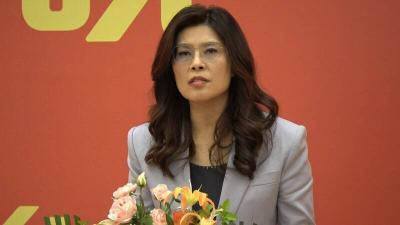
Both sides of the Taiwan Strait share a political foundation based on the “1992 consensus” and opposition to Taiwanese independence, Chinese Nationalist Party (KMT) Chairwoman Cheng Li-wun (鄭麗文) today said during her meeting with Chinese President Xi Jinping (習近平). Both sides of the Strait should plan and build institutionalized and sustainable mechanisms for dialogue and cooperation based on that foundation to make peaceful development across the Strait irreversible, she said. Peace is a shared moral value across the Strait, and both sides should move beyond political confrontation to seek institutionalized solutions to prevent war, she said. Mutually beneficial cross-strait relations are what the


 RSS
RSS