


The government yesterday expressed its appreciation to US President Donald Trump for approving the sale of 66 F-16 jets to Taiwan amid increasing threats from Beijing.
Trump a day earlier said that he had approved the US$8 billion deal and believes that Taiwan will use the jets responsibly, according to a transcript of a media interview provided by the White House.
“I mean, I’ve approved the deal,” Trump said as he boarded an airplane in New Jersey. “Got to be approved by the Senate, but I’ve approved the deal.”
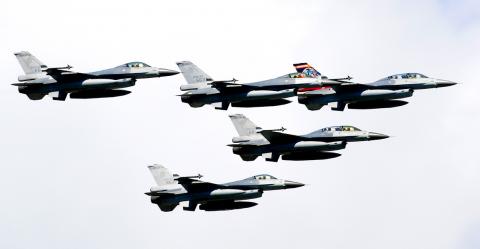
Photo: EPA-EFE
“It’s US$8 billion. It’s a lot of money. That’s a lot of jobs,” Trump said. “It’s a great aircraft. And we really believe — or we perhaps wouldn’t have done it — they’re going to use it very responsibly.”
Trump made the announcement after the Washington Post on Friday reported that the US Department of State on Thursday submitted the deal to the US Congress for an informal review.
The Ministry of National Defense in February made a request to purchase the jets from the US.
However, progress seemed to have stalled as the Trump administration did not inform US lawmakers of the proposed arms sale before Congress went into recess on July 26.
Trump’s announcement came amid harsh rhetoric from Beijing, as well as increased military drills and encirclement flights around Taiwan.
The Ministry of Foreign Affairs “welcomes and expresses appreciation for Trump’s approval for the sale of new-generation F-16V fighters” to Taiwan, ministry spokeswoman Joanne Ou (歐江安) said in a statement.
She thanked the Trump administration for adhering to the US’ Taiwan Relations Act (TRA) and fulfilling its commitments in accordance with the “six assurances” as the two nations mark the 40th anniversary of the TRA.
The defense ministry said in a statement that it hopes Congress will approve the deal as soon as possible to benefit peace and security across the Taiwan Strait and the Asia-Pacific region as a whole.
It would maintain close contact with the US about the deal, it added.
The air force on Saturday described the F-16V as a new version of F-16 A/B jets, which comprise the bulk of Taiwan’s fighter fleet.
The F-16V has greater thrust, a longer range, a more streamlined frame, and more advanced radar and attack systems, the air force said.
US Senator Marco Rubio commended the Trump administration for moving forward with the sale to bolster Taiwan’s defense capabilities.
“As the Chinese government and [Chinese] Communist Party seeks to extend its authoritarian reach in the region, it is critical that the United States continues to enhance our strategic relationship with our democratic partner Taiwan through regular and consistent support,” Rubio said in a statement.
US Senator Jim Inhofe, chairman of the US Senate Committee on Armed Services, and US Senator John Cornyn also praised the deal.
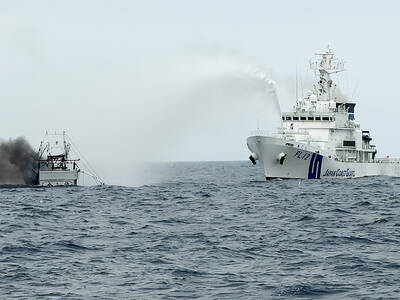
CREDIT-GRABBER: China said its coast guard rescued the crew of a fishing vessel that caught fire, who were actually rescued by a nearby Taiwanese boat and the CGA Maritime search and rescue operations do not have borders, and China should not use a shipwreck to infringe upon Taiwanese sovereignty, the Coast Guard Administration (CGA) said yesterday. The coast guard made the statement in response to the China Coast Guard (CCG) saying it saved a Taiwanese fishing boat. The Chuan Yu No. 6 (全漁6號), a fishing vessel registered in Keelung, on Thursday caught fire and sank in waters northeast of Diaoyutai Islands (釣魚台). The vessel left Keelung’s Badouzih Fishing Harbor (八斗子漁港) at 3:35pm on Sunday last week, with seven people on board — a 62-year-old Taiwanese captain surnamed Chang (張) and six
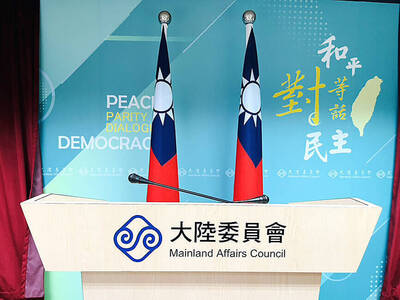
RISKY BUSINESS: The ‘incentives’ include initiatives that get suspended for no reason, creating uncertainty and resulting in considerable losses for Taiwanese, the MAC said China’s “incentives” failed to sway sentiment in Taiwan, as willingness to work in China hit a record low of 1.6 percent, a Ministry of Labor survey showed. The Directorate-General of Budget, Accounting and Statistics (DGBAS) also reported that the number of Taiwanese workers in China has nearly halved from a peak of 430,000 in 2012 to an estimated 231,000 in 2024. That marked a new low in the proportion of Taiwanese going abroad to work. The ministry’s annual survey on “Labor Life and Employment Status” includes questions respondents’ willingness to seek employment overseas. Willingness to work in China has steadily declined from

The Legislative Yuan’s Finance Committee yesterday approved proposed amendments to the Amusement Tax Act (娛樂稅法) that would abolish taxes on films, cultural activities and competitive sporting events, retaining the fee only for dance halls and golf courses. The proposed changes would set the maximum tax rate for dance halls and golf courses at 50 and 20 percent respectively, with local governments authorized to suspend the levies. Article 2 of the act says that “amusement tax shall be levied on tickets sold or fees charged by amusement places, facilities or activities” in six categories: “Cinema; professional singing, story-telling, dancing, circus, magic show, acrobatics
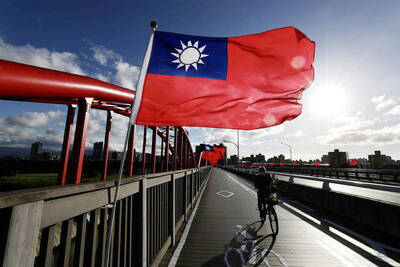
INFLATION UP? The IMF said CPI would increase to 1.5 percent this year, while the DGBAS projected it would rise to 1.68 percent, with GDP per capita of US$44,181 The IMF projected Taiwan’s real GDP would grow 5.2 percent this year, up from its 2.1 percent outlook in January, despite fears of global economic disruptions sparked by the US-Iran conflict. Taiwan’s consumer price index (CPI) is projected to increase to 1.5 percent, while unemployment would be 3.4 percent, roughly in line with estimates for Asia as a whole, the international body wrote in its Global Economic Outlook Report published in the US on Monday. The figures are comparatively better than the IMF outlook for the rest of the world, which pegged real GDP growth at 3.1 percent, down from 3.3 percent


 RSS
RSS