


Taiwan has become a popular term in Geneva, as Taiwanese nongovernmental organizations and the government push for the nation’s participation in this year’s World Health Assembly (WHA), Minister of Health and Welfare Chen Shih-chung (陳時中) said yesterday in the Swiss city.
Taiwan had hoped to attend the WHA that opens today as an observer, as it did from 2009 to 2016, but was not invited for a third year due to China’s obstructionism.
Despite the snub, Chen on Friday left for Geneva at the head of a delegation to publicize Taiwan’s contributions to global health.

Photo: CNA
Chen said that he had attended two bilateral meetings since his arrival in Geneva.
“One meeting was with Saint Lucia, and we mainly shared our experiences with the National Health Insurance system and personnel training,” he said. “The other was with a Southeast Asian country, which was mainly about Taiwan’s medical cloud, and their eyes widened when they heard about it.”
Members of Taiwanese civic groups and several expatriates yesterday wore T-shirts with the words “Health for all with Taiwan” as they handed out pamphlets and leaflets in four languages outside the UN’s Palais des Nations, he said.
Advertisements emblazoned with “Health for all, Taiwan can help” are also displayed on five TaxiBikes, the electric bicycle cabs available in downtown Geneva, as well as on the shuttle van that the delegation is using during its stay, he said.
Similar ads can also be seen near the hotels where WHA delegations are staying.
“Taiwan has become a popular term in Geneva now,” Chen said. “We are very grateful for everyone’s support.”
The Taiwan Association for Global Health Diplomacy has a booth in the Geneve-Cornavin Train Station to promote Taiwan’s interest in using its advanced telemedicine technology to help other nations and contribute to global health.
Members of the Taiwan United Nations Alliance (TAIUNA) yesterday staged a flash mob outside the Permanent Mission of the People’s Republic of China to the UN Office in Geneva to protest against China’s suppression of Taiwan.
TAIUNA members said they would also try to make Taiwan’s presence felt in Geneva by attending yesterday’s Walk the Talk, a warm-up organized by the WHO for the annual WHA meeting, which is expected to attract up to 1,000 participants from various nations.
Chen said he hoped bilateral meetings with representatives of the US, Japan and other nations would lead to substantive results, and that he plans to hold a news conference today to promote Taiwan’s stance.
The Chinese Nationalist Party (KMT) on Saturday urged China to offer an olive branch by sharing epidemic prevention information with Taiwan through the WHO.
Such a gesture might appeal to Taiwanese and lead to win-win outcomes, the KMT statement said.
It also urged the WHO to include Taiwan at its meetings, as having the highest attainable level of health is a fundamental rights of every human being, according to the WHO constitution.
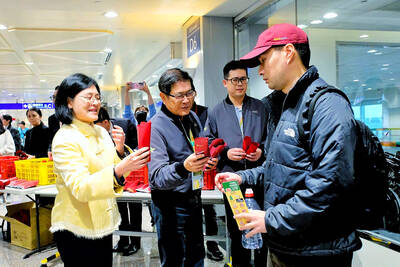
An Emirates flight from Dubai arrived at Taiwan Taoyuan International Airport yesterday afternoon, the first service of the airline since the US and Israel launched strikes against Iran on Saturday. Flight EK366 took off from the United Arab Emirates (UAE) at 3:51am yesterday and landed at 4:02pm before taxiing to the airport’s D6 gate at Terminal 2 at 4:08pm, data from the airport and FlightAware, a global flight tracking site, showed. Of the 501 passengers on the flight, 275 were Taiwanese, including 96 group tour travelers, the data showed. Tourism Administration Deputy Director-General Huang He-ting (黃荷婷) greeted Taiwanese passengers at the airport and

POSSIBILITIES EMERGE: With Taiwan’s victory and Japan’s narrow win over Australia, Taiwan now have a chance to advance if South Korea also beat the Aussies Taiwan has high hopes that the national baseball team would advance to the World Baseball Classic (WBC) quarter-finals after clinching a crucial 5-4 victory over South Korea in a nail-biting extra-inning game at the Tokyo Dome yesterday. Boosted by three home runs — two solo shots by Yu Chang (張育成) and Cheng Tsung-che (鄭宗哲) and a two-run homer by Stuart Fairchild — the triumph gave Taiwan a much-needed second victory in the five-team Pool C, where only the top two finishers would advance to the knockout stage in Miami, Florida. Entering extra innings with the game tied at four apiece, Taiwan scored
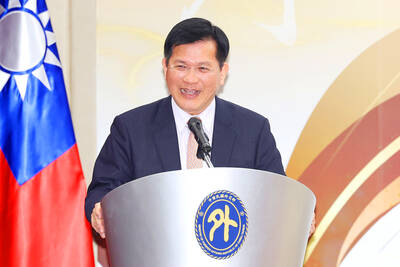
MISSION OF PEACE: The foreign minister urged Beijing to respect Taiwan’s existence as an independent nation, and work together to ensure peace and stability in the region Minister of Foreign Affairs Lin Chia-lung (林佳龍) yesterday rejected Chinese Minister of Foreign Affairs Wang Yi’s (王毅) comments about Taiwan, criticizing China as a “troublemaker” in the international community and a disruptor of cross-strait peace. Speaking at a news conference on the sidelines of the Chinese National People’s Congress, Wang said that Taiwan has always been a territory of China and that it would be impossible for it to become its own country. The “return” of Taiwan to China was the natural outcome of the Chinese people’s resistance against Japan in World War II, and that any pursuit of independence was “doomed
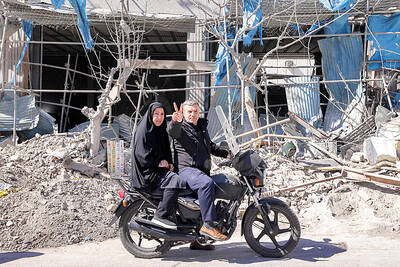
STRAIT OF HORMUZ: In the case of a prolonged blockade by Iran, Taiwan would look to sources of LNG outside the Middle East, including Australia and the US Taiwan would not have to ration power due to a shortage of natural gas, Minister of Economic Affairs Kung Ming-hsin (龔明鑫) said yesterday, after reports that the Strait of Hormuz was closed amid the conflict in the Middle East. The government has secured liquefied natural gas (LNG) supplies for this month and contingency measures are in place if the conflict extends into next month, Kung told lawmakers. Saying that 25 percent of Taiwan’s natural gas supplies are from Qatar, Chinese Nationalist Party (KMT) caucus secretary-general Lin Pei-hsiang (林沛祥) asked about the situation in light of the conflict. There would be “no problems” with


 RSS
RSS