


A slew of new measures and policies are to take effect today, including heavier penalties on vehicles that park near bus stops and bans on microbeads and partially hydrogenated oils.
Owners of motorbikes who park within 10m of a bus stop would be fined NT$900 to NT$1,200, up from the current NT$600 to NT$900, the Ministry of Transportation and Communications said.
Owners of small vehicles would be fined NT$1,200, instead of between NT$900 and NT$1,200, it added.
In addition, the time limit for removing stalled vehicles on freeway or highway shoulders would be reduced from two hours to one hour, with violators subject to a fine of NT$600 to NT$1,200.
A regulation that requires about 2 percent of public parking lots to be reserved for pregnant women and families with children up to six years old is also to go into effect today.
Parking lots affiliated with public places, such as department stores, train stations, airports, hospitals and amusement parks, are to be covered by the regulation.
The family-friendly spaces should be at least 2.5m in width and 5.5m in length to provide safe and convenient access, and must be created by Dec. 15.
Drivers who meet the criteria may obtain parking permits from hospitals and public health centers, the ministry said.
Drivers who occupy the parking spaces illegally would be fined NT$600 to NT$1,200 after a grace period ends on June 29 next year.
Meanwhile, it will be easier for people from China, Hong Kong and Macau to obtain a driver’s license in Taiwan.
Instead of one year, people from these areas could apply for a driver’s license after staying in Taiwan legally for six months, or could exchange their Chinese driver’s license for a Taiwanese license.
Various health-related regulations are also to go into effect today.
Food products that contain senna are required to have a warning on the label and to list the plant on the ingredients list, while a complete ban on the use of partially hydrogenated oils in food products is to be enforced.
In addition, only food-grade vinegar products created through fermentation can be called “vinegar.” Products that use brewed vinegar as the main ingredient, but have additional flavoring agents, must be called “conditioned vinegar,” and those made with acetic or glacial acetic acid, or mixed with carbohydrates, flavoring agents, salt or other seasonings, must be labeled as “synthesized vinegar.”
A requirement that restaurants in hotels follow the Hazard Analysis and Critical Control Points food safety system is to be extended to restaurants in five-star hotels.
Moreover, edible oil, canned food and egg production are to be included under the Regulations on Food Safety Control System (食品安全管制系統準則), which are to be enforced in phases starting today.
Also beginning today, retailers are forbidden to sell any shampoo, soap, bodywash, body scrub or toothpaste that contain microbeads.
Retailers that contravene the regulation are to be fined NT$1,200 to NT$1,600, and the offending product is to be recalled and destroyed, or returned to the original manufacturer, the Environmental Protection Administration said.
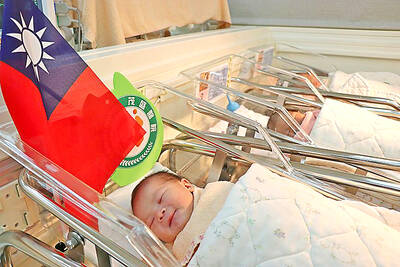
AGING: As of last month, people aged 65 or older accounted for 20.06 percent of the total population and the number of couples who got married fell by 18,685 from 2024 Taiwan has surpassed South Korea as the country least willing to have children, with an annual crude birthrate of 4.62 per 1,000 people, Ministry of the Interior data showed yesterday. The nation was previously ranked the second-lowest country in terms of total fertility rate, or the average number of children a woman has in her lifetime. However, South Korea’s fertility rate began to recover from 2023, with total fertility rate rising from 0.72 and estimated to reach 0.82 to 0.85 by last year, and the crude birthrate projected at 6.7 per 1,000 people. Japan’s crude birthrate was projected to fall below six,

US President Donald Trump in an interview with the New York Times published on Thursday said that “it’s up to” Chinese President Xi Jinping (習近平) what China does on Taiwan, but that he would be “very unhappy” with a change in the “status quo.” “He [Xi] considers it to be a part of China, and that’s up to him what he’s going to be doing, but I’ve expressed to him that I would be very unhappy if he did that, and I don’t think he’ll do that. I hope he doesn’t do that,” Trump said. Trump made the comments in the context
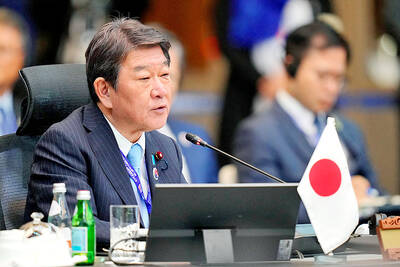
SELF-DEFENSE: Tokyo has accelerated its spending goal and its defense minister said the nation needs to discuss whether it should develop nuclear-powered submarines China is ramping up objections to what it sees as Japan’s desire to acquire nuclear weapons, despite Tokyo’s longstanding renunciation of such arms, deepening another fissure in the two neighbors’ increasingly tense ties. In what appears to be a concerted effort, China’s foreign and defense ministries issued statements on Thursday condemning alleged remilitarism efforts by Tokyo. The remarks came as two of the country’s top think tanks jointly issued a 29-page report framing actions by “right-wing forces” in Japan as posing a “serious threat” to world peace. While that report did not define “right-wing forces,” the Chinese Ministry of Foreign Affairs was

PREPAREDNESS: Given the difficulty of importing ammunition during wartime, the Ministry of National Defense said it would prioritize ‘coproduction’ partnerships A newly formed unit of the Marine Corps tasked with land-based security operations has recently replaced its aging, domestically produced rifles with more advanced, US-made M4A1 rifles, a source said yesterday. The unnamed source familiar with the matter said the First Security Battalion of the Marine Corps’ Air Defense and Base Guard Group has replaced its older T65K2 rifles, which have been in service since the late 1980s, with the newly received M4A1s. The source did not say exactly when the upgrade took place or how many M4A1s were issued to the battalion. The confirmation came after Chinese-language media reported


 RSS
RSS