


On the second anniversary of her inauguration, President Tsai Ing-wen (蔡英文) yesterday said that while the two years had been somewhat bumpy, it was natural, since her administration has been pushing through a series of reforms to lay the foundation for a better future.
In a live-streamed half-hour interview with the online platform Watchout, Tsai said she would ensure that the reforms her administration has launched would be put into practice and said that the public would soon begin to see concrete results.
“We spent most of my first two years doing preparation … the next two years of my presidency, we will speed up the pace of these proposed reforms,” Tsai said.
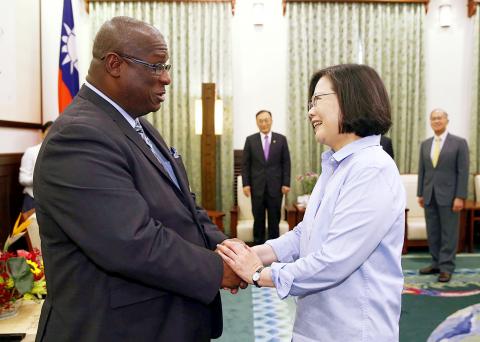
Photo: CNA
Her administration has been preparing the legal frameworks to deal with many of the fundamental problems the nation is facing.
Its reforms include providing affordable housing, especially for low-income young people; raising salaries; reducing work hours; and boosting the low birth rate.
Her cross-strait policy of maintaining the “status quo” has not changed, and the government would neither act abruptly nor be stuck in a deadlock, she said.
It would neither return to the Chinese Nationalist Party’s (KMT) authoritarian era, when the two sides of the Taiwan Strait refused to interact with one another, nor would it submit to pressure, she said.
There might have been some change in cross-strait relations, but this was all the more reason to be determined to overcome difficulties, she said.
Maintaining the peaceful and stable “status quo” across the Strait is everyone’s responsibility, she said.
Asked by a netizen how her administration would counter Chinese infiltration, Tsai said she would strengthen societal safety measures and pay extra attention to whether “Chinese factors” would affect societal stability.
Turning to other topics, the president said marriage equality is a human rights issue and an indicator of social progress.
After the Council of Grand Justices issued a constitutional interpretation affirming the constitutionality of same-sex marriage, the administration has reached a constitutional basis for marriage equality, so it has to amend the law to guarantee the freedom to marry according to the grand justices’ interpretation, she said.
Government agencies would definitely propose a plan for review by lawmakers, she added.
The government recently gave public servants a 3 percent raise and is encouraging private-sector companies to boost salaries, and even pressuring them by threatening to name and shame listed firms that pay low wages.
The government has said that Taiwan has shaken off the 16 years of wage stagnation that began in 2000 and it is starting to see an increase in overall earnings.
However, sentiment among average wage earners has been low, because of low wages, the rising cost of living and high housing prices.
The government has said it would put 200,000 social housing units on the market over an eight-year period at concessionary rates to address housing issues.
As of Feb. 1, its social housing initiative has put almost 10,000 units on the market, the Construction and Planning Agency has said.
Figures released on Saturday showed that fewer babies were born in Taiwan last year than in any year in the past four decades, with the exceptions of 2009 and 2010. The population growth last year was also the lowest in the nation’s history.
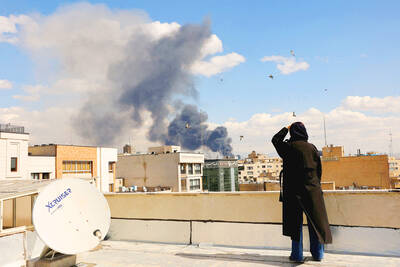
CHAOS: Iranians took to the streets playing celebratory music after reports of Khamenei’s death on Saturday, while mourners also gathered in Tehran yesterday Iranian Supreme Leader Ayatollah Ali Khamenei was killed in a major attack on Iran launched by Israel and the US, throwing the future of the Islamic republic into doubt and raising the risk of regional instability. Iranian state television and the state-run IRNA news agency announced the 86-year-old’s death early yesterday. US President Donald Trump said it gave Iranians their “greatest chance” to “take back” their country. The announcements came after a joint US and Israeli aerial bombardment that targeted Iranian military and governmental sites. Trump said the “heavy and pinpoint bombing” would continue through the week or as long
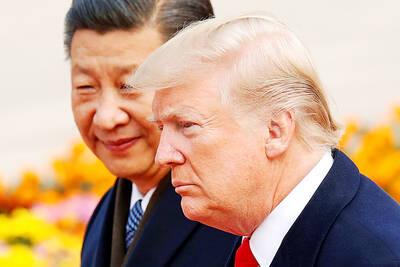
TRUST: The KMT said it respected the US’ timing and considerations, and hoped it would continue to honor its commitments to helping Taiwan bolster its defenses and deterrence US President Donald Trump is delaying a multibillion-dollar arms sale to Taiwan to ensure his visit to Beijing is successful, a New York Times report said. The weapons sales package has stalled in the US Department of State, the report said, citing US officials it did not identify. The White House has told agencies not to push forward ahead of Trump’s meeting with Chinese President Xi Jinping (習近平), it said. The two last month held a phone call to discuss trade and geopolitical flashpoints ahead of the summit. Xi raised the Taiwan issue and urged the US to handle arms sales to
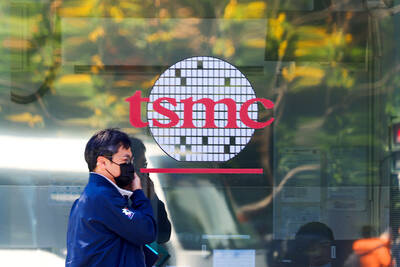
BIG SPENDERS: Foreign investors bought the most Taiwan equities since 2005, signaling confidence that an AI boom would continue to benefit chipmakers Taiwan Semiconductor Manufacturing Co’s (TSMC, 台積電) market capitalization swelled to US$2 trillion for the first time following a 4.25 percent rally in its American depositary receipts (ADR) overnight, putting the world’s biggest contract chipmaker sixth on the list of the world’s biggest companies by market capitalization, just behind Amazon.com Inc. The site CompaniesMarketcap.com ranked TSMC ahead of Saudi Aramco and Meta Platforms Inc. The Taiwanese company’s ADRs on Tuesday surged to US$385.75 on the New York Stock Exchange, as strong demand for artificial intelligence (AI) applications led to chip supply constraints and boost revenue growth to record-breaking levels. Each TSMC ADR represents

State-run CPC Corp, Taiwan (CPC, 台灣中油) yesterday said that it had confirmed on Saturday night with its liquefied natural gas (LNG) and crude oil suppliers that shipments are proceeding as scheduled and that domestic supplies remain unaffected. The CPC yesterday announced the gasoline and diesel prices will rise by NT$0.2 and NT$0.4 per liter, respectively, starting Monday, citing Middle East tensions and blizzards in the eastern United States. CPC also iterated it has been reducing the proportion of crude oil imports from the Middle East and diversifying its supply sources in the past few years in response to geopolitical risks, expanding


 RSS
RSS