


The US and the EU voiced their support for Taiwan’s attendance at this year’s World Health Assembly (WHA), following China’s move to block Taipei at the meeting in Geneva, Switzerland, later this month.
The US Department of State on Tuesday issued a statement saying it strongly supports Taiwan’s participation as an observer in the WHA, citing Taiwan’s commitment to global health security, and the important contributions it has made to public health and development.
“We are greatly dismayed that China has once again blocked Taiwan from receiving an invitation to attend [the WHA]. We will continue to urge the WHO to extend an invitation to Taiwan to attend this year’s WHA as an observer,” the statement said.
“The US believes that Taiwan should not be excluded from these critical discussions,” it added.
The EU on Tuesday also voiced its support for Taiwan’s participation at the meeting of the WHO’s decisionmaking body from May 21 to May 26.
Maja Kocijancic, spokesperson for the EU’s Foreign Affairs and Security Policy/European Neighbourhood Policy and Enlargement Negotiations, told the Central News Agency that support for Taiwan’s participation in the international arena is in line with the 28-nation bloc’s policy.
“The European Union, generally speaking, supports practical solutions regarding Taiwan’s participation in international frameworks,” including the WHA and the WHO, Kocijancic said, when asked about Taiwan’s exclusion from the meeting.
“This is in line with our ‘one China’ policy and in line with our general policy objectives,” she said.
The EU believes that Taiwan’s participation would also be welcome in some “technical meetings,” she added.
Taiwan has attracted greater support for its WHA bid this year compared with last year, a high-level government official said yesterday on condition of anonymity.
The US and six other like-minded allies have successfully requested a joint meeting with representatives of WHO Director-General Tedros Adhanom’s office twice and are planning to demand a third one soon, the official said.
The seven nations are also drafting a joint letter to Tedros, urging the WHO to at least allow Taiwan to express its stance through two-on-two debates at the WHA General Committee and the WHA plenary session, as it did last year, the official said.
“Such US-led actions have placed the WHO Secretariat under quite a lot of pressure,” the official added.
Sixteen of the nation’s allies have also submitted a proposal to the WHO Secretariat calling for Taiwan’s participation at this year’s meeting, and 12 secured a meeting with Tedros in Geneva late last month, the official said.
“However, Tedros again cited the ‘one China’ principle, UN General Assembly Resolution 2758, WHA Resolution 25.1 and the [so-called] ’1992 consensus.’ He even said that an invitation cannot be issued without China’s approval,” the official said.
Despite Chinese obstruction, the government will try to arrange at least 59 bilateral meetings — as it did last year — between Minister of Health and Welfare Chen Shih-chung (陳時中) and his foreign counterparts at the WHA, the official said.
UN Resolution 2758 recognizes the People’s Republic of China as the only lawful representative of China to the UN, while WHA Resolution 25.1 expelled the Republic of China from the WHO.
The “1992 consensus” refers to a tacit understanding between the Chinese Nationalist Party (KMT) and the Chinese Communist Party that both sides of the Taiwan Strait acknowledge that there is “one China,” with each side having its own interpretation of what “China” means.
Taiwan had participated in the WHA as an observer from 2009 to 2016, but it did not receive an invitation last year as part of China’s retaliation against President Tsai Ing-wen’s (蔡英文) refusal to acknowledge the so-called “1992 consensus.”
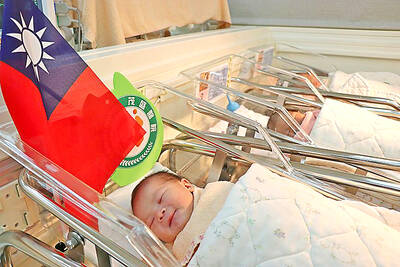
AGING: As of last month, people aged 65 or older accounted for 20.06 percent of the total population and the number of couples who got married fell by 18,685 from 2024 Taiwan has surpassed South Korea as the country least willing to have children, with an annual crude birthrate of 4.62 per 1,000 people, Ministry of the Interior data showed yesterday. The nation was previously ranked the second-lowest country in terms of total fertility rate, or the average number of children a woman has in her lifetime. However, South Korea’s fertility rate began to recover from 2023, with total fertility rate rising from 0.72 and estimated to reach 0.82 to 0.85 by last year, and the crude birthrate projected at 6.7 per 1,000 people. Japan’s crude birthrate was projected to fall below six,
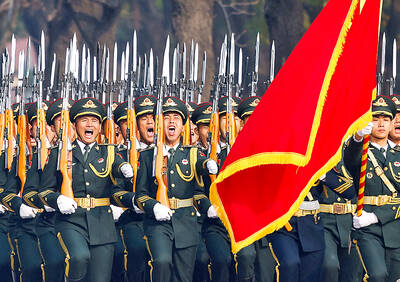
Conflict with Taiwan could leave China with “massive economic disruption, catastrophic military losses, significant social unrest, and devastating sanctions,” a US think tank said in a report released on Monday. The German Marshall Fund released a report titled If China Attacks Taiwan: The Consequences for China of “Minor Conflict” and “Major War” Scenarios. The report details the “massive” economic, military, social and international costs to China in the event of a minor conflict or major war with Taiwan, estimating that the Chinese People’s Liberation Army (PLA) could sustain losses of more than half of its active-duty ground forces, including 100,000 troops. Understanding Chinese
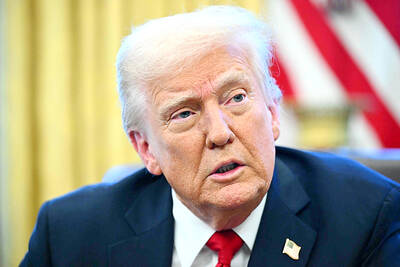
US President Donald Trump in an interview with the New York Times published on Thursday said that “it’s up to” Chinese President Xi Jinping (習近平) what China does on Taiwan, but that he would be “very unhappy” with a change in the “status quo.” “He [Xi] considers it to be a part of China, and that’s up to him what he’s going to be doing, but I’ve expressed to him that I would be very unhappy if he did that, and I don’t think he’ll do that. I hope he doesn’t do that,” Trump said. Trump made the comments in the context
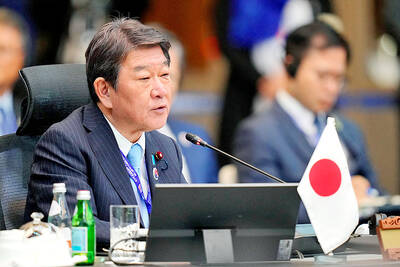
SELF-DEFENSE: Tokyo has accelerated its spending goal and its defense minister said the nation needs to discuss whether it should develop nuclear-powered submarines China is ramping up objections to what it sees as Japan’s desire to acquire nuclear weapons, despite Tokyo’s longstanding renunciation of such arms, deepening another fissure in the two neighbors’ increasingly tense ties. In what appears to be a concerted effort, China’s foreign and defense ministries issued statements on Thursday condemning alleged remilitarism efforts by Tokyo. The remarks came as two of the country’s top think tanks jointly issued a 29-page report framing actions by “right-wing forces” in Japan as posing a “serious threat” to world peace. While that report did not define “right-wing forces,” the Chinese Ministry of Foreign Affairs was


 RSS
RSS