


The Cloud Gate Dance Theatre (雲門舞集) yesterday stunned the nation by announcing that the Cloud Gate Foundation board of directors had approved founder Lin Hwai-min’s (林懷民) decision to retire at the end of 2019.
The company said in a statement that the board had approved Lin’s recommendation to appoint Cloud Gate 2 (雲門2) artistic director Cheng Tsung-lung (鄭宗龍) to succeed him, starting in 2020.
Lin would officially announce his retirement this afternoon at the National Theater at the press rehearsal for his newest work, Formosa (關於島嶼), which will have its world premiere tomorrow night, the company said, adding that he would continue to serve on the foundation’s board after his retirement.
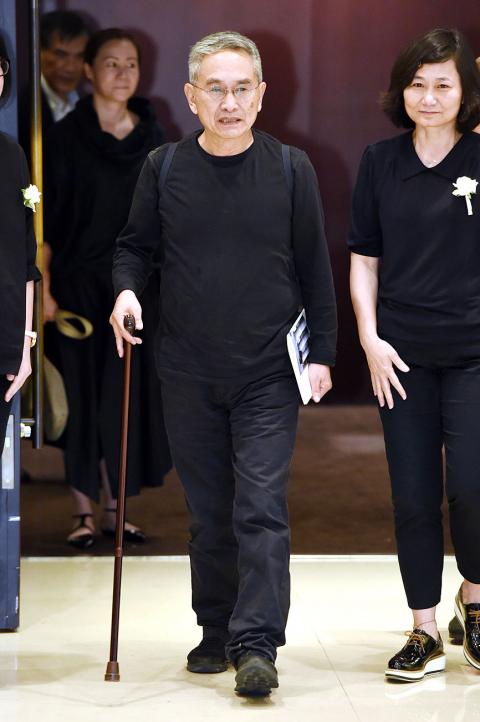
Photo: Sean Chao, Taipei Times
Lin told the Taipei Times yesterday that he believed the earlier he decided to retire, the better it would be for the company, because it would provide for a longer transition period.
The 70-year-old Lin founded Cloud Gate Dance Theatre in 1973, the nation’s first professional dance company, which in the decades since has become one of the leading modern dance companies in the world and the nation’s premier cultural export.
He has also been a major influence on Taiwan’s arts world as a writer, choreographer, teacher, founder of the dance department at the National Institute of the Arts — which was renamed Taipei National University of the Arts in 2001 — and mentor to dancers, choreographers and many other young artists under the Wanderer program he initiated in 2004, which provides subsidies for budding or experienced artists to travel abroad or to take time off to gain some artistic inspiration.
Lin cofounded Cloud Gate 2 in 1989 with Cloud Gate dancer-turned-colleague Lo Man-fei (羅曼菲) to provide a platform for young Taiwanese choreographers’ works.
Lo served as the troupe’s artistic director until her death in early 2006, at which point Lin took over running that company as well as the main company.
Cheng, a former Cloud Gate Dance Theatre member, is one of the younger generation of choreographers that Lin has mentored and nurtured. He began choreographing for Cloud Gate 2 after leaving the main troupe and was named resident choreographer in 2006 before becoming artistic director in 2014.
While Lin has frequently spoken of feeling his age and wanting to retire over the years, he admitted he was hampered by the lack of a clear choice to succeed him.
Speculation about a possible retirement grew after one of his knees was badly damaged in an automobile accident in December last year, requiring him to undergo months of recuperation and physical therapy.

South Korea has adjusted its electronic arrival card system to no longer list Taiwan as a part of China, a move that the Ministry of Foreign Affairs said would help facilitate exchanges between the two sides. South Korea previously listed “Taiwan” as “Taiwan (China)” in the drop-down menus of its online arrival card system, where people had to fill out where they came from and their next destination. The ministry had requested South Korea make a revision and said it would change South Korea’s name on Taiwan’s online immigration system from “Republic of Korea” to “Korea (South),” should the issue not be

Tainan, Taipei and New Taipei City recorded the highest fines nationwide for illegal accommodations in the first quarter of this year, with fines issued in the three cities each exceeding NT$7 million (US$220,639), Tourism Administration data showed. Among them, Taipei had the highest number of illegal short-term rental units, with 410. There were 3,280 legally registered hotels nationwide in the first quarter, down by 14 properties, or 0.43 percent, from a year earlier, likely indicating operators exiting the market, the agency said. However, the number of unregistered properties rose to 1,174, including 314 illegal hotels and 860 illegal short-term rental
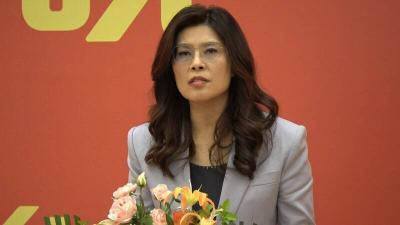
Both sides of the Taiwan Strait share a political foundation based on the “1992 consensus” and opposition to Taiwanese independence, Chinese Nationalist Party (KMT) Chairwoman Cheng Li-wun (鄭麗文) today said during her meeting with Chinese President Xi Jinping (習近平). Both sides of the Strait should plan and build institutionalized and sustainable mechanisms for dialogue and cooperation based on that foundation to make peaceful development across the Strait irreversible, she said. Peace is a shared moral value across the Strait, and both sides should move beyond political confrontation to seek institutionalized solutions to prevent war, she said. Mutually beneficial cross-strait relations are what the
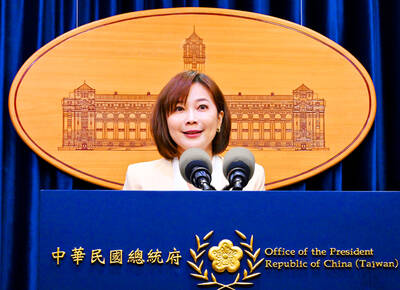
ECONOMIC COERCION: Such actions are often inconsistently applied, sometimes resumed, and sometimes just halted, the Presidential Office spokeswoman said The government backs healthy and orderly cross-strait exchanges, but such arrangements should not be made with political conditions attached and never be used as leverage for political maneuvering or partisan agendas, Presidential Office spokeswoman Karen Kuo (郭雅慧) said yesterday. Kuo made the remarks after China earlier in the day announced 10 new “incentive measures” for Taiwan, following a landmark meeting between Chinese President Xi Jinping (習近平) and Chinese Nationalist Party (KMT) Chairwoman Cheng Li-wun (鄭麗文) in Beijing on Friday. The measures, unveiled by China’s Xinhua news agency, include plans to resume individual travel by residents of Shanghai and China’s Fujian


 RSS
RSS