


Cyberspies working for or on behalf of the Chinese government have broadened attacks against official and corporate targets in Vietnam at a time of raised tension over the South China Sea, cybersecurity company FireEye said.
FireEye told reporters the attacks happened in recent weeks and it had traced them to suspected Chinese cyberspies based partly on the fact that a Chinese group it had identified previously had used the same infrastructure before.
“Where China has often focused on the [Vietnamese] government before, this shows they are really hitting the full commercial sector potentially in Vietnam and trying to gather a broad base of information there,” said Ben Read, who heads FireEye’s cyberespionage team.
FireEye said the attacks involved sending users documents in Vietnamese that appeared to be requests for financial information.
When the user opened them, they delivered malware that could infect a computer and send back information to the cyberspies, potentially letting them into computer networks, too.
FireEye linked the attacks to a team it calls Conimes, because in the past it used the conimes.com domain.
The team focuses on Southeast Asia, but its main target is Vietnam and even more so since tensions rose over the South China Sea, Read said.
He was unable to say exactly what data had been gathered.
Read said the attacks it had discovered on Vietnam were relatively unsophisticated and relied on users having pre-2012 versions of Microsoft Word.
“They are using comparatively simple techniques because apparently they work,” he said.
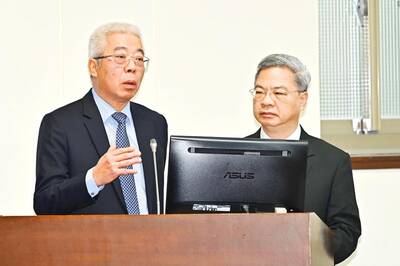
Taiwan has arranged for about 8 million barrels of crude oil, or about one-third of its monthly needs, to be shipped from the Red Sea this month to bypass the Strait of Hormuz and ease domestic supply pressures, CPC Corp, Taiwan (CPC, 台灣中油) said yesterday. The state-run oil company has worked with Middle Eastern suppliers to secure routes other than the Strait of Hormuz, through which about 20 percent of the world’s oil and liquefied natural gas typically passes, CPC chairman Fang Jeng-zen (方振仁) said at a meeting of the legislature’s Economics Committee in Taipei. Suppliers in Saudi Arabia have indicated they
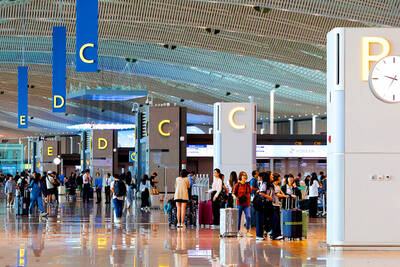
South Korea has adjusted its electronic arrival card system to no longer list Taiwan as a part of China, a move that the Ministry of Foreign Affairs said would help facilitate exchanges between the two sides. South Korea previously listed “Taiwan” as “Taiwan (China)” in the drop-down menus of its online arrival card system, where people had to fill out where they came from and their next destination. The ministry had requested South Korea make a revision and said it would change South Korea’s name on Taiwan’s online immigration system from “Republic of Korea” to “Korea (South),” should the issue not be
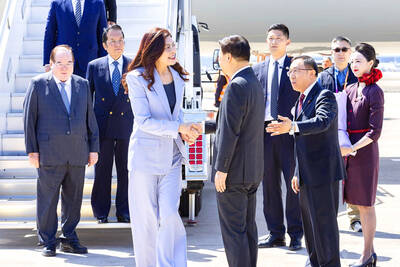
CCP ‘PAWN’? Beijing could use the KMT chairwoman’s visit to signal to the world that many people in Taiwan support the ‘one China’ principle, an academic said Chinese Nationalist Party (KMT) Chairwoman Cheng Li-wun (鄭麗文) yesterday arrived in China for a “peace” mission and potential meeting with Chinese President Xi Jinping (習近平), while a Taiwanese minister detailed the number of Chinese warships currently deployed around the nation. Cheng is visiting at a time of increased Chinese military pressure on Taiwan, as the opposition-dominated Legislative Yuan stalls a government plan for US$40 billion in extra defense spending. Speaking to reporters before going to the airport, Cheng said she was going on a “historic journey for peace,” but added that some people felt uneasy about her trip. “If you truly love Taiwan,
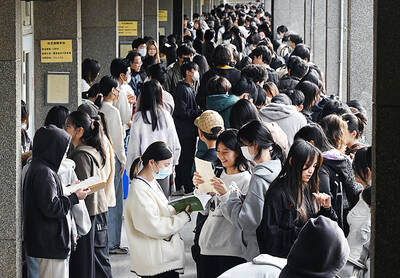
A global survey showed that 60 percent of Taiwanese had attained higher education, second only to Canada, the Ministry of the Interior said. Taiwan easily surpassed the global average of 43 percent and ranked ahead of major economies, including Japan, South Korea and the US, data from the Organisation for Economic Co-operation and Development (OECD) for 2024 showed. Taiwan has a high literacy rate, data released by the ministry showed. As of the end of last year, Taiwan had 20.617 million people aged 15 or older, accounting for 88.5 percent of the total population, with a literacy rate of 99.4 percent, the data


 RSS
RSS