


Chiang Kai-shek (蔣介石) was a “respected veteran” who put Taiwan’s security ahead of his goals, Chinese Nationalist Party (KMT) Central Policy director Alex Tsai (蔡正元) said yesterday, adding that all KMT members must be required to recite this “standard” response to questions about the former president’s role in the 228 Incident.
Tsai hosted a KMT news conference to address criticism by pan-green politicians and their supporters who say Chiang, who died 42 years ago yesterday, was the mastermind of the 228 Incident.
After the 228 Incident erupted in 1947, militia occupied public agencies — including airports, city governments, schools and hospitals — prompting Chiang, the national leader at the time, to deploy troops to Taiwan in a last-ditch effort to quash the insurgency, just like any head of state would, Tsai said.

Photo: CNA
“If [Kaohsiung Mayor] Chen Chu (陳菊) were kidnapped by a militia, it would be impossible for Taipei-based President Tsai Ing-wen (蔡英文) to sit idly by and not send any troops to quash the militia in Kaohsiung,” Alex Tsai said.
Then-Taiwan governor Chen Yi’s (陳儀) governance gave rise to the 228 Incident and Chiang, concerned that the conflict between KMT troops and the masses would escalate, sent Chen a telegram urging him to make sure that the troops did not take retaliatory action or they would be charged with treason, Alex Tsai said.
The telegram indicated that Chiang’s sole intention in sending the troops was to suppress the insurgents and although any skirmish would inevitably cause collateral damage, the death toll was insignificant compared with that during the revolt against Japanese rule when Taiwan was ceded to Japan, he said.

Photo: Fang Pin-chao, Taipei Times
Considering this and the fact that Chiang was at the time preoccupied with forming a strategy to counter the Chinese Communist Party forces gathered in China’s Yanan City, it is evident that the pan-green camp’s accusations that Chiang was a “murderer” responsible for the 228 Incident was unfair and slanderous, he said.
Chiang’s leadership was also instrumental to the then-KMT government’s victory over the People’s Liberation Army in the 1949 Battle of Kuningtou and the 823 Artillery Bombardment in 1958, without which Kinmen County would have been lost and Taiwan would have fallen under Chinese communist rule, he said.
Alex Tsai said the least any KMT member wanting to run for office in the party can do is to defend Chiang when Chiang is criticized.
“They should not distance themselves from Chiang just to pander to Taiwanese independence advocates or bereaved families of the 228 Incident,” he said.
Asked by reporters whether his remarks were directed at former president Ma Ying-jeou (馬英九), who on Feb. 27, in response to reporters’ questions, said that Chiang “had a responsibility” in the 228 Incident, Alex Tsai said that Ma had not given the question careful thought and gave an “unfair” reply.
“Therefore, we would like to issue a special notice to all KMT members who hold or have held positions in the party to adhere to the standard response: ‘Chiang Kai-shek is not the murderer in the 228 Incident, but a leading warrior and veteran who protected Taiwan,’” he said.
“This is the standard answer the party wishes to establish today. Anyone who diverts from this answer does not deserve to serve as a KMT employee or official,” he said.
Separately yesterday, former vice president Wu Den-yih (吳敦義), who is running in next month’s KMT chairpersonship race, said that without Chiang’s dedication to the Republic of China, Taiwan would still be occupied by the Japanese instead of being governed by Tsai Ing-wen today.
Although Chiang was not perfect, his role in the 228 Incident should be evaluated in a fair and just manner, Wu said.
KMT Chairwoman Hung Hsiu-chu (洪秀柱) said the Democratic Progressive Party’s plan to remove remnants of Chiang’s rule is aimed at severing Taiwanese people’s emotional ties to Beijing and fulfilling its dream of independence.
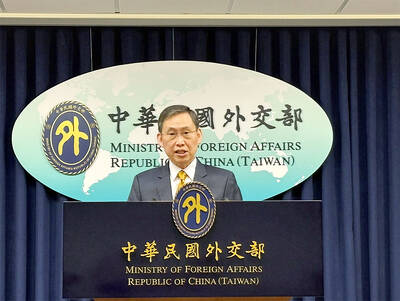
A Ministry of Foreign Affairs official yesterday said that a delegation that visited China for an APEC meeting did not receive any kind of treatment that downgraded Taiwan’s sovereignty. Department of International Organizations Director-General Jonathan Sun (孫儉元) said that he and a group of ministry officials visited Shenzhen, China, to attend the APEC Informal Senior Officials’ Meeting last month. The trip went “smoothly and safely” for all Taiwanese delegates, as the Chinese side arranged the trip in accordance with long-standing practices, Sun said at the ministry’s weekly briefing. The Taiwanese group did not encounter any political suppression, he said. Sun made the remarks when

PREPAREDNESS: Given the difficulty of importing ammunition during wartime, the Ministry of National Defense said it would prioritize ‘coproduction’ partnerships A newly formed unit of the Marine Corps tasked with land-based security operations has recently replaced its aging, domestically produced rifles with more advanced, US-made M4A1 rifles, a source said yesterday. The unnamed source familiar with the matter said the First Security Battalion of the Marine Corps’ Air Defense and Base Guard Group has replaced its older T65K2 rifles, which have been in service since the late 1980s, with the newly received M4A1s. The source did not say exactly when the upgrade took place or how many M4A1s were issued to the battalion. The confirmation came after Chinese-language media reported
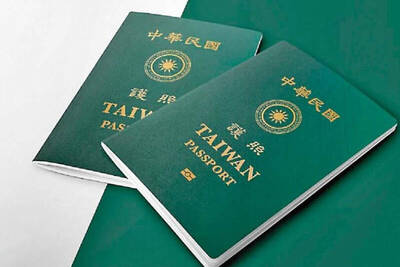
The Taiwanese passport ranked 33rd in a global listing of passports by convenience this month, rising three places from last month’s ranking, but matching its position in January last year. The Henley Passport Index, an international ranking of passports by the number of designations its holder can travel to without a visa, showed that the Taiwan passport enables holders to travel to 139 countries and territories without a visa. Singapore’s passport was ranked the most powerful with visa-free access to 192 destinations out of 227, according to the index published on Tuesday by UK-based migration investment consultancy firm Henley and Partners. Japan’s and
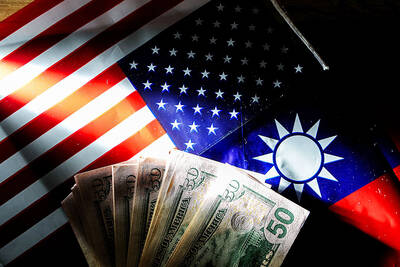
BROAD AGREEMENT: The two are nearing a trade deal to reduce Taiwan’s tariff to 15% and a commitment for TSMC to build five more fabs, a ‘New York Times’ report said Taiwan and the US have reached a broad consensus on a trade deal, the Executive Yuan’s Office of Trade Negotiations said yesterday, after a report said that Washington is set to reduce Taiwan’s tariff rate to 15 percent. The New York Times on Monday reported that the two nations are nearing a trade deal to reduce Taiwan’s tariff rate to 15 percent and commit Taiwan Semiconductor Manufacturing Co (TSMC, 台積電) to building at least five more facilities in the US. “The agreement, which has been under negotiation for months, is being legally scrubbed and could be announced this month,” the paper said,


 RSS
RSS