


Former President Ma Ying-jeou (馬英九) yesterday held a news conference in Malaysia to protest the World Chinese Economic Summit’s failure to acknowledge him as the former president of the Republic of China (ROC), Taiwan
At the summit earlier in the day, the program designated Ma as “H.E. Ma, Ying-jeou, World Chinese Leader,” or simply “H.E. Ma, Ying-jeou,” without a title, whereas all other heads of state were fully credited.
Refusing to accept the organizer’s arrangements, Ma attended the meeting to give his speech with his own tag, which read: “Former President of the Republic of China (Taiwan),” and introduced himself as such at the beginning of his speech in Malacca.
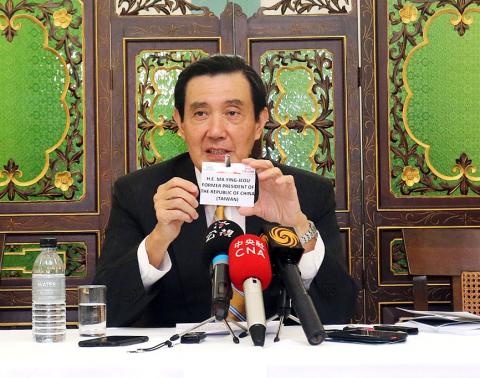
Photo: CNA
Hours after the speech, Ma criticized summit organizers, saying: “It is hard to fathom this kind of unfair and unreasonable treatment which harms me and also cross-strait relations. This attack on my personal dignity is unacceptable and I will fight for what is right.”
“It is apparent that intervention by the Chinese embassy in Malaysia caused this row,” Ma said.
He said that the invitation by Southern University College had clearly addressed him as a former president of the ROC, but a few days prior to his visit, “there were signs that things had gone wrong,” including questions from the organizers asking whether “world Chinese leader” could be used instead of former president.
Ma said his initial reply was that he would decline the invitation if the organizers insisted on not calling him “former president.” The college agreed at the time to designate him as such, but arrangements for his speech remained in dispute even after his departure from Taipei.
Presidential Office spokesman Alex Huang (黃重諺) issued a statement criticizing the organizers, saying the treatment Ma received was “extremely impolite and inappropriate” for the former head of Taiwan, demanding “an immediate apology and correction.”
In his speech, Ma said Taiwan-ASEAN ties are to become even closer as a result of Taiwan’s innovation and technology, the entanglement of Southeast Asian economies and the cultural links between Taiwan and Southeast Asian countries.
Under normal conditions trade relations are developed to pursue common interests and are not exclusive, he said.
Political and diplomatic factors affected Taiwan’s efforts to join regional trade arrangements, but ASEAN will support Taiwan’s participation in trade organizations and agreements, including the Trans-Pacific Partnership, the Regional Comprehensive Economic Partnership and the Free Trade Area of the Asia-Pacific, he said.
Taiwan’s advanced technologies play an important role in the global supply chain and bring advantages to all nations, Ma said, adding that when serving as Taipei mayor 13 years ago he advocated the nation’s inclusion in the ASEAN+3 as an informational member and he hopes Taiwan “will not wait 13 more years” to be a part of regional economic integration.
In response to a reporter’s question on the legal challenge the Chinese Nationalist Party (KMT) faces from the Ill-gotten Party Assets Settlement Committee, Ma said: “The KMT faced many difficulties in more than a century of history and I believe solidarity and reform have the power to change destinies, as Sun Yat-sen is the exemplar of KMT members.”
Additional reporting by Shih Hsiao-kuang
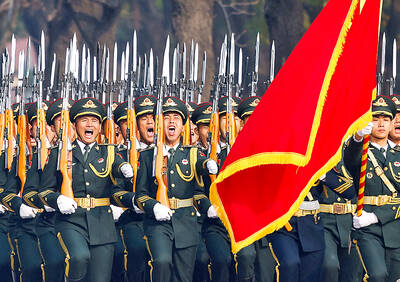
Conflict with Taiwan could leave China with “massive economic disruption, catastrophic military losses, significant social unrest, and devastating sanctions,” a US think tank said in a report released on Monday. The German Marshall Fund released a report titled If China Attacks Taiwan: The Consequences for China of “Minor Conflict” and “Major War” Scenarios. The report details the “massive” economic, military, social and international costs to China in the event of a minor conflict or major war with Taiwan, estimating that the Chinese People’s Liberation Army (PLA) could sustain losses of more than half of its active-duty ground forces, including 100,000 troops. Understanding Chinese
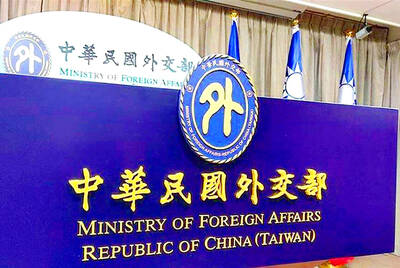
The Ministry of Foreign Affairs (MOFA) yesterday said it is closely monitoring developments in Venezuela, and would continue to cooperate with democratic allies and work together for regional and global security, stability, and prosperity. The remarks came after the US on Saturday launched a series of airstrikes in Venezuela and kidnapped Venezuelan President Nicolas Maduro, who was later flown to New York along with his wife. The pair face US charges related to drug trafficking and alleged cooperation with gangs designated as terrorist organizations. Maduro has denied the allegations. The ministry said that it is closely monitoring the political and economic situation

UNRELENTING: China attempted cyberattacks on Taiwan’s critical infrastructure 2.63 million times per day last year, up from 1.23 million in 2023, the NSB said China’s cyberarmy has long engaged in cyberattacks against Taiwan’s critical infrastructure, employing diverse and evolving tactics, the National Security Bureau (NSB) said yesterday, adding that cyberattacks on critical energy infrastructure last year increased 10-fold compared with the previous year. The NSB yesterday released a report titled Analysis on China’s Cyber Threats to Taiwan’s Critical Infrastructure in 2025, outlining the number of cyberattacks, major tactics and hacker groups. Taiwan’s national intelligence community identified a large number of cybersecurity incidents last year, the bureau said in a statement. China’s cyberarmy last year launched an average of 2.63 million intrusion attempts per day targeting Taiwan’s critical
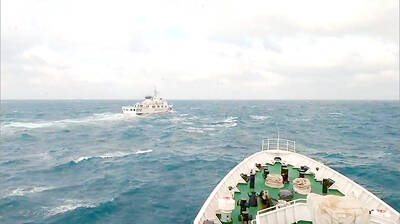
‘SLICING METHOD’: In the event of a blockade, the China Coast Guard would intercept Taiwanese ships while its navy would seek to deter foreign intervention China’s military drills around Taiwan this week signaled potential strategies to cut the nation off from energy supplies and foreign military assistance, a US think tank report said. The Chinese People’s Liberation Army (PLA) conducted what it called “Justice Mission 2025” exercises from Monday to Tuesday in five maritime zones and airspace around Taiwan, calling them a warning to “Taiwanese independence” forces. In a report released on Wednesday, the Institute for the Study of War said the exercises effectively simulated blocking shipping routes to major port cities, including Kaohsiung, Keelung and Hualien. Taiwan would be highly vulnerable under such a blockade, because it


 RSS
RSS