


China is developing space technologies aimed at blocking US military communications and destroying its ability to win conflicts, according to a report commissioned by a panel created by the US Congress.
“China’s improving space capabilities have negative-sum consequences for US military security,” the University of California Institute on Global Conflict and Cooperation (IGCC) said in the report.
Its progress requires “the US to prepare to confront an adversary possessing space and counter-space technologies,” the report said.
The report, released on Monday in Washington, comes as the US Congress debates US President Barack Obama’s request for a Department of Defense budget increase of 7.7 percent to US$534.3 billion and ways to align defense strategy and spending.
The top US intelligence official and the commander of the US Strategic Command both warned last week that China’s space program threatens US military communications.
The program is part of Chinese President Xi Jinping’s (習近平) “China Dream” strategy of strengthening national power and reshaping the Asia-Pacific political environment into one in which its interests are given greater attention.
“China’s goal is to become a space power on par with the United States and to foster a space industry that is the equal of those in the United States, Europe and Russia,” according to the report, which was prepared for the US-China Economic and Security Review Commission.
“With improved military capabilities, and the potential for growth in the commercial aerospace industry, China’s development” of space technologies will allow it to “more effectively wield international power,” the commission said in a statement on Monday.
Chinese military analysts consider that space-based information will become a deciding issue in future wars, that space will be a dominant battlefield, and that in order to achieve victory on Earth, one must first seize the initiative in space, the institute said.
“This will require China to achieve space supremacy, defined as the ability to freely use space and to deny the use of space to adversaries,” according to the report, titled China Dream, Space Dream: China’s Progress in Space Technologies and Implications for the United States.
The assessment that space is the dominant battlefield has led the People’s Liberation Army to conclude that war in space is inevitable, the institute said in the report led by Kevin Pollpeter, deputy director of the Study of Innovation and Technology in China at the IGCC.
If the current trajectory of China’s space program continues, by 2030 China will have a new line of advanced launch vehicles, a robust, space-based command and control network and more capable electronic intelligence communication satellites, the report said.
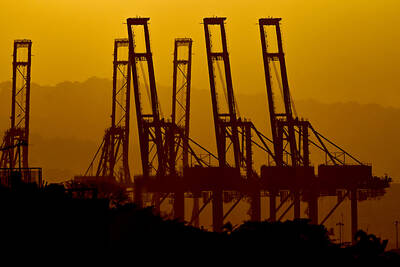
A subsidiary of a Hong Kong-based company that has lost control of two critical ports on the Panama Canal said it is seeking US$2 billion of compensation in damages from Panama over its “illegal” takeover of the ports. Panama Ports Co, a unit of Hong Kong’s CK Hutchison Holdings (長江和記實業), on Friday said in a statement that it is demanding the sum under international arbitration proceedings that it had already started. The Panamanian government last week seized control of the Balboa and Cristobal ports on each end of the Panama Canal, after the country’s Supreme Court declared earlier that a concession allowing
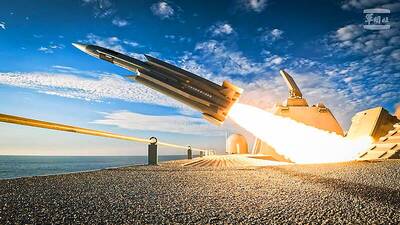
DETERRENCE: With 1,000 indigenous Hsiung Feng II and III missiles and 400 Harpoon missiles, the nation would boast the highest anti-ship missile density in the world With Taiwan wrapping up mass production of Hsiung Feng II and III missiles by December and an influx of Harpoon missiles from the US, Taiwan would have the highest density of anti-ship missiles in the world, a source said yesterday. Taiwan is to wrap up mass production of the indigenous anti-ship missiles by the end of year, as the Chungshan Institute of Science and Technology has been meeting production targets ahead of schedule, a defense official with knowledge of the matter said. Combined with the 400 Harpoon anti-ship missiles Taiwan expects to receive from the US by 2028, the nation would have

POSSIBILITIES EMERGE: With Taiwan’s victory and Japan’s narrow win over Australia, Taiwan now have a chance to advance if South Korea also beat the Aussies Taiwan has high hopes that the national baseball team would advance to the World Baseball Classic (WBC) quarter-finals after clinching a crucial 5-4 victory over South Korea in a nail-biting extra-inning game at the Tokyo Dome yesterday. Boosted by three home runs — two solo shots by Yu Chang (張育成) and Cheng Tsung-che (鄭宗哲) and a two-run homer by Stuart Fairchild — the triumph gave Taiwan a much-needed second victory in the five-team Pool C, where only the top two finishers would advance to the knockout stage in Miami, Florida. Entering extra innings with the game tied at four apiece, Taiwan scored
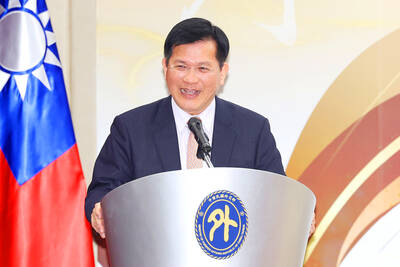
MISSION OF PEACE: The foreign minister urged Beijing to respect Taiwan’s existence as an independent nation, and work together to ensure peace and stability in the region Minister of Foreign Affairs Lin Chia-lung (林佳龍) yesterday rejected Chinese Minister of Foreign Affairs Wang Yi’s (王毅) comments about Taiwan, criticizing China as a “troublemaker” in the international community and a disruptor of cross-strait peace. Speaking at a news conference on the sidelines of the Chinese National People’s Congress, Wang said that Taiwan has always been a territory of China and that it would be impossible for it to become its own country. The “return” of Taiwan to China was the natural outcome of the Chinese people’s resistance against Japan in World War II, and that any pursuit of independence was “doomed


 RSS
RSS