


A wave of attacks, most of them car bombs targeting Shiite neighborhoods of Baghdad, killed 33 people yesterday in the latest bout of deadly violence to hit Iraq, while a suicide bomber rammed his explosives-laden car into one of two buses carrying off-duty soldiers in Egypt’s northern Sinai, killing 10 and wounding 35.
The bombings and shootings in Iraq, which left more than 70 people wounded in all, came amid a protracted surge in bloodletting just months ahead of general elections that has forced Iraqi officials to appeal for international help in combating the country’s worst unrest since 2008.
At least eight explosions, including seven car bombs, went off mostly in Shiite neighborhoods of the Iraqi capital from about 7:30am onwards, leaving 28 people dead and more than 70 wounded, according to security and medical officials.
They come after similarly coordinated bombings in Baghdad on Sunday evening left 21 dead and pushed the overall death toll for this month above 300.
Yesterday’s attacks occurred in areas ranging from the city’s main commercial district of Karrada to the predominantly Shiite neighborhood of Shaab, as well as Sadriyah, one of Baghdad’s oldest districts.
One car bomb also went off in the Sunni-majority neighborhood of Adhamiyah in north Baghdad, the officials said.
The blast in Karrada struck near a car dealership as Shiites were gathering to mark the anniversary of the death of a venerated figure in Shiite Islam, when Sunni militants often step up their attacks.
“We were cooking and giving food on the anniversary of the death of Imam Hussein,” said Ahmed Abu Ali, an employee of the al-Baldawi car dealership. “Many people were gathering at the dealership and suddenly a car blew up 20 meters away.”
In a separate attack in the normally peaceful northern Kurdish city of Sulaimaniyah, gunmen assassinated Iraqi President Jalal Talabani’s chief bodyguard, according to a police spokesman.
The trio of attackers entered Colonel Sarwat Rashid’s home and shot him three times in the head in front of his wife, the spokesman said.
Authorities were still investigating the motive behind the attack.
Talabani has for nearly a year been recovering in Germany from a stroke and Rashid had been due to depart Sulaimaniyah to visit the president, for whom he had been head of personal security since 1994.
Multiple shootings in Baghdad and the main northern city of Mosul, along with a bombing in Abu Ghraib, left four others dead.
In Egypt said the suicide bomber struck when the two buses were traveling on a road between the border town of Rafah and the coastal city of el-Arish. The explosion damaged both buses, officials said.
The 10 victims were the bus driver, three members of a security detail and six off-duty soldiers, according to a statement by Colonel Mohammed Ahmed Ali, a military spokesman.
“The precious blood of our sons strengthens our resolve to cleanse Egypt, and shield its sons from violence and treacherous terrorism,” Ali wrote on his Facebook page.
The wounded were being treated in military hospitals, he said.
The soldiers belonged to the 2nd Field Army, which is doing most of the fighting against Islamic militants waging an insurgency against security forces in Sinai. The buses were on their way to Cairo, officials said.
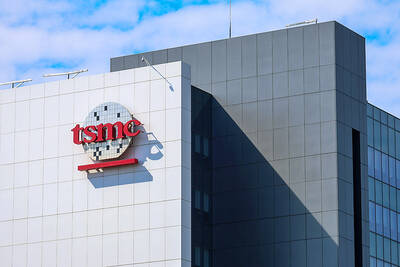
Taiwan Semiconductor Manufacturing Co (TSMC, 台積電), the world’s largest foundry service provider, yesterday said that global semiconductor revenue is projected to hit US$1.5 trillion in 2030, after the figure exceeds US$1 trillion this year, as artificial intelligence (AI) demand boosts consumption of token and compute power. “We are still at the beginning of the AI revolution, but we already see a significant impact across the whole semiconductor ecosystem,” TSMC deputy cochief operating officer Kevin Zhang (張曉強) said at the company’s annual technology symposium in Hsinchu City. “It is fair to say that in the past decade, smartphones and other mobile devices were
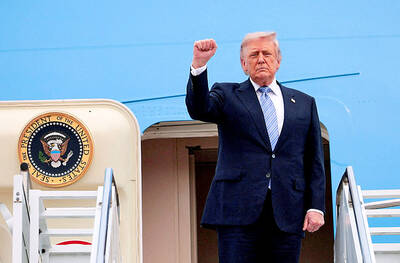
US-CHINA SUMMIT: MOFA welcomed US reassurance of no change in its Taiwan policy; Trump said he did not comment when Xi talked of opposing independence US President Donald Trump yesterday said he has not made a decision on whether to move forward with a major arms package for Taiwan after hearing concerns about it from Chinese President Xi Jinping (習近平). Trump’s comments on Taiwan came as he flew back to Washington after wrapping up critical talks in which both leaders said important progress was made in stabilizing US-China relations even as deep differences persist between the world’s two biggest powers on Iran and Taiwan. “I will make a determination,” Trump said, adding: “I’ll be making decisions. But, you know, I think the last thing we need right
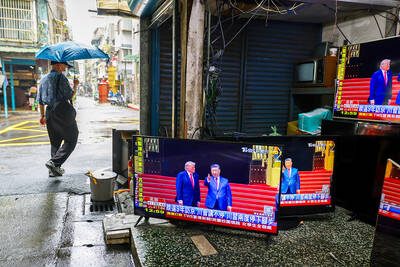
TAIWAN ISSUE: US treasury secretary Scott Bessent said on the first day of meetings that ‘it wouldn’t be a US-China summit without the Taiwan issue coming up’ There were no surprises on the first day of the summit between US President Donald Trump and Chinese President Xi Jinping (習近平), the Mainland Affairs Council (MAC) said yesterday, as the government reiterated that cross-strait stability is crucial to the Asia-Pacific region, as well as the world. As the two presidents met for a highly anticipated summit yesterday, Chinese state media reported that Xi warned Trump that missteps regarding Taiwan could push their two countries into “conflict.” Trump arrived in China with accolades for his host, calling Xi a “great leader” and “friend,” and extending an invitation to visit the White House
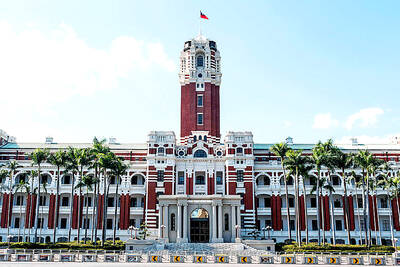
SECURITY: Taipei presses the US for arms supplies, saying the arms sales are not only a reflection of the US security commitment to Taiwan but also serve as a mutual deterrent against regional threats Taiwan is committed to preserving the cross-strait “status quo” and contributing to regional peace and stability, the Presidential Office said yesterday. “It is an undeniable fact that the Republic of China is a sovereign and independent democratic nation,” Presidential Office spokeswoman Karen Kuo (郭雅慧) reiterated, adding that Beijing has no right to claim sovereignty over Taiwan. The statements came after US President Donald Trump warned against Taiwanese independence. Trump wrapped up a state visit to Beijing on Friday, during which Chinese President Xi Jinping (習近平) had pressed him not to support Taiwan. Taiwan depends heavily on US security backing to deter China from carrying


 RSS
RSS