


The leaders of Russia and Japan yesterday agreed to increase efforts to resolve a territorial dispute that has prevented the nations signing a peace treaty to end World War II.
“We have instructed our foreign ministries to step up contacts on working out mutually acceptable options” for an end to the dispute, Russian President Vladimir Putin said after talks with Japanese Prime Minister Shinzo Abe.
They gave no indication that the meeting had produced any further progress toward a resolution of the dispute over four Pacific islands, which Russia calls the Southern Kuriles and Japan calls the Northern Territories.
Abe’s visit to Moscow is the first such high-level visit by a Japanese government leader in a decade.
Russia and Japan’s failure since the 1950s to agree a World War II peace treaty owing to the islands dispute has held up full potential of bilateral ties.
However since returning to power in December last year, Abe has made a priority of improving relations with Russia and given rise to cautious hope by backing the resumption of stalled talks on a solution.
Without directly referring to the islands dispute in his comments before the start of yesterday’s talks, Abe hailed the development of relations with Russia during Putin’s 13-year domination of the country, but said more needed to be done.
“The potential for cooperation has not been unlocked sufficiently and it is necessary to increase the cooperation between our countries as partners,” he said in comments translated from Japanese.
Abe has made clear he wants to build a strong personal relationship with Putin as the basis for solving the two countries’ problematic relations.
“I will work on boosting Japan-Russia relations so that this visit will mark a restart in stalled negotiations over a peace treaty,” Abe told reporters before leaving Tokyo.
The last such top-level official visit was by then-Japanese prime minister Junichiro Koizumi, who traveled to Moscow to meet Putin in January 2003.
Former Japanese prime ministers Yasuo Fukada and Taro Aso visited in 2008 and 2009 for shorter, lower-level trips.
Abe is being accompanied by a business delegation of 120 people, the biggest-ever such group to join a Japanese prime minister on a visit to Russia.
Japan is particularly interested in increasing its import of Russian energy resources as it seeks to diversify supplies in the wake of the Fukushima Dai-ichi nuclear power plant disaster.
Russia’s trade with Japan reached US$32 billion last year, but it was only Japan’s 15th-most important trading partner, in a sign of the unrealized potential of relations.
The dispute surrounds the southernmost four of the Kuril islands — known in Japan as the Northern Territories — which have been controlled by Moscow since they were seized by Soviet troops at Soviet dictator Josef Stalin’s behest in 1945.

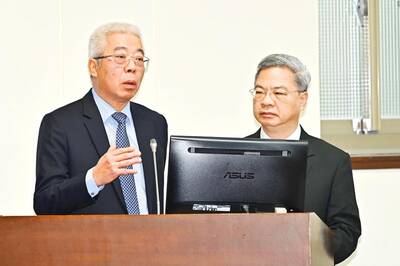
Taiwan has arranged for about 8 million barrels of crude oil, or about one-third of its monthly needs, to be shipped from the Red Sea this month to bypass the Strait of Hormuz and ease domestic supply pressures, CPC Corp, Taiwan (CPC, 台灣中油) said yesterday. The state-run oil company has worked with Middle Eastern suppliers to secure routes other than the Strait of Hormuz, through which about 20 percent of the world’s oil and liquefied natural gas typically passes, CPC chairman Fang Jeng-zen (方振仁) said at a meeting of the legislature’s Economics Committee in Taipei. Suppliers in Saudi Arabia have indicated they
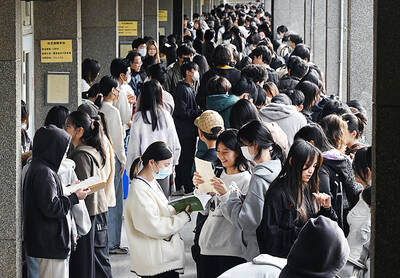
A global survey showed that 60 percent of Taiwanese had attained higher education, second only to Canada, the Ministry of the Interior said. Taiwan easily surpassed the global average of 43 percent and ranked ahead of major economies, including Japan, South Korea and the US, data from the Organisation for Economic Co-operation and Development (OECD) for 2024 showed. Taiwan has a high literacy rate, data released by the ministry showed. As of the end of last year, Taiwan had 20.617 million people aged 15 or older, accounting for 88.5 percent of the total population, with a literacy rate of 99.4 percent, the data
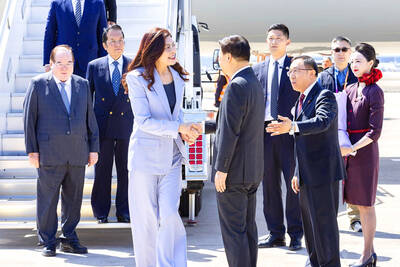
CCP ‘PAWN’? Beijing could use the KMT chairwoman’s visit to signal to the world that many people in Taiwan support the ‘one China’ principle, an academic said Chinese Nationalist Party (KMT) Chairwoman Cheng Li-wun (鄭麗文) yesterday arrived in China for a “peace” mission and potential meeting with Chinese President Xi Jinping (習近平), while a Taiwanese minister detailed the number of Chinese warships currently deployed around the nation. Cheng is visiting at a time of increased Chinese military pressure on Taiwan, as the opposition-dominated Legislative Yuan stalls a government plan for US$40 billion in extra defense spending. Speaking to reporters before going to the airport, Cheng said she was going on a “historic journey for peace,” but added that some people felt uneasy about her trip. “If you truly love Taiwan,

NEW LOW: The council in 2024 based predictions on a pessimistic estimate for the nation’s total fertility rate of 0.84, but last year that rate was 0.69, 17 percent lower An expected National Development Council (NDC) report expects the nation’s population to drop below 12 million by 2065, with the old-age dependency ratio to top 100 percent sooner than 2070, sources said yesterday. The council is slated to release its latest population projections in August, using an ultra-low fertility model, the sources said. The previous report projected that Taiwan’s population would fall to 14.37 million by 2070, but based on a new estimate of the total fertility rate (TFR) — the average number of children born to a woman over her lifetime — the population is expected to reach 12 million by


 RSS
RSS