


Leaked US cables cast doubt on statements made by President Ma Ying-jeou’s (馬英九) administration that Taiwan’s presence at the World Health Assembly (WHA) was a result of direct communication with the WHO and that Taiwan’s designation as “Chinese Taipei” was acceptable and did not infringe on Taiwanese sovereignty.
Instead, the cables released by WikiLeaks suggest Beijing’s heavy involvement in the matter, with its insistence that Taiwan’s international participation be based on the “one China” principle.
For three consecutive years since 2009, Taiwan has taken part in the annual WHA meeting as an observer under the name “Chinese Taipei.” While Ma’s government has hailed the participation in the WHA as a major diplomatic achievement, it has been clouded by accusations that it has eroded Taiwan’s sovereignty.
Recent evidence came in May following the leak of an internal memo from the WHO, in which it said Taiwan is a “province of China” pursuant to an agreement the WHO signed with Beijing. The Ma administration sent a letter of protest in May, but to date the WHO has yet to respond.
US cables released by WikiLeaks recently provide more insight into what it took for Taiwan to be able to take part in WHA meetings.
In a confidential cable dated Dec. 24, 2008, the US embassy in Beijing quoted Taiwan Affairs Office Minister Wang Yi (王毅) as saying that “Taiwan’s international space, particularly [its] participation in the WHA, should be worked out on the basis of the ‘one China’ principle and through direct consultations between the Mainland and Taiwan.”
Wang was quoted in the cable as saying that Taiwan’s attendance at the WHA must rely on “cross-strait consultation” to find the “most suitable arrangement.”
Earlier the same year, Wang told visiting US academics on Oct. 31 that WHO Director-General Margaret Chan (陳馮富珍) could invite Taiwan to “participate” in the WHA meeting, but this would not give Taiwan “legal observer” status, according to a cable dated Dec. 5, 2008.
“Any progress that could be made on the WHO/WHA issue by next May in the absence of direct negotiations between China and Taiwan would be something short of formal observership,” the same cable quoted Chinese officials as saying.
In another cable dated March 24, 2009, the US embassy in Beijing said that its contacts were unanimous in predicting that there would be “a new arrangement” allowing Taiwan to participate in the WHA in May after Wang said in a CCTV interview on March 11 that he was “cautiously optimistic” about Taiwan’s participation in the UN agency because both sides now agreed to “oppose Taiwan independence” and uphold the “[19]92 consensus.”
Despite the fact that the WHA issue had not been put on the table in cross-strait negotiations shortly after Ma took office in May 2008, several cables issued by the American Institute in Taiwan (AIT) showed that many Chinese Nationalist Party (KMT) figures brought up the subject with Chinese officials.
According to a cable dated Dec. 24, 2008, then-KMT vice chairman and Legislator John Chiang (蔣孝嚴) told the AIT that former vice president and KMT chairman Lien Chan (連戰) had raised the WHO issue in his meeting with Chinese President Hu Jintao (胡錦濤) at the APEC meeting in November in Peru.
Lien was then Ma’s envoy to the APEC summit.
Hu responded by suggesting “Taiwan send someone to talk to PRC [People’s Republic of China] officials” and pointed to the KMT-Chinese Communist Party (CCP) forum, the cable said, also quoting Chiang as offering AIT officers a readout of a recording of the Dec. 20-21 KMT-CCP forum in Shanghai.
Chiang also told the AIT that he had discussed the issue with Wang at the forum and he was confident that Taiwan would be able to attend the WHA meeting in May 2009 in some “mutually acceptable status,” the cable showed.
Meanwhile, a cable dated Dec. 22, 2008, showed that the AIT noted that Ma tried to “lower public expectations” about the country’s participation in the WHA when he gave an interview with the Washington Post on Dec. 9, in which he said that “Taiwan just wanted to attend the WHA meeting. We are not asking for anything more.”
“This seemed a step back from Ma’s May statement that his goal was to secure WHO observer status under an appropriate name,” the AIT said in the cable.
Another AIT cable dated May 8, 2009, showed that then-AIT director Stephen Young was told by Ma on May 7 that Taiwan plans to focus on participation in WHA and WHO activities for the present and not to push to join other international organizations.
Taiwan will proceed cautiously because Beijing is worried the WHA observership breakthrough could produce a domino effect, the AIT said in the cable.
During the meeting, Ma attributed Taiwan’s success in joining the WHA to three factors. First, domestic efforts by the Democratic Progressive Party and past health ministers; second, senior KMT leaders, including Lien and former KMT chairman Wu Po-hsiung (吳伯雄), who mentioned the issue to Hu; and third, international support from the US, EU, Japan and others, the cable said.
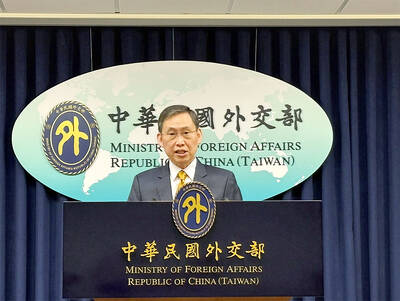
A Ministry of Foreign Affairs official yesterday said that a delegation that visited China for an APEC meeting did not receive any kind of treatment that downgraded Taiwan’s sovereignty. Department of International Organizations Director-General Jonathan Sun (孫儉元) said that he and a group of ministry officials visited Shenzhen, China, to attend the APEC Informal Senior Officials’ Meeting last month. The trip went “smoothly and safely” for all Taiwanese delegates, as the Chinese side arranged the trip in accordance with long-standing practices, Sun said at the ministry’s weekly briefing. The Taiwanese group did not encounter any political suppression, he said. Sun made the remarks when
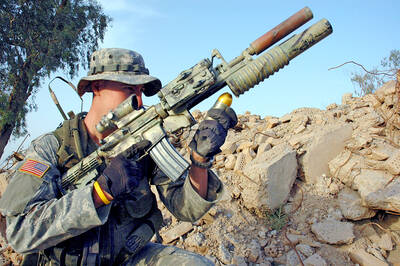
PREPAREDNESS: Given the difficulty of importing ammunition during wartime, the Ministry of National Defense said it would prioritize ‘coproduction’ partnerships A newly formed unit of the Marine Corps tasked with land-based security operations has recently replaced its aging, domestically produced rifles with more advanced, US-made M4A1 rifles, a source said yesterday. The unnamed source familiar with the matter said the First Security Battalion of the Marine Corps’ Air Defense and Base Guard Group has replaced its older T65K2 rifles, which have been in service since the late 1980s, with the newly received M4A1s. The source did not say exactly when the upgrade took place or how many M4A1s were issued to the battalion. The confirmation came after Chinese-language media reported
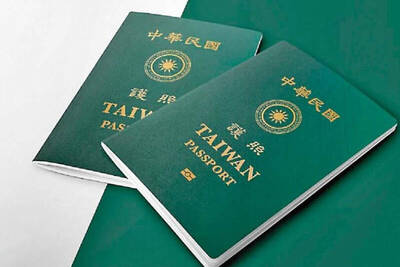
The Taiwanese passport ranked 33rd in a global listing of passports by convenience this month, rising three places from last month’s ranking, but matching its position in January last year. The Henley Passport Index, an international ranking of passports by the number of designations its holder can travel to without a visa, showed that the Taiwan passport enables holders to travel to 139 countries and territories without a visa. Singapore’s passport was ranked the most powerful with visa-free access to 192 destinations out of 227, according to the index published on Tuesday by UK-based migration investment consultancy firm Henley and Partners. Japan’s and
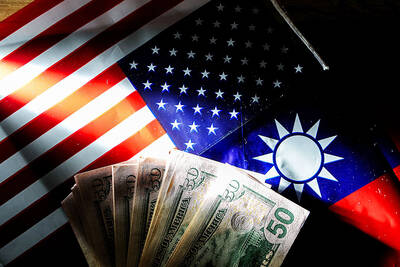
BROAD AGREEMENT: The two are nearing a trade deal to reduce Taiwan’s tariff to 15% and a commitment for TSMC to build five more fabs, a ‘New York Times’ report said Taiwan and the US have reached a broad consensus on a trade deal, the Executive Yuan’s Office of Trade Negotiations said yesterday, after a report said that Washington is set to reduce Taiwan’s tariff rate to 15 percent. The New York Times on Monday reported that the two nations are nearing a trade deal to reduce Taiwan’s tariff rate to 15 percent and commit Taiwan Semiconductor Manufacturing Co (TSMC, 台積電) to building at least five more facilities in the US. “The agreement, which has been under negotiation for months, is being legally scrubbed and could be announced this month,” the paper said,


 RSS
RSS