


The shocking scale of sexual and physical abuse in educational institutions in Ireland run by the Catholic Church was revealed on Wednesday in a report describing how thousands of children were raped, abused and exploited by the religious brothers and nuns who were supposed to look after them.
The 2,600-page report by Ireland’s Commission to Inquire Into Child Abuse found that rape was “endemic” for decades at more than 250 Irish Catholic care institutions from the 1930s to the 1990s, and that the Church in Ireland had protected pedophiles in its ranks from arrest.
“A climate of fear, created by pervasive, excessive and arbitrary punishment, permeated most of the institutions and all those run for boys. Children lived with the daily terror of not knowing where the next beating was coming from,” it said.
Children in industrial schools and reformatories were treated like convicts and slaves, it said. Rape was particularly common in boys homes and industrial schools run by the Christian Brothers.
John Kelly of the group the Irish Survivors of Child Abuse (SOCA) described the failure of the report to recommend criminal prosecutions as a complete whitewash.
The report confirmed allegations from thousands of former students at the institutions. The Ryan Commission said that beatings in institutions run by both priests and nuns were commonplace.
It also criticized the failure of the Irish state, most notably the Department of Education, over allowing the abuse and exploitation to continue for decades.
The department aided this culture “through infrequent, toothless inspectors” that always deferred to the Church’s authority, the report said.
The commission proposed 21 ways the Irish government could recognize past wrongs, including building a permanent memorial, providing counseling and education to victims and improving child protection services.
Meanwhile, the new leader of Catholics in England and Wales provoked outrage after describing members of the clergy who admitted to abusing children as courageous for facing up to their past.
In an interview broadcast on Wednesday night, the Most Reverend Vincent Nichols said of the report: “It’s very distressing and very disturbing and my heart goes out today first of all to those people who will find that their stories are now told in public.”
“Secondly, I think of those in religious orders and some of the clergy in Dublin who have to face these facts from their past, which instinctively and quite naturally they’d rather not look at. That takes courage, and also we shouldn’t forget that this account today will also overshadow all of the good that they also did,” he said.

PROVOCATIVE: Chinese Deputy Ambassador to the UN Sun Lei accused Japan of sending military vessels to deliberately provoke tensions in the Taiwan Strait China denounced remarks by Japan and the EU about the South China Sea at a UN Security Council meeting on Monday, and accused Tokyo of provocative behavior in the Taiwan Strait and planning military expansion. Ayano Kunimitsu, a Japanese vice foreign minister, told the Council meeting on maritime security that Tokyo was seriously concerned about the situation in the East China and South China seas, and reiterated Japan’s opposition to any attempt to change the “status quo” by force, and obstruction of freedom of navigation and overflight. Stavros Lambrinidis, head of the EU delegation to the UN, also highlighted South China Sea

SILENCING CRITICS: In addition to blocking Taiwan, China aimed to prevent rights activists from speaking out against authoritarian states, a Cabinet department said The Ministry of Foreign Affairs (MOFA) yesterday condemned transnational repression by Beijing after RightsCon, a major digital human rights conference scheduled to be held in Zambia this week, was abruptly canceled due to Chinese pressure over Taiwanese participation. This year’s RightsCon, the world’s largest conference discussing issues “at the intersection of human rights and technology,” was scheduled to take place from tomorrow to Friday in Lusaka, and expected to draw 2,600 in-person attendees from 150 countries, along with 1,100 online participants. However, organizers were forced to cancel the event due to behind-the-scenes pressure from China, the ministry said, expressing its “strongest condemnation”
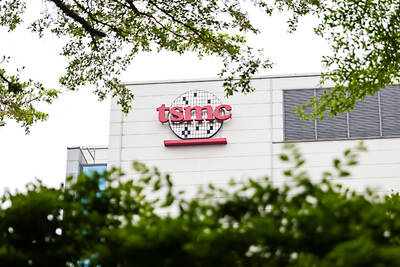
Taiwan Semiconductor Manufacturing Co (TSMC, 台積電), the world’s largest contract chipmaker, said it expects its 2-nanometer (2nm) chip capacity to grow at a compound annual rate of 70 percent from this year to 2028. The projection comes as five fabs begin volume production of 2-nanometer chips this year — two in Hsinchu and three in Kaohsiung — TSMC senior vice president and deputy cochief operating officer Cliff Hou (侯永清) said at the company’s annual technology symposium in Silicon Valley, California, last week. Output in the first year of 2-nanometer production, which began in the fourth quarter of last year, is expected to
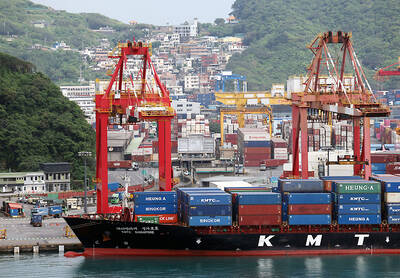
Taiwan’s economy grew far faster than expected in the first quarter, as booming demand for artificial intelligence (AI) applications drove a surge in exports, spilling over into investment and consumption, the Directorate-General of Budget, Accounting and Statistics (DGBAS) said yesterday. GDP growth was 13.69 percent year-on-year during the January-to-March period, beating the DGBAS’ February forecast by 2.23 percentage points and marking the most robust growth in nearly four decades, DGBAS senior official Chiang Hsin-yi (江心怡) told a news conference in Taipei. The result was powered by exports, which remain the backbone of Taiwan’s economy, Chiang said. Outbound shipments jumped 51.12 percent year-on-year to


 RSS
RSS