


Health workers clad in masks began culling thousands of chickens at a marketplace in Hong Kong yesterday, a day after authorities raised the bird flu alert level to “serious” following an outbreak at a farm.
More than 60,000 birds were culled.
The outbreak near the border with China was the city’s first in five years despite mass vaccination of the birds, prompting concern that the virus might have mutated.
“A vaccine’s effectiveness today will not be the same like what it was five years ago. So this time, could it be that the vaccine may not be as effective in fighting the virus? This possibility remains,” said Ho Pak-leung (何柏良), a microbiologist at the University of Hong Kong.
Hong Kong Health Secretary York Chow (周一嶽) said yesterday morning that the outbreak was “under control.”
Inspectors had visited all local farms in the area and found no further signs of infection, he said.
Tests were meanwhile continuing yesterday to establish whether the birds infected in the new outbreak were infected by the H5N1 strain of bird flu that more easily jumps the species barrier to humans.
Hong Kong uses a Dutch-made vaccine to protect chickens against the virus, whereas some experts say the city should switch to a different vaccine used in China.
“We have to rely on scientific experts’ opinion on which vaccine we should use and how we should use it,” Chow told reporters.
Workers clad in masks, white medical suits and black rubber gloves began the culling in a wholesale market yesterday. Culling also continued for the second day in areas within a 3km radius of the infected farm.
Hong Kong health authorities raised the city’s bird flu alert level to “serious” on Tuesday after the H5 virus killed dozens of chickens at a farm.
Laboratories in the city are trying to determine the precise identity of the virus. A leading expert said it was likely to turn out to be the highly pathogenic H5N1 strain, which turns up regularly in flocks in Asia, parts of Europe and Africa.
Although H5N1 is mainly a disease among birds, it may mutate into a form that spreads easily among people.
EUROPEAN TARGETS: The planned Munich center would support TSMC’s European customers to design high-performance, energy-efficient chips, an executive said Taiwan Semiconductor Manufacturing Co (TSMC, 台積電), the world’s largest contract chipmaker, yesterday said that it plans to launch a new research-and-development (R&D) center in Munich, Germany, next quarter to assist customers with chip design. TSMC Europe president Paul de Bot made the announcement during a technology symposium in Amsterdam on Tuesday, the chipmaker said. The new Munich center would be the firm’s first chip designing center in Europe, it said. The chipmaker has set up a major R&D center at its base of operations in Hsinchu and plans to create a new one in the US to provide services for major US customers,
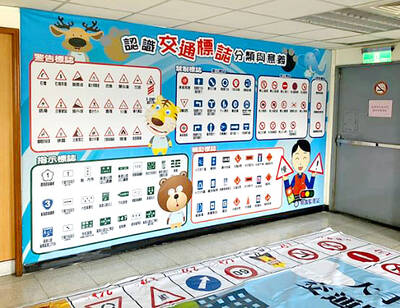
The Ministry of Transportation and Communications yesterday said that it would redesign the written portion of the driver’s license exam to make it more rigorous. “We hope that the exam can assess drivers’ understanding of traffic rules, particularly those who take the driver’s license test for the first time. In the past, drivers only needed to cram a book of test questions to pass the written exam,” Minister of Transportation and Communications Chen Shih-kai (陳世凱) told a news conference at the Taoyuan Motor Vehicle Office. “In the future, they would not be able to pass the test unless they study traffic regulations

‘A SURVIVAL QUESTION’: US officials have been urging the opposition KMT and TPP not to block defense spending, especially the special defense budget, an official said The US plans to ramp up weapons sales to Taiwan to a level exceeding US President Donald Trump’s first term as part of an effort to deter China as it intensifies military pressure on the nation, two US officials said on condition of anonymity. If US arms sales do accelerate, it could ease worries about the extent of Trump’s commitment to Taiwan. It would also add new friction to the tense US-China relationship. The officials said they expect US approvals for weapons sales to Taiwan over the next four years to surpass those in Trump’s first term, with one of them saying

‘COMING MENACINGLY’: The CDC advised wearing a mask when visiting hospitals or long-term care centers, on public transportation and in crowded indoor venues Hospital visits for COVID-19 last week increased by 113 percent to 41,402, the Centers for Disease Control (CDC) said yesterday, as it encouraged people to wear a mask in three public settings to prevent infection. CDC Epidemic Intelligence Center Deputy Director Lee Chia-lin (李佳琳) said weekly hospital visits for COVID-19 have been increasing for seven consecutive weeks, and 102 severe COVID-19 cases and 19 deaths were confirmed last week, both the highest weekly numbers this year. CDC physician Lee Tsung-han (李宗翰) said the youngest person hospitalized due to the disease this year was reported last week, a one-month-old baby, who does not


 RSS
RSS