

Ballot-counting was under way yesterday in Sierra Leone's first presidential election since UN peacekeepers withdrew two years ago -- a vote seen as a test of the country's transition to democratic rule.
Many Sierra Leoneans see the poll as a chance to show that they have finally emerged from a legacy of coups and a decade-long, diamond-fueled war as a multiparty state that can transfer power peacefully.
Seven candidates are vying to succeed Sierra Leonean President Ahmed Tejan Kabbah. Term limits prevent the 75-year-old leader from running for a third five-year term.
The head of Sierra Leone's electoral commission, Christina Thorpe, said voting finished on time and without incident on Saturday at most polling centers, despite rain and long lines.
Still, there were disturbances.
Late on Saturday, police used tear gas to disperse crowds of youths setting up makeshift roadblocks in a part of eastern Freetown. It was unclear what sparked the incident or whether it was related to the polling.
Thorpe also noted "a small number of violent incidents" in western Freetown, and said polling was delayed in one southern town because of lost ballot boxes.
Results from Saturday's presidential and parliamentary poll will be released progressively, with final tallies within 12 days of voting.
The most crucial period for the war-battered nation may come months down the road, when the public begins expecting real change from a new government. Despite progress since the 10-year war ended in 2002, analysts say many of the root problems that caused the conflict -- corruption, poverty and unemployment -- remain.
"When the euphoria dies down, the public will want to see real change. ... If the new government doesn't perform as people demand, the patience people have shown could run out," said Carolyn Norris, the West Africa director for International Crisis Group, a Brussels-based think tank.
Vice President and ruling party candidate Solomon Berewa, 69, is considered the front-runner. His biggest challenger is 54-year-old opposition party chief and businessman Ernest Bai Koroma. Also running is Charles Francis Margai, 62, a lawyer and former minister who heads a party that broke away from the ruling coalition 15 months ago.
Saturday's victor must take more than 55 percent of the vote to avoid a run-off between the top two finishers.
In other races, some 572 contenders vied for 112 parliamentary seats. About 2.6 million people are registered to vote.
Sierra Leone has held two elections since the war ended: a presidential vote in 2002 and municipal elections two years later.

Taiwan, which accounts for more than half of the global outsourced semiconductor assembly and testing market, is well-positioned to develop copackaged optics (CPO) and manufacture precision silicon photonics chips, the Ministry of Economic Affairs said yesterday. Silicon photonics are emerging as a mainstream optical communications technology and is seen as key to overcoming bottlenecks in AI computing power. The technology is a key project under the government’s New 10 Major AI Infrastructure Projects, with industry, government, academia and research institutions working to overcome critical technological hurdles and build a self-reliant silicon photonics supply chain, the ministry said. Nvidia Corp in March invested US$4
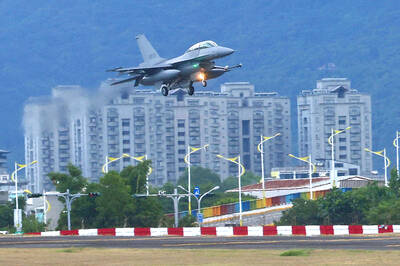
The air force plans to build 26 more hardened aircraft shelters as the number of F-16Vs stationed along Taiwan’s east coast is expected to reach 120 when the final shipment of 66 jets procured from the US arrives. The incoming jets would be stationed at Chihhang Air Base in Taitung County, augmenting the F-16V Block 20s operated by the 5th Tactical Fighter Wing in Hualien County, officials said yesterday. The air force plans to allocate more than NT$6.88 billion (US$218.1 million) from next year to 2031 to build the shelters in Hualien and Taitung as part of the implementation of a “one
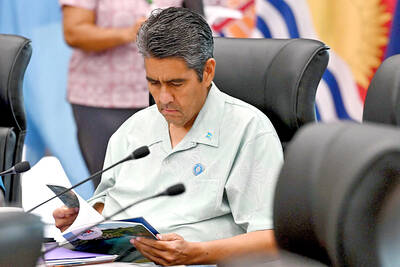
Palau’s president yesterday called for a “unified” Pacific response to a missile test by China in July, while Taiwan and its Pacific allies a day earlier at the Pacific Islands Forum (PIF) reaffirmed their commitment to peace, stability and prosperity. China gave only a handful of nations short notice before test-firing an intercontinental ballistic missile in July, sparking condemnation from several Pacific leaders. The 18-member PIF being held in Palau was expected to release a communique after press time last night, with a formal response to the test possibly included. Palau, which invited Taiwan to attend sideline events as an aid partner, urged
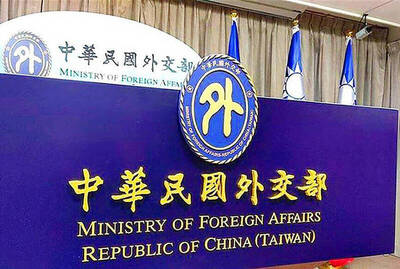
China’s continued efforts to inject geopolitical rivalry into the region and disrupt Pacific nations’ discussions of regional issues warrant greater international attention, a foreign affairs official said yesterday. Minister of Foreign Affairs Lin Chia-lung (林佳龍) last week led a delegation to diplomatic ally Palau to attend events related to the 55th Pacific Islands Forum (PIF) summit. However, the absence of some member-state leaders has been interpreted by some people as a sign of fracturing in Pacific unity. Thirteen PIF members were represented by their heads of state or government, while Fiji, New Caledonia, Vanuatu and Samoa sent ministerial-level representatives, a diplomatic official


 RSS
RSS