

The Taipei City Government yesterday declared the 70-year-old "Black Beauty Night Club" a historical site, making it the second municipal location with ties to the sex industry to be recognized for its cultural and historical significance.
The "Black Beauty Night Club," which was built in the 1930s at Nanjing W Road and Yanping N Road, follows on the heels of the Wen-meng Building on Guisui Street, which formerly housed a brothel.
Taipei City Department of Cultural Affairs Commissioner Lee Yong-ping (李永萍) said that cultural experts from the department's advisory committee had agreed to list the building as a historical site late last month.
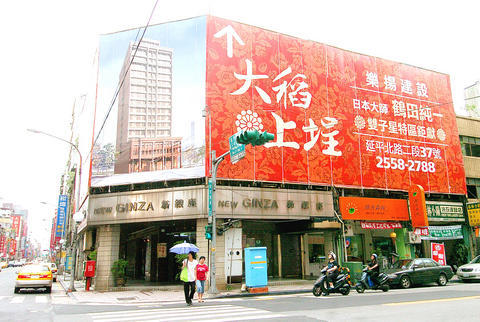
PHOTO: WANG MIN-WEI, TAIPEI TIMES
The windows and pillars of the two-floor building preserved the architectural style of the late Qing dynasty and early Japanese colonial period, Lee said.
The building's cultural significance lies in it having witnessed the development of the city's sex industry as well as having been a gathering place for local celebrities, especially around the time of the 228 Incident.
"The place witnessed part of [the nation's] history. We should not write off its significance simply because it was a night club which offered sexual services," Lee said at Taipei City Hall yesterday.
Lee said that the committee began to review the cultural and historical significance of the building after some residents recommended the site and its significance to the department, and formally listed it as a historical site on May 28.
While most of the old buildings in the area have been remodeled, most of night club's original structure has been preserved, despite it being closed for many years.
Lee said that the department would assist the owner in tearing down the unlicensed third floor and billboard outside the building, and seek to revive the original style of the building.

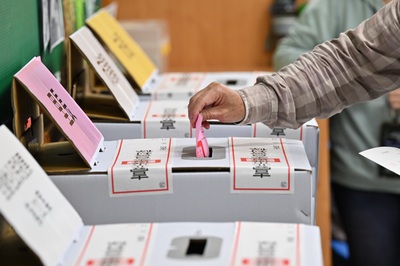
Preliminary voter turnout in Taipei for today’s nine-in-one local elections reached 68.85 percent, surpassing the 67.7 percent recorded in the 2022 mayoral race, according to initial tallies reported by district offices to the Taipei Department of Civil Affairs. Among the capital’s 12 administrative districts, Nangang District (南港) posted the highest preliminary turnout at 72.19 percent, while Wanhua District (萬華) recorded the lowest at 65.65 percent, the department said. Turnout climbed steadily throughout the afternoon ahead of the 4pm close of polls in the closely watched Taipei mayoral race. Taiwanese went to the polls today to choose more than 11,000 local government positions across
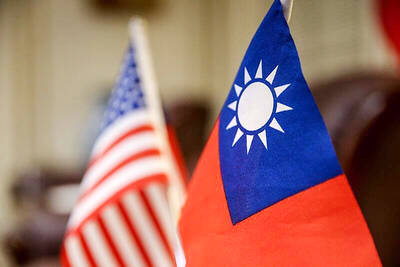
‘NOT FINAL’: US President Donald Trump proposed new tariffs on trading powers, including Taiwan, but signed agreements would still hold sway, a source said Tariff rates proposed by Washington under a Section 301 investigation into structural overcapacity would be procedural recommendations rather than final decisions, and Taiwan’s final rate is expected to revert to the agreed 15 percent non-stacked cap, a source familiar with Taiwan-US trade affairs said yesterday. US President Donald Trump later yesterday proposed new tariffs on major trading powers, including China. His administration proposed levies on 14 trading partners to combat structural excess industrial capacity, with the highest rate of 20 percent to hit China, which Washington accuses of flooding world markets with cheap exports of everything from steel to electric vehicles and
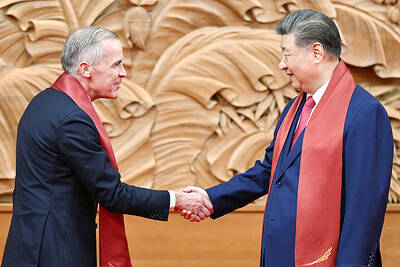
CALL FOR COLLABORATION: ‘We have a high respect of Prime Minister [Mark] Carney’s vision, and we want to be part of this vision,’ the deputy minister of foreign affairs said Canadian Prime Minister Mark Carney risks exposing Canada to the very economic coercion he has cautioned against by deepening trade ties with China, Deputy Minister of Foreign Affairs Chen Ming-chi (陳明祺) said on Saturday, adding that Taiwan has learned the hard way that dependence on Beijing comes with consequences. “We worry. We worry,” Chen said in an interview at the Halifax International Security Forum in Nova Scotia when asked about Carney’s efforts to improve relations with China. Carney has said that major powers are using economic integration as a weapon, citing US tariffs and China’s restrictions on critical minerals. He

LONG-ARM TACTICS: China’s new law allows authorities to label anyone who does not promote unification as ‘undermining ethnic unity,’ the Mainland Affairs Council said China’s Ethnic Unity and Progress Promotion Law disguises unification as ethnic unity, escalating the Chinese Communist Party’s (CCP) legal warfare against Taiwan from “opposing independence” to “forcing unification,” Mainland Affairs Council Minister Chiu Chui-cheng (邱垂正) said yesterday. The Tibet Religious Foundation of His Holiness the Dalai Lama yesterday held a forum “addressing the adverse impact of the People’s Republic of China’s Ethnic Unity and Progress Promotion Law and strategies for response.” Chiu in his speech said the law, that was implemented on July 1 is not only a set of legal regulations, but also a crucial part of the “long-arm


 RSS