


A day after radical Shiite cleric Moqtada al-Sadr resurfaced to end nearly four months in hiding and demand US troops leave Iraq, US forces raided his Sadr City stronghold in Baghdad and killed five suspected militia fighters in air strikes, the US military said in a statement issued yesterday.
The military said US and Iraqi forces called in the air strikes after a raid in which they captured a "suspected terrorist cell leader."
The statement said the captured man was "the suspected leader in a secret cell terrorist network known for facilitating the transport of weapons and explosively formed penetrators, or EFPs, from Iran to Iraq, as well as bringing militants from Iraq to Iran for terrorist training."
EFPs are deadly roadside bombs that hurl a fist-size slug of molten copper that penetrates armor, a weapon that has been highly effective against US forces over the past year.
The militia fighters were killed in air strikes on nine cars that were seen positioning themselves to attack US forces after the raid, the military said.
Al-Sadr's reappearance in the fourth month of the US-Iraqi security crackdown on Baghdad and environs was expected to complicate the mission to crack down on violence and broker political compromise in the country.
Hours after the cleric spoke at a key Shiite shrine in Kufa, about 160km south of Baghdad, the notorious leader of al-Sadr's Mehdi Army militia in the city of Basra was killed in a shootout as British and Iraq troops tried to arrest him, police and the British military said, further inflaming tensions in the Shiite areas of southern Iraq.
The US military also announced the deaths of eight US soldiers and one Marine, putting this month on pace to be one of the deadliest months for US forces here in years.
Al-Sadr went underground -- reportedly in Iran -- at the start of the US-led security crackdown on Baghdad 14 weeks ago. He had also ordered his militia off the streets to prevent conflict with US forces.
His return to the Shiite holy city of Najaf appeared to be an effort by the 33-year-old firebrand cleric to regain control over his militia, which had begun fragmenting, and to take advantage of the illness of a Shiite rival. There had also been some indication that his absence from the national arena was costing him political support.
Al-Sadr drove in a long motorcade from Najaf to its sister city of Kufa to deliver an anti-US sermon to 6,000 chanting supporters at the main mosque.
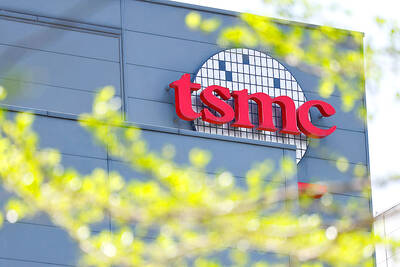
EUROPEAN TARGETS: The planned Munich center would support TSMC’s European customers to design high-performance, energy-efficient chips, an executive said Taiwan Semiconductor Manufacturing Co (TSMC, 台積電), the world’s largest contract chipmaker, yesterday said that it plans to launch a new research-and-development (R&D) center in Munich, Germany, next quarter to assist customers with chip design. TSMC Europe president Paul de Bot made the announcement during a technology symposium in Amsterdam on Tuesday, the chipmaker said. The new Munich center would be the firm’s first chip designing center in Europe, it said. The chipmaker has set up a major R&D center at its base of operations in Hsinchu and plans to create a new one in the US to provide services for major US customers,
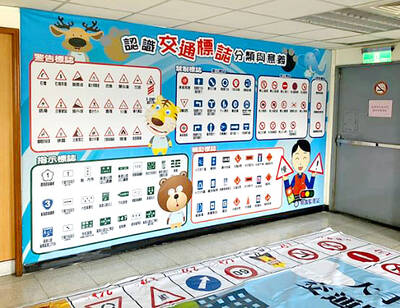
The Ministry of Transportation and Communications yesterday said that it would redesign the written portion of the driver’s license exam to make it more rigorous. “We hope that the exam can assess drivers’ understanding of traffic rules, particularly those who take the driver’s license test for the first time. In the past, drivers only needed to cram a book of test questions to pass the written exam,” Minister of Transportation and Communications Chen Shih-kai (陳世凱) told a news conference at the Taoyuan Motor Vehicle Office. “In the future, they would not be able to pass the test unless they study traffic regulations
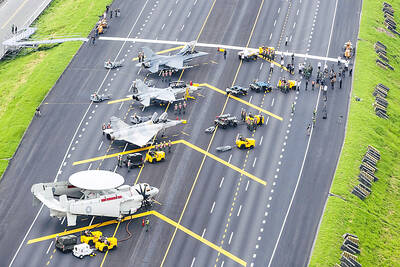
‘A SURVIVAL QUESTION’: US officials have been urging the opposition KMT and TPP not to block defense spending, especially the special defense budget, an official said The US plans to ramp up weapons sales to Taiwan to a level exceeding US President Donald Trump’s first term as part of an effort to deter China as it intensifies military pressure on the nation, two US officials said on condition of anonymity. If US arms sales do accelerate, it could ease worries about the extent of Trump’s commitment to Taiwan. It would also add new friction to the tense US-China relationship. The officials said they expect US approvals for weapons sales to Taiwan over the next four years to surpass those in Trump’s first term, with one of them saying
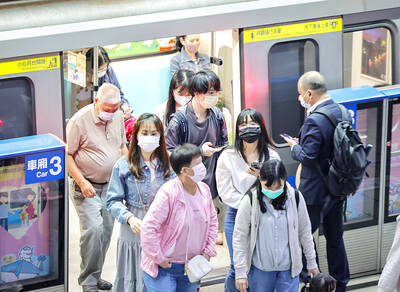
‘COMING MENACINGLY’: The CDC advised wearing a mask when visiting hospitals or long-term care centers, on public transportation and in crowded indoor venues Hospital visits for COVID-19 last week increased by 113 percent to 41,402, the Centers for Disease Control (CDC) said yesterday, as it encouraged people to wear a mask in three public settings to prevent infection. CDC Epidemic Intelligence Center Deputy Director Lee Chia-lin (李佳琳) said weekly hospital visits for COVID-19 have been increasing for seven consecutive weeks, and 102 severe COVID-19 cases and 19 deaths were confirmed last week, both the highest weekly numbers this year. CDC physician Lee Tsung-han (李宗翰) said the youngest person hospitalized due to the disease this year was reported last week, a one-month-old baby, who does not


 RSS
RSS