


Telling others about their traumatic experiences is a healing process for the families of victims of the 228 Incident, Nobel Peace Prize laureate Desmond Tutu said yesterday.
Tutu, the former primate of the Anglican Church of Southern Africa, made the remarks when visiting Machangding (
The 228 Incident was an uprising against the Chinese Nationalist Party (KMT) administration under dictator Chiang Kai-shek (
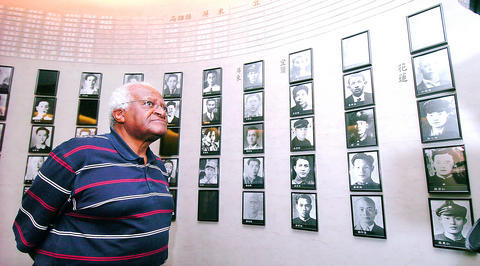
PHOTO: LIU HSIN-DE, TAIPEI TIMES
Machangding Memorial Park is where the KMT executed political prisoners during the White Terror era in the 1950s.
Tutu is visiting the country at the invitation of the Taiwan Foundation for Democracy.
When meeting the family members of the 288 victims, Tutu said that he had not come to Taiwan to educate people on how to solve problems caused by the tragedy. He said he wanted to hear stories from the incident and advised that facing the truth humbly could be a way of dealing with it.
Establishing the Truth and Reconciliation Commission was one way that South Africa was able to cope with its racial persecution, he said. Understanding a tragic past can help people face trauma, he added.
"I think it is good therapy for the family members to tell their stories. And finding out the truth from those stories is a key to heal the wound," Tutu said, adding that the government has the responsibility of finding the truth, which is an essential element of reconciliation and forgiveness.
Tutu said that he has seen many South Africans who have suffered from apartheid that are filled with anger, wanting to take revenge. But the sufferers in Taiwan look genial and peaceful.
"I hope [the 228 victims] know that their unfortunate experiences have brought democracy, human rights and freedom to today's Taiwan," he said.
Boraine said that Taiwan and South Africa have similar tragic histories, but they both have just and peaceful voices. He also stressed that pursuing truth can bring hope to people, although it is not an easy path.
"Truth is just like herbal medicine. It tastes bitter but it can heal the past," Boraine said.
Last night, Tutu met former Democratic Progressive Party (DPP) chairman Lin I-hsiung (
Lin's mother and twin daughters were murdered on Feb. 28, 1980, while he was in jail for his involvement in the Kaohsiung Incident in December 1979, a pro-human rights rally that turned violent. The murders remain unsolved.
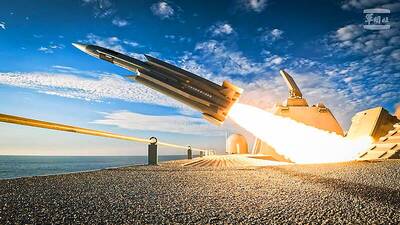
DETERRENCE: With 1,000 indigenous Hsiung Feng II and III missiles and 400 Harpoon missiles, the nation would boast the highest anti-ship missile density in the world With Taiwan wrapping up mass production of Hsiung Feng II and III missiles by December and an influx of Harpoon missiles from the US, Taiwan would have the highest density of anti-ship missiles in the world, a source said yesterday. Taiwan is to wrap up mass production of the indigenous anti-ship missiles by the end of year, as the Chungshan Institute of Science and Technology has been meeting production targets ahead of schedule, a defense official with knowledge of the matter said. Combined with the 400 Harpoon anti-ship missiles Taiwan expects to receive from the US by 2028, the nation would have

POSSIBILITIES EMERGE: With Taiwan’s victory and Japan’s narrow win over Australia, Taiwan now have a chance to advance if South Korea also beat the Aussies Taiwan has high hopes that the national baseball team would advance to the World Baseball Classic (WBC) quarter-finals after clinching a crucial 5-4 victory over South Korea in a nail-biting extra-inning game at the Tokyo Dome yesterday. Boosted by three home runs — two solo shots by Yu Chang (張育成) and Cheng Tsung-che (鄭宗哲) and a two-run homer by Stuart Fairchild — the triumph gave Taiwan a much-needed second victory in the five-team Pool C, where only the top two finishers would advance to the knockout stage in Miami, Florida. Entering extra innings with the game tied at four apiece, Taiwan scored
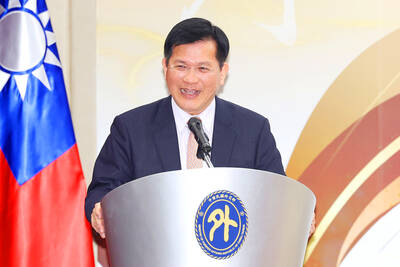
MISSION OF PEACE: The foreign minister urged Beijing to respect Taiwan’s existence as an independent nation, and work together to ensure peace and stability in the region Minister of Foreign Affairs Lin Chia-lung (林佳龍) yesterday rejected Chinese Minister of Foreign Affairs Wang Yi’s (王毅) comments about Taiwan, criticizing China as a “troublemaker” in the international community and a disruptor of cross-strait peace. Speaking at a news conference on the sidelines of the Chinese National People’s Congress, Wang said that Taiwan has always been a territory of China and that it would be impossible for it to become its own country. The “return” of Taiwan to China was the natural outcome of the Chinese people’s resistance against Japan in World War II, and that any pursuit of independence was “doomed

‘UNWAVERING FRIENDSHIP’: A representative of a Japanese group that co-organized a memorial, said he hopes Japanese never forget Taiwan’s kindness President William Lai (賴清德) yesterday marked the 15th anniversary of the Tohoku earthquake and tsunami, urging continued cooperation between Taiwan and Japan on disaster prevention and humanitarian assistance. Lai wrote on social media that Taiwan and Japan have always helped each other in the aftermath of major disasters. The magnitude 9 earthquake struck northeastern Japan on March 11, 2011, triggering a massive tsunami that claimed more than 19,000 lives, according to data from Japanese authorities. Following the disaster, Taiwan donated more than US$240 million in aid, making it one of the largest contributors of financial assistance to Japan. In addition to cash donations and


 RSS
RSS