


After coming under fire for denying a Chinese-American infant a US$25,000 prize in a New Year's baby contest because her mother was not a legal US resident, the Toys "R" Us Co said that it had reversed its decision.
The company said on Saturday evening that it would award each of the three babies in the grand prize pool of the "First Baby of the Year Sweepstakes" a US$25,000 savings bond. Toys "R" Us is the parent company of Babies "R" Us, which sponsored the contest.
Toys "R" Us, which opened its first store in China less than a month ago, changed its mind after Chinese-American advocates protested and the story was reported in ethnic newspapers and the New York Times among other media outlets.
"We love all babies," the company said in a written statement on Saturday. "Our sweepstakes was intended to welcome the first baby of 2007 and prepare for its future. We deeply regret that this sweepstakes became a point of controversy."
The prize was originally supposed to go to Yuki Lin, who was born at the stroke of midnight at New York Downtown Hospital, hospital officials said.
She won a random drawing with two other babies for the US$25,000 savings bond, Toys "R" Us spokeswoman Kathleen Waugh said.
The Wayne, New Jersey company had said it would go to the first American baby born this year.
Yuki was born a US citizen. But the company disqualified her because "the sweepstakes administrator was informed that the mother of the baby born at New York Downtown Hospital was not a legal resident of the United States," Waugh said.
Although promotional materials called for "all expectant New Year's mothers" to apply, Waugh said eligibility rules required babies' mothers to be legal residents.
Many sweepstakes have such requirements, Waugh added.
Attempts to reach Yuki's parents, Liu Yanzhu and Lin Han, 22, were unsuccessful on Saturday. Their immigration status was not clear.
The original prize was instead awarded to runner-up Jayden Swain, born 19 seconds after midnight at Northeast Georgia Medical Center in Gainesville, Georgia.
Chinese-American advocates had complained that the toy company's decision smacks of second-class citizenship.

CREDIT-GRABBER: China said its coast guard rescued the crew of a fishing vessel that caught fire, who were actually rescued by a nearby Taiwanese boat and the CGA Maritime search and rescue operations do not have borders, and China should not use a shipwreck to infringe upon Taiwanese sovereignty, the Coast Guard Administration (CGA) said yesterday. The coast guard made the statement in response to the China Coast Guard (CCG) saying it saved a Taiwanese fishing boat. The Chuan Yu No. 6 (全漁6號), a fishing vessel registered in Keelung, on Thursday caught fire and sank in waters northeast of Diaoyutai Islands (釣魚台). The vessel left Keelung’s Badouzih Fishing Harbor (八斗子漁港) at 3:35pm on Sunday last week, with seven people on board — a 62-year-old Taiwanese captain surnamed Chang (張) and six
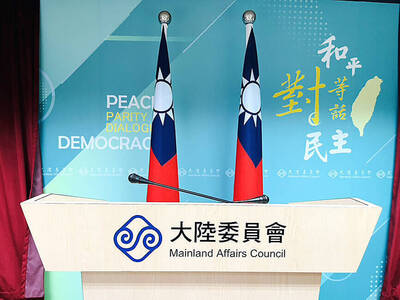
RISKY BUSINESS: The ‘incentives’ include initiatives that get suspended for no reason, creating uncertainty and resulting in considerable losses for Taiwanese, the MAC said China’s “incentives” failed to sway sentiment in Taiwan, as willingness to work in China hit a record low of 1.6 percent, a Ministry of Labor survey showed. The Directorate-General of Budget, Accounting and Statistics (DGBAS) also reported that the number of Taiwanese workers in China has nearly halved from a peak of 430,000 in 2012 to an estimated 231,000 in 2024. That marked a new low in the proportion of Taiwanese going abroad to work. The ministry’s annual survey on “Labor Life and Employment Status” includes questions respondents’ willingness to seek employment overseas. Willingness to work in China has steadily declined from

The Legislative Yuan’s Finance Committee yesterday approved proposed amendments to the Amusement Tax Act (娛樂稅法) that would abolish taxes on films, cultural activities and competitive sporting events, retaining the fee only for dance halls and golf courses. The proposed changes would set the maximum tax rate for dance halls and golf courses at 50 and 20 percent respectively, with local governments authorized to suspend the levies. Article 2 of the act says that “amusement tax shall be levied on tickets sold or fees charged by amusement places, facilities or activities” in six categories: “Cinema; professional singing, story-telling, dancing, circus, magic show, acrobatics
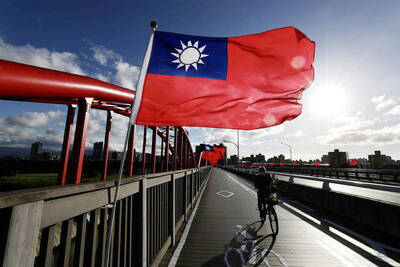
INFLATION UP? The IMF said CPI would increase to 1.5 percent this year, while the DGBAS projected it would rise to 1.68 percent, with GDP per capita of US$44,181 The IMF projected Taiwan’s real GDP would grow 5.2 percent this year, up from its 2.1 percent outlook in January, despite fears of global economic disruptions sparked by the US-Iran conflict. Taiwan’s consumer price index (CPI) is projected to increase to 1.5 percent, while unemployment would be 3.4 percent, roughly in line with estimates for Asia as a whole, the international body wrote in its Global Economic Outlook Report published in the US on Monday. The figures are comparatively better than the IMF outlook for the rest of the world, which pegged real GDP growth at 3.1 percent, down from 3.3 percent


 RSS
RSS