


Former president Lee Teng-hui (李登輝) said yesterday that he will visit Japan next month but he would not detail his itinerary until shortly before he leaves in order to prevent any attempt by China to obstruct his trip.
Lee announced the trip during a gathering with the press, the first time in four years that he has sat down for a talk with reporters.
Taiwan Solidarity Union [TSU] Chairman Shu Chin-chiang (蘇進強) was also at the meeting.
Lee also gave his viewpoint on recent political developments, including calls for President Chen Shui-bian (陳水扁) to resign, for Vice President Annette Lu (呂秀蓮) to succeed Chen and for Legislative Speaker Wang Jin-pyng (王金平) to be named premier.
"This notion of a Lu-Wang alliance was created by some people, who attributed the idea to me. It was never my idea," he said.
Lee did not give concrete answers to several questions, saying "I had no idea" or "You could ask Taiwan Solidarity Union Chairman Shu Chin-chiang," who was sitting next to him.
The only definite answer he was willing to give was about his trip to Japan. He said that a new Japanese prime minister will take office next month, which is why he thought it would be a good time for a visit.
"But to prevent unnecessary disturbances, I will not announce my schedule until I leave," he said.
When asked about Chen's proposal on Saturday that CKS International Airport be renamed "Taipei International Airport," Lee said that correcting the country's official name and writing a new constitution are complicated issues that involve Taiwan's relations with the US and other countries.
"It is not a goal that can be reached in one step. There are so many problems to be solved. We have to do it step by step. We have to make other countries understand Taiwan's reasons for changing its name and a new constitution," he said.
As for the question of whether a presidential or a parliamentary system should be adopted, Lee said he had a personal view on the subject, but now was not the time to discuss it.
"I don't care about any specific political figure. What I care about is the establishment of a democratic system. Only political stability can assure people of a stable life," he said.
"I would not join in any campaign to oust any person," he added.
When asked about the political disputes over the Presidential Office's special expenditure allowance, Lee said the controversy should be settled by law.
He said he had dealt with the same issue when he was president according to systems in place at that time. He said he had no idea what was involved in Chen's problems with the fund.
Asked whether the TSU would join a pan-blue motion to topple the Cabinet, Lee said Shu would have his own opinion.
Lee said it was important for journalists to provide balanced reporting and verify their sources.
He also clarified a criticism he made on Saturday about the Cabinet's cross-strait policy, saying that he had not been trying to target Premier Su Tseng-chang (蘇貞昌), simply trying to point out some policy-making mistakes. Lee had said that the policy was not aimed at defending Taiwan's development but a promoting unification with China.
also see story:
Ma mum on KMT debt under Lee
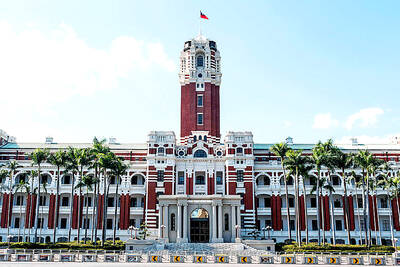
SECURITY: Taipei presses the US for arms supplies, saying the arms sales are not only a reflection of the US security commitment to Taiwan but also serve as a mutual deterrent against regional threats Taiwan is committed to preserving the cross-strait “status quo” and contributing to regional peace and stability, the Presidential Office said yesterday. “It is an undeniable fact that the Republic of China is a sovereign and independent democratic nation,” Presidential Office spokeswoman Karen Kuo (郭雅慧) reiterated, adding that Beijing has no right to claim sovereignty over Taiwan. The statements came after US President Donald Trump warned against Taiwanese independence. Trump wrapped up a state visit to Beijing on Friday, during which Chinese President Xi Jinping (習近平) had pressed him not to support Taiwan. Taiwan depends heavily on US security backing to deter China from carrying
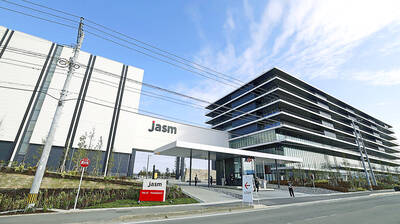
The subsidiary of Taiwan Semiconductor Manufacturing Co (TSMC, 台積電) in Kumamoto, Japan, turned a profit in the first quarter of this year, marking the first time the first fab of the unit has become profitable since mass production started at the end of 2024. According to the contract chipmaker’s financial statement released on Friday, Japan Advanced Semiconductor Manufacturing Inc (JASM), a joint venture running the fab in Kumamoto, posted NT$951 million (US$30.19 million) in profit in the January-to-March period, compared with a loss of NT$1.39 billion in the previous quarter, and a loss of NT$3.25 billion in the first quarter of
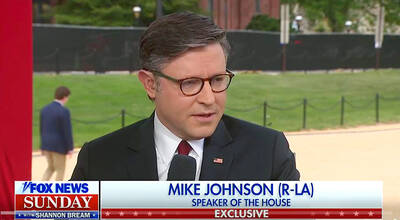
RESOLUTE BACKING: Two Republican senators are planning to introduce legislation that would impose immediate sanctions on China if it attempts to invade Taiwan US House of Representatives Speaker Mike Johnson on Sunday reaffirmed US congressional support for Taiwan, saying the US and “all freedom-loving people” have a stake in preventing China from seizing Taiwan by force. Johnson made the remarks in an interview with Fox News Sunday on US President Donald Trump’s summit with Chinese President Xi Jinping (習近平) last week. In an interview that aired on Friday on Fox News, just as Trump wrapped up a high-stakes visit to China, he said he has yet to green-light a new US$14 billion arms package to Taiwan and that it “depends on China.” “It’s a very good
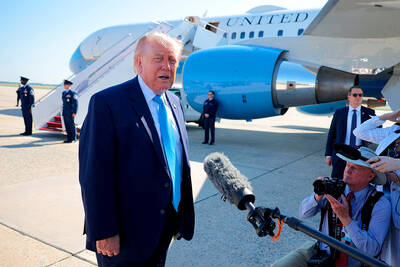
US President Donald Trump yesterday said he would speak to President William Lai (賴清德) as his administration considers whether to move ahead with a US$14 billion weapons sale to Taiwan — a potential arms deal that has drawn criticism from China. “Well, I’ll speak to him. I speak to everybody,” Trump told reporters yesterday when asked if he had any plans to call his counterpart, although he did not offer a time frame for when such a conversation could take place. Trump previously said he would speak to the person “that’s running Taiwan,” without specifying who he meant. “We have that situation very


 RSS
RSS