


A torrential flood hit a school in northeast China and swept 64 people to their deaths, while a fire in the country's south raced through the top floors of a hotel and killed 31, state media reported yesterday.
Authorities in Beijing were struggling to handle the twin tragedies thousands of kilometers apart, and trying to overcome faulty communication in the flood zone and vowing to dispatch an emergency team of investigators to the hotel fire.
Friday's flash flood inundated a school in Shalan, a remote town in far northeastern Heilongjiang Province, claiming the lives of 62 students and two villagers, the official Xinhua News Agency reported.
TORRENT OF WATER
Some 352 students -- all between 6 and 14 years old -- and 31 teachers were in the school when it was slammed by a torrent of water from heavy rains gushing down a mountain, the agency said.
Information was slowly trickling out of Shalan more than a day after the flood.
Initial reports said that 29 people were killed, and authorities later announced the dramatically higher death toll yesterday afternoon.
Meanwhile, in China's far south, a fire engulfed the top three floors of a hotel, killing 31 people, state media said.
The fire broke out at noon on Friday at the Huanan Hotel in Shantou, a city in Guangdong Province, and swept through the top stories of the four-story building, the reports said.
more bodies
Early dispatches said five people had died, but rescuers found more bodies when they entered the hotel after putting out the fire, Xinhua said. Another 15 people were injured, four of them seriously, the agency said.
It wasn't clear how many people were in the hotel at the time of the blaze, which took three hours to extinguish.
Images on television showed the neighborhood shrouded in heavy gray smoke, and still photographs showed firefighters removing tanks of cooking gas from the hotel.
A firefighter reached by phone yesterday said the cause was still under investigation.
Huanan Hotel is managed by a Hong Kong company, Xinhua said.

LEVERAGE: China did not ‘need to fire a shot’ to deny Taiwan airspace over Africa when it owns ‘half the continent’s debt,’ a US official said, calling it economic warfare The EU has raised concerns about overflight rights following the delay of President William Lai’s (賴清德) planned state visit to the Kingdom of Eswatini after three African nations denied overflight clearance for his charter at the last minute. Taiwanese allies Paraguay and Saint Kitts and Nevis, as well as several US lawmakers and the Inter-Parliamentary Alliance on China (IPAC) condemned China for allegedly pressuring the countries. Lai was scheduled to fly directly to Taiwan’s only African ally from yesterday to Sunday to celebrate the 40th anniversary of King Mswati III’s accession and his 58th birthday, but Seychelles, Mauritius and Madagascar suddenly revoked
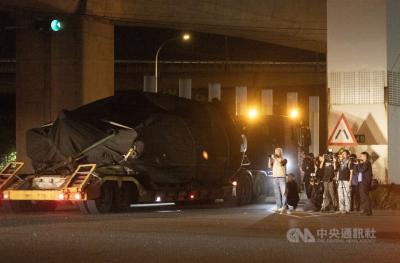
The final batch of 28 M1A2T Abrams tanks purchased from the US arrived at Taipei Port last night and were transported to the Armor Training Command in Hsinchu County’s Hukou Township (湖口), completing the military’s multi-year procurement of 108 of the tanks. Starting at 12:10am today, reporters observed more than a dozen civilian flatbed trailers departing from Taipei Port, each carrying an M1A2T tank covered with black waterproof tarps. Escorted by military vehicles, the convoy traveled via the West Coast Expressway to the Armor Training Command, with police implementing traffic control. The army operates about 1,000 tanks, including CM-11 Brave Tiger
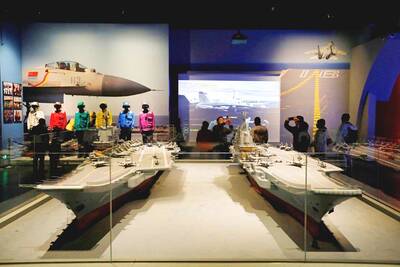
China on Wednesday teased in a video an aircraft carrier that could be its fourth, and the first using nuclear power, while making an allusion to Taiwan and vowing to further build up its islands, as it looks to boost maritime power, secure resources and bolster territorial claims. The video, issued on the eve of the 77th founding anniversary of the Chinese People’s Liberation Army Navy, featured fictional officers with names that are homophones of three commissioned aircraft carriers, the Liaoning (遼寧), Shandong (山東) and Fujian (福建). Titled Into the Deep, it showed a 19-year-old named “Hejian” (何劍) joining the group, sparking
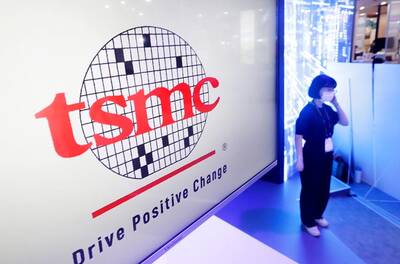
BIG YEAR: The company said it would also release its A12 chip the same year to keep a ‘reliable stream of new silicon technologies’ flowing to its customers Taiwan Semiconductor Manufacturing Co (TSMC, 台積電) yesterday said its newest A13 chip is to enter volume production in 2029 as the chipmaker seeks to hold onto its tech leadership and demand for next-generation chips used in artificial intelligence (AI), high-performance-computing (HPC) and mobile applications. TSMC, the world’s biggest contract chipmaker, also unveiled its A12 chip at its annual technology symposium in Santa Clara, California. The A12 chip, which features TSMC’s super-power-rail technology to provide backside power delivery for AI and HPC applications, is also to enter volume production in 2029, a year after the scheduled release of the A14 chip. The technology moves


 RSS
RSS