


US and Iraqi forces sealed off roads to an insurgent stronghold south of Baghdad yesterday and militants bombed two bridges in an apparent bid to hinder troop movement as pro-government forces tried to retake control of the region ahead of national elections.
On Tuesday, Iraq's Interim Prime Minister Ayad Allawi said the tempo of attacks against insurgent strongholds would increase but acknowledged that the security challenge was a "source of worry."
"I don't want to deny the impact of the security situation nor minimize the size of the challenges we face," Allawi said during a speech in Baghdad.
More than 3,000 US and Iraqi forces on Tuesday launched a major operation to retake control of insurgent-held parts of Babil province -- an area notorious for kidnappings and ambushes and home to the fabled city of Babylon. The Babil operation followed last week's move to oust insurgent forces from Samarra.
The Marines and Iraqis punched their way across the Euphrates River, rounded up 160 suspects, seized a suspected training camp and took control of a major bridge, the US command said. The bridge, spanning the Euphrates, is believed to be a favored corridor linking insurgent areas around Baghdad, Fallujah and towns farther south.
Yesterday, US soldiers and Iraqi National Guardsmen were sealing off the roads leading to Qasir town in the area of Youssifiyah, preventing anybody from going in or out. A day earlier, insurgents detonated a car bomb in Youssifiyah, 20km south of the capital, as the Iraqi National Guard was conducting raids, killing one civilian and wounding 13 Iraqis.
Two explosions -- one a car bomb another a roadside bomb -- hit two bridges in the area yesterday, residents said, in an apparent attempt by insurgents to affect the movement of Iraqi and US forces.
In Fallujah, US-led forces unleashed a strike early yesterday on a suspected safe house in rebel-held Fallujah where leaders of Abu Musab al-Zarqawi's terrorist network were believed to be meeting, the military said in a statement.
Three houses were flattened in the air strike, witnesses said. There were no casualties reported, said Dr. Dhiya al-Jumaili.
In Basra, a roadside bomb exploded as a British patrol was crossing a bridge, killing one Iraqi and injuring 10 others, police said.
Also See Story:
Irish passport may save UK hostage in Iraq
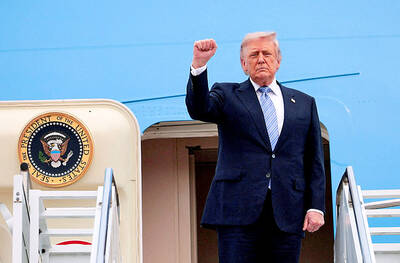
US-CHINA SUMMIT: MOFA welcomed US reassurance of no change in its Taiwan policy; Trump said he did not comment when Xi talked of opposing independence US President Donald Trump yesterday said he has not made a decision on whether to move forward with a major arms package for Taiwan after hearing concerns about it from Chinese President Xi Jinping (習近平). Trump’s comments on Taiwan came as he flew back to Washington after wrapping up critical talks in which both leaders said important progress was made in stabilizing US-China relations even as deep differences persist between the world’s two biggest powers on Iran and Taiwan. “I will make a determination,” Trump said, adding: “I’ll be making decisions. But, you know, I think the last thing we need right
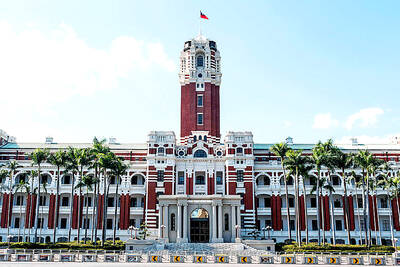
SECURITY: Taipei presses the US for arms supplies, saying the arms sales are not only a reflection of the US security commitment to Taiwan but also serve as a mutual deterrent against regional threats Taiwan is committed to preserving the cross-strait “status quo” and contributing to regional peace and stability, the Presidential Office said yesterday. “It is an undeniable fact that the Republic of China is a sovereign and independent democratic nation,” Presidential Office spokeswoman Karen Kuo (郭雅慧) reiterated, adding that Beijing has no right to claim sovereignty over Taiwan. The statements came after US President Donald Trump warned against Taiwanese independence. Trump wrapped up a state visit to Beijing on Friday, during which Chinese President Xi Jinping (習近平) had pressed him not to support Taiwan. Taiwan depends heavily on US security backing to deter China from carrying
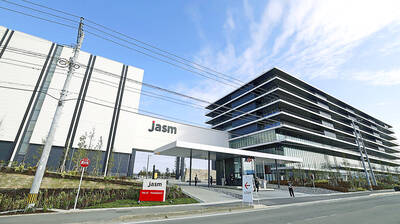
The subsidiary of Taiwan Semiconductor Manufacturing Co (TSMC, 台積電) in Kumamoto, Japan, turned a profit in the first quarter of this year, marking the first time the first fab of the unit has become profitable since mass production started at the end of 2024. According to the contract chipmaker’s financial statement released on Friday, Japan Advanced Semiconductor Manufacturing Inc (JASM), a joint venture running the fab in Kumamoto, posted NT$951 million (US$30.19 million) in profit in the January-to-March period, compared with a loss of NT$1.39 billion in the previous quarter, and a loss of NT$3.25 billion in the first quarter of
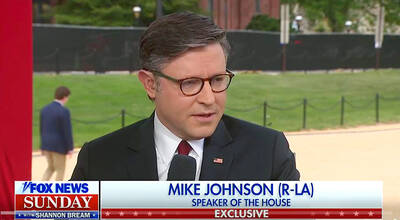
RESOLUTE BACKING: Two Republican senators are planning to introduce legislation that would impose immediate sanctions on China if it attempts to invade Taiwan US House of Representatives Speaker Mike Johnson on Sunday reaffirmed US congressional support for Taiwan, saying the US and “all freedom-loving people” have a stake in preventing China from seizing Taiwan by force. Johnson made the remarks in an interview with Fox News Sunday on US President Donald Trump’s summit with Chinese President Xi Jinping (習近平) last week. In an interview that aired on Friday on Fox News, just as Trump wrapped up a high-stakes visit to China, he said he has yet to green-light a new US$14 billion arms package to Taiwan and that it “depends on China.” “It’s a very good


 RSS
RSS