


Baghdad was engulfed in violence yesterday as 21 people were killed and more than 100 wounded in a car bomb attack and US-led offensives on Shiite and Sunni rebel pockets in the capital.
An official from radical cleric Moqtada al-Sadr's movement said 15 people were killed and 52 wounded in an apparent push by the US military to reclaim parts of the Shiite stronghold of Sadr City.
Naim al-Qaabi described the ongoing raids as "the most devastating operation in Sadr City" since the fall of Saddam Hussein's regime in April last year.
US Major General Peter Chiarelli said in a statement that the operation was aimed at restoring stability in Baghdad by improving the living conditions of Iraqis.
"I think the key to improving the security situation in Baghdad is giving people hope through the execution of our large projects to fix the infrastructure," he said.
The coalition is keen to keep a lid on violence in the capital in the run-up to the January general elections and quell growing discontent among the population by providing much-delayed basic services such as sewers, water and electricity.
A correspondent in Sadr City said gunfire and rocket-propelled grenade attacks were still ongoing at midday.
The impoverished district, from which Sadr has drawn most of his support for an anti-coalition rebellion that started in April, is littered with bombs and has become a no-go zone for US troops.
Meanwhile, a suicide car bomb targeting Iraqis queuing up to join the national guard ripped through a busy shopping area in the heart of Baghdad yesterday morning, police and witnesses told reporters on the scene.
"A suicide car bomb rammed into a group of people gathered to sign up for the Iraqi National Guard" at a shopping complex on the central al-Rabih Street, a police officer said.
"The suicide bomber drove onto the sidewalk and detonated his charge," he said.
Medical sources at the Yarmuk hospital said at least six people were killed and 54 wounded in the latest attack, which took place just a few meters away from the site where another car bomb was defused on Tuesday.
US Army Lieutenant Charles Heaton confirmed that yesterday's attack was a suicide car bomb.
A dozen vehicles in the vicinity of the blast were turned into charred shells and several shopfronts destroyed, and panicked residents ran through the debris and smoke to rescue the wounded.
A reporter saw people burying body parts on the median strip which cuts the boulevard in two.
"I saw about 30 to 40 ING (Iraqi National Guard) recruits lining up and at about 10:20am the explosion went off," said a witness who runs an office on the first floor of the shopping complex.
"I felt the whole building shake and I thought the walls were going to collapse on me," he added.
Fresh fighting in the Sunni stronghold of Haifa Street in Baghdad erupted overnight, but there were no immediate reports of any casualties.
Sporadic but heavy gunfire was heard in the central neighborhood, which is a mixture of posh high-rises and impoverished alleyways harboring a loose alliance of Saddam Hussein loyalists and Islamic insurgents.
Violence in the capital was compounded by more bloodshed elsewhere in the country.
The police chief of the northern town of Tall Afar, where US and Iraqi forces have recently conducted raids to crack down on Iraqi and foreign insurgents, was wounded in an assassination attempt, police said.
An Iraqi civilian was also killed and two wounded when a roadside bomb went off early yesterday near the town of Tikrit, north of Baghdad, police said.
Also See Story:
Iraq getting too expensive for foreign contractors
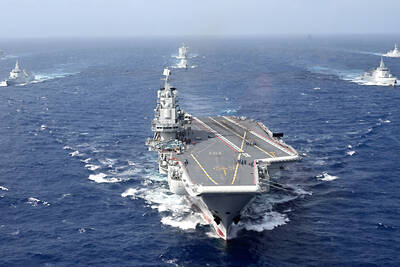
PROVOCATIVE: Chinese Deputy Ambassador to the UN Sun Lei accused Japan of sending military vessels to deliberately provoke tensions in the Taiwan Strait China denounced remarks by Japan and the EU about the South China Sea at a UN Security Council meeting on Monday, and accused Tokyo of provocative behavior in the Taiwan Strait and planning military expansion. Ayano Kunimitsu, a Japanese vice foreign minister, told the Council meeting on maritime security that Tokyo was seriously concerned about the situation in the East China and South China seas, and reiterated Japan’s opposition to any attempt to change the “status quo” by force, and obstruction of freedom of navigation and overflight. Stavros Lambrinidis, head of the EU delegation to the UN, also highlighted South China Sea
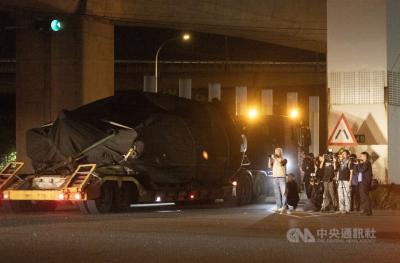
The final batch of 28 M1A2T Abrams tanks purchased from the US arrived at Taipei Port last night and were transported to the Armor Training Command in Hsinchu County’s Hukou Township (湖口), completing the military’s multi-year procurement of 108 of the tanks. Starting at 12:10am today, reporters observed more than a dozen civilian flatbed trailers departing from Taipei Port, each carrying an M1A2T tank covered with black waterproof tarps. Escorted by military vehicles, the convoy traveled via the West Coast Expressway to the Armor Training Command, with police implementing traffic control. The army operates about 1,000 tanks, including CM-11 Brave Tiger
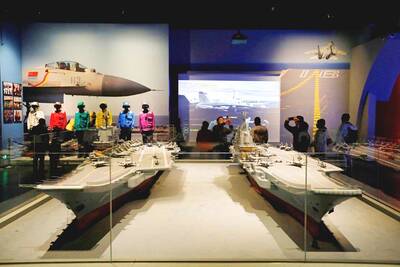
China on Wednesday teased in a video an aircraft carrier that could be its fourth, and the first using nuclear power, while making an allusion to Taiwan and vowing to further build up its islands, as it looks to boost maritime power, secure resources and bolster territorial claims. The video, issued on the eve of the 77th founding anniversary of the Chinese People’s Liberation Army Navy, featured fictional officers with names that are homophones of three commissioned aircraft carriers, the Liaoning (遼寧), Shandong (山東) and Fujian (福建). Titled Into the Deep, it showed a 19-year-old named “Hejian” (何劍) joining the group, sparking
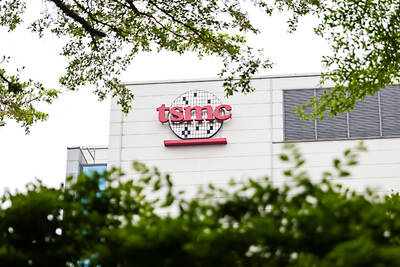
Taiwan Semiconductor Manufacturing Co (TSMC, 台積電), the world’s largest contract chipmaker, said it expects its 2-nanometer (2nm) chip capacity to grow at a compound annual rate of 70 percent from this year to 2028. The projection comes as five fabs begin volume production of 2-nanometer chips this year — two in Hsinchu and three in Kaohsiung — TSMC senior vice president and deputy cochief operating officer Cliff Hou (侯永清) said at the company’s annual technology symposium in Silicon Valley, California, last week. Output in the first year of 2-nanometer production, which began in the fourth quarter of last year, is expected to


 RSS
RSS