


President Chen Shui-bian (陳水扁) yesterday encouraged Taiwanese people of all ethnic backgrounds to join hands in a 1-million-person chain at a rally on Feb. 28 as an expression of Taiwan's opposition to the missile threat posed by China.
Speaking at the Democratic Progressive Party's national campaign headquarters, Chen said the purpose of holding such an event was to invite the people of Taiwan to protect the cross-strait status quo.
"The homeland which the Taiwanese people have strived hard to build has been overshadowed by China's military threat, which is increasing day by day. We can't pretend we are not aware of it, nor can we take it as a matter of course. If we keep being silent, we will be regarded as approving" of this threat, he said.
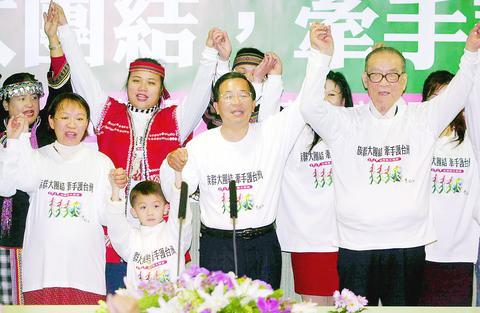
PHOTO: CHIANG YING-YING, TAIPEI TIMES
"Therefore, each Taiwanese has a right to tell the world and the Beijing authorities that we want peace and not war."
While reiterating his intention to hold the referendum, Chen said the event also aims to promote ethnic unity in this joint effort to protect Taiwan.
"Through this activity, everyone holds hands together -- as if each of our five fingers represents the ethnic groups of Hakka, Chinese mainlanders, Minnan, Aboriginals and the foreign expatriates. All people will join together to protect Taiwan," Chen said.
He said that through decades of social and cultural integration of various ethnic forces in Taiwan, the nation had developed a unique identity, one that recognizes multicultural assimilation.
Commenting on the sensitive ethnic and identity issues that have long been regarded as a source of division, Chen said, "Taiwan doesn't have an ethnic issue, all it has is an issue of national identity that certain politicians refuse to recognize."
He said some politicians denied honoring such an identity and have distorted the identity issue into an ethnic one, trying to inflame ethnic confrontation.
"This merely shows their equivocal attitudes on national identity, undermining not only the social harmony of Taiwan, but also bringing unpredictable dangers to Taiwan when China threatens to swallow the country," Chen said.
"Taiwan's sovereignty and international position need to be defended by all the people of Taiwan, especially when China increases its oppression of us," the president said.
The rally's organizers are hoping to arrange for 1 million people to hold hands along the north-south provincial highway from Keelung County to Pingtung County, a distance of 500km.
Also called the "228 Hand-in-Hand Rally," the event will seek to break the world record for the longest human chain since the Baltic Chain in 1989, when the people of the three Baltic countries, Estonia, Lithuania and Latvia, formed a human chain to express their opposition to interference by the Russian Army.
A rehearsal is planned for tomorrow in Tainan County, in which 70,000 people will form a chain 63km long, Tainan County Commissioner Su Huan-chih (
"The success of the rehearsal will help boost people's confidence and motivate more people from other cities and counties to join the event," Su said.
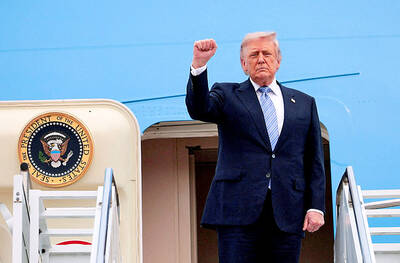
US-CHINA SUMMIT: MOFA welcomed US reassurance of no change in its Taiwan policy; Trump said he did not comment when Xi talked of opposing independence US President Donald Trump yesterday said he has not made a decision on whether to move forward with a major arms package for Taiwan after hearing concerns about it from Chinese President Xi Jinping (習近平). Trump’s comments on Taiwan came as he flew back to Washington after wrapping up critical talks in which both leaders said important progress was made in stabilizing US-China relations even as deep differences persist between the world’s two biggest powers on Iran and Taiwan. “I will make a determination,” Trump said, adding: “I’ll be making decisions. But, you know, I think the last thing we need right
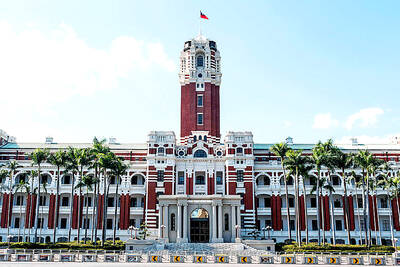
SECURITY: Taipei presses the US for arms supplies, saying the arms sales are not only a reflection of the US security commitment to Taiwan but also serve as a mutual deterrent against regional threats Taiwan is committed to preserving the cross-strait “status quo” and contributing to regional peace and stability, the Presidential Office said yesterday. “It is an undeniable fact that the Republic of China is a sovereign and independent democratic nation,” Presidential Office spokeswoman Karen Kuo (郭雅慧) reiterated, adding that Beijing has no right to claim sovereignty over Taiwan. The statements came after US President Donald Trump warned against Taiwanese independence. Trump wrapped up a state visit to Beijing on Friday, during which Chinese President Xi Jinping (習近平) had pressed him not to support Taiwan. Taiwan depends heavily on US security backing to deter China from carrying
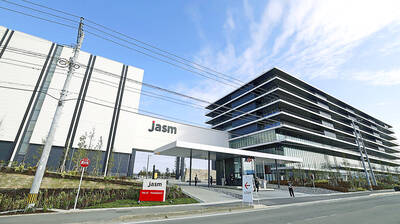
The subsidiary of Taiwan Semiconductor Manufacturing Co (TSMC, 台積電) in Kumamoto, Japan, turned a profit in the first quarter of this year, marking the first time the first fab of the unit has become profitable since mass production started at the end of 2024. According to the contract chipmaker’s financial statement released on Friday, Japan Advanced Semiconductor Manufacturing Inc (JASM), a joint venture running the fab in Kumamoto, posted NT$951 million (US$30.19 million) in profit in the January-to-March period, compared with a loss of NT$1.39 billion in the previous quarter, and a loss of NT$3.25 billion in the first quarter of
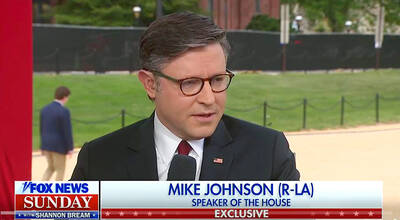
RESOLUTE BACKING: Two Republican senators are planning to introduce legislation that would impose immediate sanctions on China if it attempts to invade Taiwan US House of Representatives Speaker Mike Johnson on Sunday reaffirmed US congressional support for Taiwan, saying the US and “all freedom-loving people” have a stake in preventing China from seizing Taiwan by force. Johnson made the remarks in an interview with Fox News Sunday on US President Donald Trump’s summit with Chinese President Xi Jinping (習近平) last week. In an interview that aired on Friday on Fox News, just as Trump wrapped up a high-stakes visit to China, he said he has yet to green-light a new US$14 billion arms package to Taiwan and that it “depends on China.” “It’s a very good


 RSS
RSS