


Malaysia became the first country yesterday to bar tourists from China, where a doctor accused the health minister of covering up the severe acute respiratory syndrome (SARS) virus that has killed more than 100 people worldwide.
In Hong Kong, two more people died after contracting the SARS virus and 42 new cases of the illness were detected, the government said yesterday.
The new deaths bring the total death toll in Hong Kong from the disease to 27.
A total of 970 cases of the mysterious respiratory illness have now been detected in the former British colony.
An official in Kuala Lumpur said Malaysian missions in China would no longer issue tourist visas in a bid to halt the spread of the disease.
Chinese travelling for government or business reasons were still welcome so long as they carried health certificates declaring that they had no symptoms of SARS, the official said.
A Chinese military doctor accused the health minister of covering up the number of people in the teeming capital of Beijing infected by SARS.
The flu-like disease has infected more than 2,800 people in about 20 countries with nearly half the cases, at least 1,279, in China.
Although the epidemic is small, it concerns doctors because the virus is new and has a death rate of nearly 4 percent.
Dr Jiang Yanyong, 71, said in a letter sent to journalists that six people had died of SARS and 60 had been infected at Beijing's military-run 309 Hospital by last Thursday.
Health Minister Zhang Wenkang (
Although Chinese officials said the epidemic was under control, Chinese doctors contacted by news organizations on Tuesday spoke of packed wards and many more deaths than reported by Beijing.
Jiang said he and many other doctors and nurses had been angry when they heard Zhang's statement.
"I think he wants very much to accomplish big things so he must tell lies," Jiang, a Communist Party member for more than 50 years, said in the letter, a copy of which was obtained by Reuters yesterday.
Jiang's move, highly unusual for a Party member, could lay him open to being purged or even jailed for criticizing leaders publicly.
Asked to comment on Jiang's allegation, Health Ministry spokesman Deng Haihua said military hospitals were not under Zhang's jurisdiction.
"In China, military hospitals are independent. Zhang Wenkang has no control over military hospitals," Deng said.
At a news conference yesterday, Beijing Vice Mayor Zhang Mao sidestepped questions on the doctor's accusations, saying the central and local governments would report figures on a regular basis, but declined to elaborate or give figures.
He said the Health Ministry was reporting daily to the World Health Organization (WHO).
"These cases of SARS have not affected the life and work of people in Beijing. Therefore it is safe to travel and work in Beijing," he said.Also See Story:
Hospitals to get SARS compensation
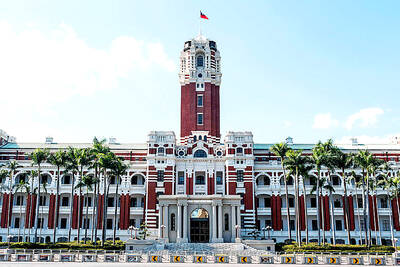
SECURITY: Taipei presses the US for arms supplies, saying the arms sales are not only a reflection of the US security commitment to Taiwan but also serve as a mutual deterrent against regional threats Taiwan is committed to preserving the cross-strait “status quo” and contributing to regional peace and stability, the Presidential Office said yesterday. “It is an undeniable fact that the Republic of China is a sovereign and independent democratic nation,” Presidential Office spokeswoman Karen Kuo (郭雅慧) reiterated, adding that Beijing has no right to claim sovereignty over Taiwan. The statements came after US President Donald Trump warned against Taiwanese independence. Trump wrapped up a state visit to Beijing on Friday, during which Chinese President Xi Jinping (習近平) had pressed him not to support Taiwan. Taiwan depends heavily on US security backing to deter China from carrying
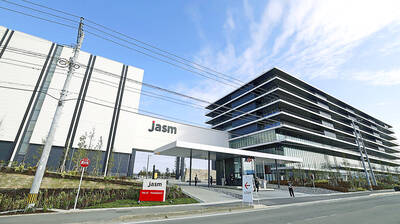
The subsidiary of Taiwan Semiconductor Manufacturing Co (TSMC, 台積電) in Kumamoto, Japan, turned a profit in the first quarter of this year, marking the first time the first fab of the unit has become profitable since mass production started at the end of 2024. According to the contract chipmaker’s financial statement released on Friday, Japan Advanced Semiconductor Manufacturing Inc (JASM), a joint venture running the fab in Kumamoto, posted NT$951 million (US$30.19 million) in profit in the January-to-March period, compared with a loss of NT$1.39 billion in the previous quarter, and a loss of NT$3.25 billion in the first quarter of
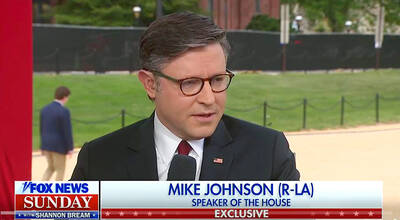
RESOLUTE BACKING: Two Republican senators are planning to introduce legislation that would impose immediate sanctions on China if it attempts to invade Taiwan US House of Representatives Speaker Mike Johnson on Sunday reaffirmed US congressional support for Taiwan, saying the US and “all freedom-loving people” have a stake in preventing China from seizing Taiwan by force. Johnson made the remarks in an interview with Fox News Sunday on US President Donald Trump’s summit with Chinese President Xi Jinping (習近平) last week. In an interview that aired on Friday on Fox News, just as Trump wrapped up a high-stakes visit to China, he said he has yet to green-light a new US$14 billion arms package to Taiwan and that it “depends on China.” “It’s a very good
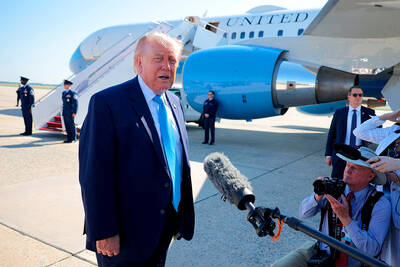
US President Donald Trump yesterday said he would speak to President William Lai (賴清德) as his administration considers whether to move ahead with a US$14 billion weapons sale to Taiwan — a potential arms deal that has drawn criticism from China. “Well, I’ll speak to him. I speak to everybody,” Trump told reporters yesterday when asked if he had any plans to call his counterpart, although he did not offer a time frame for when such a conversation could take place. Trump previously said he would speak to the person “that’s running Taiwan,” without specifying who he meant. “We have that situation very


 RSS
RSS