


The DPP is set to enter a new era as President Chen Shui-bian (
Chen will be sworn in with 11 newly appointed Arbitration Committee members, 11 newly elected Central Review Committee members, 35 newly elected Central Executive Committee members and 15 Central Standing Committee members during the inauguration ceremony.
The ceremony is scheduled for 5:30pm at the International Convention Center in Taipei City.
According to Michael You (游盈隆), deputy secretary-general of the DPP, Chen is scheduled to give a 20-minute speech during the ceremony and the theme of his speech will focus on party reforms and his vision for the party and the nation.
Commenting on the achievements made by outgoing chairman Frank Hsieh (
"He faced an overwhelming amount of difficulties from the opposition parties because he's the first party chairman after the peaceful transfer of power," You said. "However, he not only led the party to become the largest in the legislature but also successfully helped push for party reforms."
Speaking on behalf of the party, You said that the DPP has great expectations for the new chairman.
"The president's doubling up as the party chairman ushers in a new chapter of the party's history," he said. "I hope it'll help better integrate the opinions of the Presidential Office, the Executive Yuan and the party and I believe the president himself will manage to strike a balance between his two roles."
To drum up support for the year-end mayoral race, a pep rally will be held at 10:30am for Hsieh, who is seeking his second term as Kaohsiung mayor; and Lee Ying-yuan (李應元), who is running against the KMT's candidate, incumbent Taipei Mayor Ma Ying-jeou (馬英九).
The race for Kaohsiung and Taipei mayors is slated for Dec. 7.
In the afternoon, the National Congress will approve the 11 Arbitration Committee members, who are recommended by the Central Standing Committee and need to be approved by the National Congress. The National Congress will also elect 11 Central Review Committee members.
Central Review Committee members are elected from National Congress members who have served at local chapters, county or city governments, or as local representatives at provincial or city councils, judges or prosecutors, or lawyers or accountants.
The National Congress will also elect 30 new members of the Central Executive Committee.
Membership of the Central Standing Committee is 15 and that of the Central Executive Committee is 35.
Thirty of the 35 Central Executive Committee members are elected from the ranks of the National Congress. The remaining five positions are reserved for the leader of the legislative caucus and the party chairman -- who in turn must appoint the remaining three committee members.
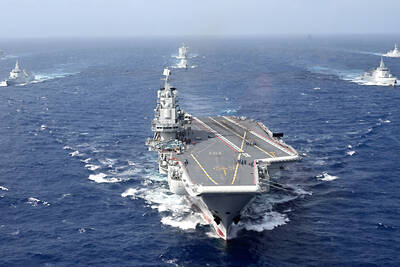
PROVOCATIVE: Chinese Deputy Ambassador to the UN Sun Lei accused Japan of sending military vessels to deliberately provoke tensions in the Taiwan Strait China denounced remarks by Japan and the EU about the South China Sea at a UN Security Council meeting on Monday, and accused Tokyo of provocative behavior in the Taiwan Strait and planning military expansion. Ayano Kunimitsu, a Japanese vice foreign minister, told the Council meeting on maritime security that Tokyo was seriously concerned about the situation in the East China and South China seas, and reiterated Japan’s opposition to any attempt to change the “status quo” by force, and obstruction of freedom of navigation and overflight. Stavros Lambrinidis, head of the EU delegation to the UN, also highlighted South China Sea
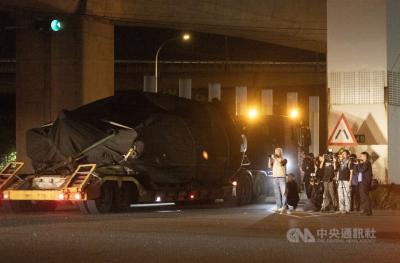
The final batch of 28 M1A2T Abrams tanks purchased from the US arrived at Taipei Port last night and were transported to the Armor Training Command in Hsinchu County’s Hukou Township (湖口), completing the military’s multi-year procurement of 108 of the tanks. Starting at 12:10am today, reporters observed more than a dozen civilian flatbed trailers departing from Taipei Port, each carrying an M1A2T tank covered with black waterproof tarps. Escorted by military vehicles, the convoy traveled via the West Coast Expressway to the Armor Training Command, with police implementing traffic control. The army operates about 1,000 tanks, including CM-11 Brave Tiger
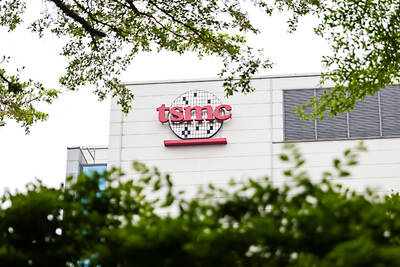
Taiwan Semiconductor Manufacturing Co (TSMC, 台積電), the world’s largest contract chipmaker, said it expects its 2-nanometer (2nm) chip capacity to grow at a compound annual rate of 70 percent from this year to 2028. The projection comes as five fabs begin volume production of 2-nanometer chips this year — two in Hsinchu and three in Kaohsiung — TSMC senior vice president and deputy cochief operating officer Cliff Hou (侯永清) said at the company’s annual technology symposium in Silicon Valley, California, last week. Output in the first year of 2-nanometer production, which began in the fourth quarter of last year, is expected to
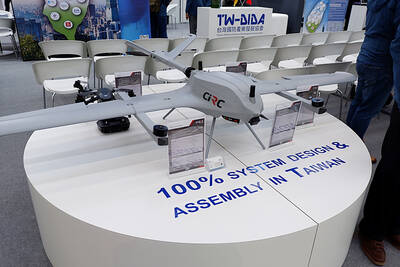
Taiwan’s drone exports surged past US$100 million in the first quarter, exceeding last year’s full-year total, with the Czech Republic emerging as the largest buyer, the Ministry of Economic Affairs said. Exports of complete drones reached US$115.85 million in the period, about 1.2 times the total recorded for all of last year, the ministry said in a report. Exports to the Czech Republic accounted for about US$100 million, far outpacing other markets. Poland, last year’s top destination, recorded about US$11.75 million in the first quarter. Taiwan’s drone exports have expanded rapidly in the past few years, with last year’s total


 RSS
RSS