


SVIIB, School of Seven Bells, Vagrant
“This is our time, and our time is indestructible,” Alejandra Deheza sings, with blissful conviction, at the end of the wholeheartedly gleaming march that concludes the final album by School of Seven Bells, SVIIB. There’s a sad back story behind it.
School of Seven Bells was formed in 2007 and distilled itself down to a studio songwriting duo: Deheza and Benjamin Curtis, the group’s producer, who together built songs from elaborately layered electronics and guitars and Deheza’s airborne vocals. (Deheza’s twin sister, Claudia, initially played keyboards in the group.) Curtis and Deheza recorded the bulk of SVIIB in the summer of 2012. Soon afterward, Curtis learned he had a rare form of T-cell lymphoblastic lymphoma, and he died in December 2013. His last project with School of Seven Bells, overseen from his hospital bed, was a defiantly jubilant remake of a song Joey Ramone wrote about his own lymphoma treatment, I Got Knocked Down (But I’ll Get Up).

Now, Deheza and the producer Justin Meldal-Johnsen (Beck’s musical director and M83’s producer) have completed the 2012 album. Its songs chronicle an enduring connection that parallels the relationship of Deheza and Curtis: infatuation, love, friction, separation and the eternal bond of friendship. “In time the pain subsides and then you start to live again,” Deheza promises in A Thousand Times More. Nearly all of the lyrics were written as the album was being recorded; now, they echo past mortality. One song, Confusion, was written after the diagnosis: “We spent so long facing the days together/that I forgot how to be different from us,” Deheza sings, over a synthetic backdrop of billowing major chords, but without the security of a drumbeat.
SVIIB is a memorial that looks back and forward. From its first album, Alpinisms, School of Seven Bells defined itself as a group that admired the majestic electronic sounds of the 1980s and 1990s, the blurry grandeur of shoegaze rock and the mantric repetitions of Krautrock. But the group wanted to keep its own perspective on them: a little ragged, a little skeptical, and also fascinated by both academic Minimalism and mystical cycles of rebirth.
There’s still a retro streak on SVIIB: hints of the Cranberries, Tears for Fears, Stereolab, Joy Division and Madonna’s Ray of Light. But with its valedictory, SVIIB gave up the skepticism. Minimalist repetition turns into pop certitude, and the arrangements — sorting out the many tracks Curtis recorded — set aside the buzzy, abrasive keyboard tones of the group’s 2012 album, Ghostory, for a sonic vocabulary of reverberation and depth, of optimistic promise. School of Seven Bells had found a way forward, un-self-conscious and unified. Fate made it the end instead of another beginning.
— JON PARELES, NY TIMES NEWS SERVICE
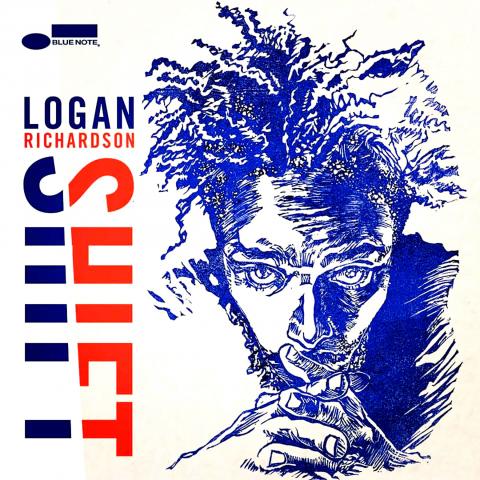
Shift, Logan Richardson, Blue Note
Up to this point, the alto saxophonist Logan Richardson has seemed a matter of promise. He has a soft, languid tone that encompasses 20 years of full-service new saxophone improvising — precise, abstract, funky, noisy and sentimental, within the same tune. But his first two records felt a little like sketches, not fully embodied. Shift, his third and latest, and first on Blue Note records, is a totally different proposition.

Sometimes emerging bandleaders need framing, contrast and challenge. Richardson has given himself the advance version of all that in Shift, with a quartet including the guitarist Pat Metheny, the pianist Jason Moran, the bassist Harish Raghavan and the drummer Nasheet Waits.
That’s a pretty imposing list of names. Metheny, one of the most popular and creative forces in jazz for decades, rarely plays in bands that aren’t his own, and Moran and Waits have been making their own furrowed, organic language together in Moran’s band since 2000. No one here acts like a special guest. Everyone’s in for a pound, on every track.
Richardson’s songs rest on his melodies, which are sweeping and rhapsodic and don’t need a fixed rhythm to ground them. (All the compositions are his, except for an excellently crawling, spacey, dirtied-up version of Bruno Mars’ Locked Out of Heaven.) The melodies guide the tunes firmly for a while; then the band starts gathering inside the chord changes, getting bigger, transcending the tune and blowing it apart.
This might happen best in Slow, which starts with tolling piano chords, like a dirge, until Richardson unspools his complex, circular melody in tandem with Metheny and Waits. Then the solos begin: Richardson in mournful long tones and trills and rapid figures; Metheny, at length, playing one bravado melodic phrase after another until he becomes rough and loud; Moran and Waits briefly carrying out their intuitive communication together, turning the piece in new directions, making it end in a different place.
Metheny, in particular, is a big presence here. He expands to full size. The risk is that he’ll eclipse the leader, and sometimes he does, but not for long. Richardson holds his ground, often with ballad tones, patience and mystery.
— BEN RATLIFF, NY TIMES NEWS SERVICE
Summertime: Willie Nelson Sings Gershwin, Willie Nelson, Legacy
Willie Nelson is 82 and has earned the right to nostalgia. His agreeably slight new release, Summertime, is a songbook album, a stroll through some of George and Ira Gershwin’s best-loved songs. Nelson apparently settled on this idea after receiving the Gershwin Prize for Popular Song from the Library of Congress last year, and there are worse reasons. But you’ll want to swat away any comparisons to Stardust, the ageless, radiant album he released in 1978, before songbook crossover had become such a wan cliche.
Nelson infuses the title track with the rhythmic sorcery that has long been his genius — singing some phrases before the beat (but relaxed) and others with a laggardly slouch (but alert). He’s wistfully tender on But Not for Me and confidingly subtle on Love Is Here to Stay. On Somebody Loves Me, his springy saunter evokes Bob Wills and the Texas Playboys. And he’s game but less inspired on a pair of marquee duets, with Cyndi Lauper (Let’s Call the Whole Thing Off, chirpy, cloying) and Sheryl Crow (Embraceable You, a satiny snooze).
Summertime is lighter on its feet than American Classic (Blue Note, from 2009), which framed Nelson’s voice against the tastefully lush backing associated with one of its featured guests, Diana Krall. With arrangements by Matt Rollings, who produced Summertime with Buddy Cannon, the style is upmarket western swing, featuring smooth work by aces like David Piltch on upright bass and Paul Franklin on pedal steel. Nelson’s longtime harmonica player, Mickey Raphael, is also on board, as is his sister, Bobbie Nelson. On most songs, he gives Trigger, his trusty Martin guitar, tight spaces in which to make an impression.
Compared with Django and Jimmie, the album Nelson and Merle Haggard released last year, there’s less vinegar here, and more circumspection. Still, when Nelson re-engages with Someone to Watch Over Me — the ballad that closed Stardust, in the same key and at a similar clip — he sounds as insightful and irreplaceable as ever.
— NATE CHINEN, NY TIMES NEWS SERVICE


The US war on Iran has illuminated the deep interdependence of Asia on flows of oil and related items as raw materials that become the basis of modern human civilization. Australians and New Zealanders had a wake up call. The crisis also emphasizes how the Philippines is a swatch of islands linked by jet fuel. These revelations have deep implications for an invasion of Taiwan. Much of the commentary on the Taiwan scenario has looked at the disruptions to world trade, which will be in the trillions. However, the Iran war offers additional specific lessons for a Taiwan scenario. An insightful

The problem with Marx’s famous remark that history repeats itself, first as tragedy, the second time as farce, is that the first time is usually farce as well. This week Chinese Nationalist Party (KMT) Chair Cheng Li-wun (鄭麗文) made a pilgrimage to the People’s Republic of China (PRC) “to confer, converse and otherwise hob-nob” with Chinese Communist Party (CCP) officials. The visit was an instant international media hit, with major media reporting almost entirely shorn of context. “Taiwan’s main opposition leader landed in China Tuesday for a rare visit aimed at cross-strait ‘peace’”, crowed Agence-France Presse (AFP) from Shanghai. Rare!

April 6 to April 13 Few expected a Japanese manga adaptation featuring four tall, long-haired heartthrobs and a plucky heroine to transform Taiwan’s television industry. But Meteor Garden (流星花園) took the nation by storm after premiering on April 12, 2001, single-handedly creating the “idol drama” (偶像劇) craze that captivated young viewers across Asia. The show was so successful that Japan produced its own remake in 2005, followed by South Korea, China and Thailand. Other channels quickly followed suit, with more than 50 such shows appearing over the following two years. Departing from the melodramatic

Sunflower movement superstar Lin Fei-fan (林飛帆) once quipped that the Democratic Progressive Party (DPP) could nominate a watermelon to run for Tainan mayor and win. Conversely, the DPP could run a living saint for mayor in Taipei and still lose. In 2022, the DPP ran with the closest thing to a living saint they could find: former Minister of Health and Welfare Chen Shih-chung (陳時中). During the pandemic, his polling was astronomically high, with the approval of his performance reaching as high as 91 percent in one TVBS poll. He was such a phenomenon that people printed out pop-up cartoon


 RSS
RSS