

It’s not easy to come up with a second act when your first act was being Jim Carroll.
He was the author of The Basketball Diaries, a cult-classic memoir of his drug-fueled misadventures as a teenager in the 1960s; he then became a celebrated downtown poet; and then, the star of his own hit rock band.
Carroll had lived a panoramic New York youth that his fans had turned into legend.
But by the time he died of a heart attack this Sept. 11 at the age of 60, Carroll, who had once hung out with the Rolling Stones and Allen Ginsberg, no longer bore much resemblance to the downtown cover-boy with the chiseled cheekbones and flowing red hair, friends said.
His once-powerful athlete’s body had been weakened by pneumonia and hepatitis C, said Rosemary Carroll, his former wife, who had remained a close friend. At times, circulation problems in his legs prevented him from leaving his apartment. His trademark hair was flecked with gray, and often tucked under a wool beanie. His cheekbones were hidden behind a white beard that plunged to the collar of his T-shirts.
Carroll had moved back to Inwood, in upper Manhattan, to the same building where he had grown up. “Jim would often sit home with these heavy curtains drawn shut,” recalled Martin Heinz, a friend, one of the few to maintain contact with him in latter months.
But Carroll did have a purpose. He was trying to finish his first novel, tentatively titled The Petting Zoo, an ambitious book about an art-world prodigy of the 1980s, Billy Wolfram, who is driven by early fame into seclusion, where he suffers psychological and spiritual crises. It didn’t take much to see the autobiographical thread. In his teens, Jim, a scholarship student at the elite Trinity School and fledgling heroin addict, was a high-school basketball star who shot jumpers on the same courts as Lew Alcindor. The journal he kept between the ages of 14 and 16 — dark comic accounts of ducking class to cop drugs, steal cars and hustle in Times Square — earned the praise of Jack Kerouac and later became The Basketball Diaries.
He became involved in the downtown poetry scene, receiving praise as a new Rimbaud. In his late 20s, he tried rock ’n’ roll, nudged by his old girlfriend Patti Smith. He was soon jamming with Keith Richards, and formed the Jim Carroll Band, whose first release, Catholic Boy, has been described as the last great punk album.
“Jim was really in love with the concept of his own phoenix-like rise, which had happened repeatedly in his life — bottoming out, then transcending his negative circumstances with an undeniably brilliant work of art,” Rosemary Carroll said.
A “brilliant work of art” is what Carroll’s ardent, loyal fans were hoping for in his novel, and what the writer himself must have passionately wished for. A successful novel might have meant that he would not be marginalized as an aging “punk poet,” as he was in some recent obituaries. Given his health, it might have constituted his most unlikely comeback yet.
But Carroll, who had specialized in street-rap diary entries, poems and song lyrics, found adapting his literary voice to long-form prose challenging. “He definitely wrote a lot and tossed a lot,” said Betsy Lerner, his agent.
And “he worked irregularly,” she added. “Sometimes it was a struggle to pick up the thread again, but once he did, it would be amazing. He’d have these tremendous flights. He was still very much in the old Romantic school, I guess.”
“I always used to tell him, ‘It’s the much anticipated’” Jim Carroll novel. Lerner added. “Then it was the ‘long-awaited.’ Then it was ‘10 years in the making.’”
By the time he died, the book was in its final edits, close enough to completion to publish posthumously, perhaps by the fall of 2010, said Paul Slovak, his editor and the publisher of Viking.
In his last years, Jim Carroll did venture out, if infrequently, to Narcotics Anonymous meetings (he had been sober since the 1970s), and joining friends for a “breakfast club” at a Chelsea coffee shop.
At these gatherings, Carroll was not the scathing street punk described in recent obituaries, but rather a raconteur and yarn-spinner in the grand Irish tradition. His stories — about Greek philosophy, old movies, his youthful adventures on the streets — invariably spun off in epic digressions.
“It would often take three or four breakfasts to get the end of a story,” recalled Heinz, 48, his friend and breakfast club regular.
There, Carroll sometimes discussed his ambivalence about his time in the spotlight. And in private, Carroll’s thoughts on fame and his life could be searing:
“My self sabotaging tendencies in all aspects of my life, along with the validation needs you referenced, go without saying,” Carroll wrote in a 2005 message to Heinz. “There are deep seeded reasons for both, but the latter is also an outcome of the way you are spoiled and coddled by managers, women and media et al when you are on top, and the quickness with which everyone scatters when you recede a moment.”
Last month, Carroll canceled multiple appointments to see Lerner, his agent, citing doctors’ appointments. The last time she had seen him, a year before, she had listened to hours of rambling, if hilarious, digression. She finally persuaded him to sit at his computer and discuss the novel’s third and final section. The other two were largely finished. The book was close. Near the end, however, Carroll receded again. He stopped returning Lerner’s e-mail messages. He seemed to be “grappling with the last questions about life through this character.”
Carroll was alone the day he died. A neighbor peering into his window apparently saw him slump to the floor and called 911, Tom Carroll said. (“Classic Inwood,” joked Tara Newman, a friend who also grew up there).
In the final passage of The Petting Zoo, Billy Wolfram, accompanied by a mythic raven, succumbs. He is also alone, and too young to die. But his death is not without ecstasy:
“Finally, a last sigh of consciousness rocked him gently on the deck of an old schooner ship. Billy’s body, dark blue like the storm clouds preceding the storm, shuttered and his eyes closed dull and loosely. Sensing young Wolfram had given up the ghost, the raven glided back down aside the dead artist, whispering a last demand.
‘It’s time your eyes remain shut, Billy Wolfram. Now is the time, so get on with it. Take that single step and fly.’”
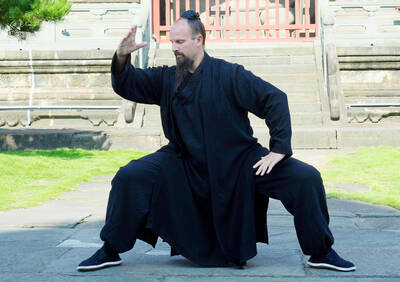
There was a time when Chinese master Yuan Shimao thought martial arts were all about punching and kicking. As a young practitioner, he focused on speed and strength. “I trained that way for many years without becoming still enough to search within myself,” said Yuan, who founded a kung fu academy in central China in 2004. “But as you gradually settle into stillness, you begin to understand what the scriptures mean by spirit,” he added. “You can begin to rediscover yourself.” That process is known as “entering the Dao” in martial arts. It is a guiding principle at Yuan’s academy in the sacred

The Nuclear Safety Commission (NSC, 核安會) on Sept. 24 approved the re-operation plan that Taiwan Power Co (Taipower, 台電) filed in March for the Ma-anshan Nuclear Power Plant in Pingtung County, after three rounds of review and 589 comments. Taipower now has to carry out the work in the plan and its own inspections on ageing, radiation and seismic resistance, then report back to the commission for review and on-site checks. Minister of Economic Affairs Kung Ming-hsin (龔明鑫) has named 2028 as the earliest restart. The NSC has given no date. THE DEBATE No challenge has been identified as to whether Ma-anshan

Cognitive warfare, says the Ministry of National Defense (MND), is the People’s Republic of China’s (PRC) use of “political, economic, cultural, military and legal means, with the intent to divide internal unity and undermine social stability” in Taiwan. Last week offered several examples. PRC media in October last year reported that the Chongqing Municipal Public Security Bureau had opened an investigation into Democratic Progressive Party (DPP) Legislator Puma Shen (沈伯洋), the DPP’s mayoral candidate for Taipei in next month’s election, for “Taiwan independence” activities. This was a cognitive warfare ploy, designed to unsettle the targeted person and to establish the idea
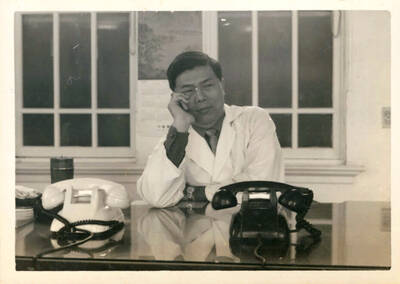
Oct. 12 to Oct. 18 After 11 years in prison on Green Island, Yen Shih-hung (顏世鴻) was finally due for release when a camp guard asked him for NT$20,000 to help pay his bride price. Yen refused. The next day, officials deemed that he had “failed to improve his thinking” and ordered him to undergo further political reeducation on Siaoliouciou (小琉球), where prisoners were also subjected to forced labor. He spent another 19 months there before regaining his freedom in January 1964. Yen’s punishment stemmed from his joining the Taiwan Provincial Student Affairs Committee


 RSS
RSS