


President Ma Ying-jeou (馬英九) should clarify his duties as president, sack his premier and abandon economic policies that ignore China’s military threat, a group of academics said yesterday.
The Taipei Society, a civic group perceived as pro-independence, challenged the president over his performance on the economy, national sovereignty and human rights since taking office in May.
The group also presented several suggestions to the Ma administration.
Ku Chung-hwa (顧忠華), a senior member of the group and a sociology professor at National Chengchi University, expressed concern that the Chinese Nationalist Party (KMT) was leading the nation back to a “party-state” government.
The KMT was straying from the principles of democracy since winning both the presidential and legislative elections earlier this year, Ku said.
Ku urged Ma and the KMT to establish a mechanism to guarantee responsible politics with the public’s interests in mind.
“Judging from the legislature’s performance in recent months, the KMT failed to take advantage of its majority in the legislature to pass laws that would benefit the public,” Ku told a press conference in Taipei yesterday.
In addition to stalling sunshine laws, the KMT allowed the four agreements on cross-strait sea transport, flights and postal services as well as food safety signed by the Straits Exchange Foundation and the Association for Relations Across the Taiwan Strait (ARATS) to escape a legislative vote, he said.
The agreements took effect by default after the deadline for a legislative review passed.
“The KMT is abandoning its duties and obligations in the legislature, and this is a violation of constitutional politics ... If the Ma administration and the KMT continues to abuse power, the party may suffer in the upcoming elections,” he said.
Academia Sinica research fellow Chiu Hei-yuan (瞿海源) said that Ma had failed to clarify his duties as president, had interfered with the Cabinet’s decision-making process and had failed to establish a full advisory mechanism to hear differing opinions on important issues.
Another executive member of the group, Lu Shih-hsiang (盧世祥) said Ma’s policies would make the nation’s economy too dependent on China, which flatly ignored the military threat posed by Taiwan’s rival across the Strait.
The group also said Ma had failed to stand up for freedom of assembly during the protests against ARATS Chairman Chen Yunlin (陳雲林) in October.
In addition, his rejection of a proposed visit by the Dalai Lama had hurt the nation’s human rights image, they said.
The president should replace Premier Liu Chao-shiuan (劉兆玄), the group said, and allow his replacement to form a new Cabinet, abandon pro-China policies and ensure that the government does not interfere in the media.
It also called for a meeting between Ma and Democratic Progressive Party Chairperson Tsai Ing-wen (蔡英文) to push for social and political reconciliation.

The military has spotted two Chinese warships operating in waters near Penghu County in the Taiwan Strait and sent its own naval and air forces to monitor the vessels, the Ministry of National Defense (MND) said. Beijing sends warships and warplanes into the waters and skies around Taiwan on an almost daily basis, drawing condemnation from Taipei. While the ministry offers daily updates on the locations of Chinese military aircraft, it only rarely gives details of where Chinese warships are operating, generally only when it detects aircraft carriers, as happened last week. A Chinese destroyer and a frigate entered waters to the southwest

A magnitude 6.1 earthquake struck off the coast of Yilan County at 8:39pm tonight, the Central Weather Administration (CWA) said, with no immediate reports of damage or injuries. The epicenter was 38.7km east-northeast of Yilan County Hall at a focal depth of 98.3km, the CWA’s Seismological Center said. The quake’s maximum intensity, which gauges the actual physical effect of a seismic event, was a level 4 on Taiwan’s 7-tier intensity scale, the center said. That intensity level was recorded in Yilan County’s Nanao Township (南澳), Hsinchu County’s Guansi Township (關西), Nantou County’s Hehuanshan (合歡山) and Hualien County’s Yanliao (鹽寮). An intensity of 3 was

Japanese Prime Minister Sanae Takaichi’s comment last year on Tokyo’s potential reaction to a Taiwan-China conflict has forced Beijing to rewrite its invasion plans, a retired Japanese general said. Takaichi told the Diet on Nov. 7 last year that a Chinese naval blockade or military attack on Taiwan could constitute a “survival-threatening situation” for Japan, potentially allowing Tokyo to exercise its right to collective self-defense. Former Japan Ground Self-Defense Force general Kiyofumi Ogawa said in a recent speech that the remark has been interpreted as meaning Japan could intervene in the early stages of a Taiwan Strait conflict, undermining China’s previous assumptions
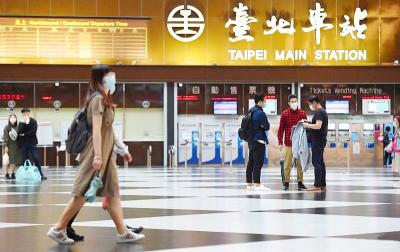
Taiwan Railways Corp (TRC) today announced that Shin Kong Mitsukoshi has been selected as the preferred bidder to operate the Taipei Railway Station shopping mall, replacing the current operator, Breeze Development Co Ltd. Among eight qualified firms that delivered presentations and were evaluated by a review committee, Shin Kong Mitsukoshi was ranked first, while Breeze was named the runner-up, the rail company said in a statement. Contract negotiations are to proceed in accordance with regulations, it said, adding that if negotiations with the top bidder fail, it could invite the second-ranked applicant to enter talks. Breeze in a statement today expressed doubts over


 RSS
RSS