


Low-cost airlines claimed on Monday that they will not make windfall profits from a trading program intended to limit their greenhouse gas emissions.
The EU wants all airlines that fly within its borders to trade pollution permits beginning in 2011, forcing them to buy more permits if they want to operate more or longer flights.
The EU’s cap-and-trade program gives companies a permit to pollute that they can sell to other companies if they use cleaner technology or emit less carbon dioxide. Businesses with more permits than they need can potentially profit.
But EU governments and lawmakers plan to force airlines to buy 15 percent of available permits to avoid any profiteering — something the European Low Fares Airline Association says is unlikely to happen.
A report ordered by the UK government last year claimed that all airlines would be able to pass on extra costs to customers, giving carriers less incentive to make real cuts to how much carbon dioxide they emit. To combat this, it called for more permits to be sold to companies.
The association says members will instead be unfairly loaded with high costs because they will have to buy the permits.
They cited a study they commissioned by Ernst & Young and York Aviation. It forecast a cost of 4 billion euros (US$5.5 billion) per year for low-cost carriers if they had to buy just 3 percent of all permits. The airlines say this will wipe out future profits and stop them from expanding.
The global airline industry also says that governments are ignoring airlines’ efforts to become more fuel-efficient and are threatening them with extra costs instead.
Giovanni Bisignani, the director general of the International Air Transport Association, said on Monday that airlines are generating enormous carbon dioxide savings by shortening routes, managing fuel more carefully and improving air navigation.
He said that “governments think green and see cash.”
“We get tax after tax, conceived in the name of the environment, which rob the industry of the cash to invest in technology,” he said in a speech in Amsterdam.

Four contenders are squaring up to succeed Antonio Guterres as secretary-general of the UN, which faces unprecedented global instability, wars and its own crushing budget crisis. Chile’s Michelle Bachelet, Argentina’s Rafael Grossi, Costa Rica’s Rebeca Grynspan and Senegal’s Macky Sall are each to face grillings by 193 member states and non-governmental organizations for three hours today and tomorrow. It is only the second time the UN has held a public question-and-answer, a format created in 2016 to boost transparency. Ultimately the five permanent members of the UN’s top body, the Security Council, hold the power, wielding vetoes over who leads the

A humanoid robot that won a half-marathon race for robots in Beijing on Sunday ran faster than the human world record in a show of China’s technological leaps. The winner from Honor, a Chinese smartphone maker, completed the 21km race in 50 minutes and 26 seconds, said a WeChat post by the Beijing Economic-Technological Development Area, also known as Beijing E-Town, where the race began. That was faster than the human world record holder, Ugandan Jacob Kiplimo, who finished the same distance in about 57 minutes in March at the Lisbon road race. The performance by the robot marked a significant step forward

An earthquake registering a preliminary magnitude of 7.7 off northern Japan on Monday prompted a short-lived tsunami alert and the advisory of a higher risk of a possible mega-quake for coastal areas there. The Cabinet Office and the Japan Meteorological Agency said there was a 1% chance for a mega-quake, compared to a 0.1% chance during normal times, in the next week or so following the powerful quake near the Chishima and Japan trenches. Officials said the advisory was not a quake prediction but urged residents in 182 towns along the northeastern coasts to raise their preparedness while continuing their daily lives. Prime
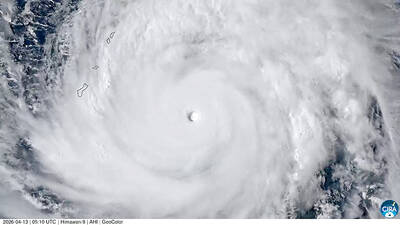
HAZARDOUS CONDITION: The typhoon’s sheer size, with winds extending 443km from its center, slowed down the ability of responders to help communities, an official said The US Coast Guard was searching for six people after losing contact with their disabled boat off the coast of Guam following Typhoon Sinlaku. The crew of the 44m dry cargo vessel, the US-registered Mariana, on Wednesday notified the coast guard that the boat had lost its starboard engine and needed assistance, Petty Officer 3rd Class Avery Tibbets said yesterday. The coast guard set up a one-hour communication schedule with the vessel, but lost contact on Thursday. A Coast Guard HC-130 Hercules aircraft was launched to search for the six people on board, but it had to return to Guam because of


 RSS
RSS