


Bank of Singapore Ltd (新加坡銀行), the private banking arm of Oversea-Chinese Banking Corp (OCBC, 華僑銀行), is looking to expand its family office business as the city-state rolls out the red carpet for wealthy investors.
“We are seeing increasing demand for families moving into the next generation to set a proper structure in place to manage family wealth,” chief executive officer Bahren Shaari said in an interview on Thursday. “Singapore is promoting that, to let families use it as a base to manage their investment activities globally.”
Bank of Singapore’s expansion would heighten competition with European firms such as UBS Group AG and Credit Suisse Group AG, who have long dominated this space.
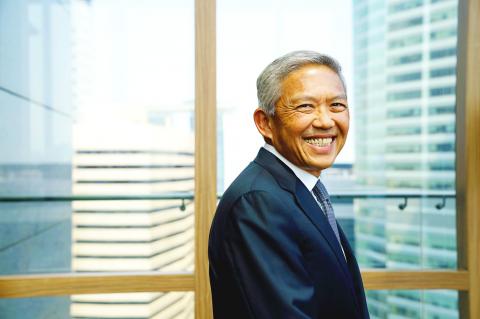
Photo: Bloomberg
Singapore family offices had average assets under management of US$857 million last year, nearly double the Asia-Pacific average of US$445 million, according to a survey of 262 such offices in a UBS/Campden report.
The expansion is to be spearheaded by Lee Woon Shiu (李文修), a managing director who currently looks after Bank of Singapore’s wealth planning and trust solutions, Shaari said.
While the bank does not plan to substantially increase the number of relationship managers it employs from about 400 now, it aims to double assets under management to US$500 million per banker over the next three to four years, he told Bloomberg TV on Friday.
Bank of Singapore also plans to open a new Taiwan unit to tap OCBC’s onshore presence.
The expanded family office business in Singapore would especially focus on rich families from China, Europe, and the Middle East, who are looking to invest in the Southeast Asian nation.
The Singapore government provides incentives including tax exemptions for funds managed by family offices for both offshore and onshore vehicles.
That offers the advantage that the offices would not pay Singapore tax on most of its investment gains, Shaari said.
Bank of Singapore’s assets under management rose to US$100 billion last month, after increasing an average 21 percent each year over the past five years.
The bank ranked No. 7 among Asia’s largest private banks in 2016, data compiled by Asian Private Banker showed.
To help expand its wealth and family office business in Europe, Bank of Singapore hired Anthony Adriano Simcic this month from HSBC Private Bank in Luxembourg. Simcic is to remain in the European city, which would be used as a base in addition to London.
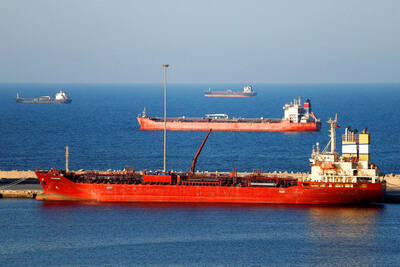
HORMUZ ISSUE: The US president said he expected crude prices to drop at the end of the war, which he called a ‘minor excursion’ that could continue ‘for a little while’ The United Arab Emirates (UAE) and Kuwait started reducing oil production, as the near-closure of the crucial Strait of Hormuz ripples through energy markets and affects global supply. Abu Dhabi National Oil Co (ADNOC) is “managing offshore production levels to address storage requirements,” the company said in a statement, without giving details. Kuwait Petroleum Corp said it was lowering production at its oil fields and refineries after “Iranian threats against safe passage of ships through the Strait of Hormuz.” The war in the Middle East has all but closed Hormuz, the narrow waterway linking the Persian Gulf to the open seas,

Taiwan has enough crude oil reserves for more than 100 days and sufficient natural gas reserves for more than 11 days, both above the regulatory safety requirement, Minister of Economic Affairs Kung Ming-hsin (龔明鑫) said yesterday, adding that the government would prioritize domestic price stability as conflicts in the Middle East continue. Overall, energy supply for this month is secure, and the government is continuing efforts to ensure sufficient supply for next month, Kung told reporters after meeting with representatives from business groups at the ministry in Taipei. The ministry has been holding daily cross-ministry meetings at the Executive Yuan to ensure

RATIONING: The proposal would give the Trump administration ample leverage to negotiate investments in the US as it decides how many chips to give each country US officials are debating a new regulatory framework for exporting artificial intelligence (AI) chips and are considering requiring foreign nations to invest in US AI data centers or security guarantees as a condition for granting exports of 200,000 chips or more, according to a document seen by Reuters. The rules are not yet final and could change. They would be the first attempt to regulate the flow of AI chips to US allies and partners since US President Donald Trump’s administration said it rescinded its predecessor’s so-called AI diffusion rules. Those rules sought to keep a significant amount of AI

Apple Inc increased iPhone production in India by about 53 percent last year and now makes a quarter of its marquee devices there, reflecting the US company’s efforts to avoid tariffs on China. The company assembled about 55 million iPhones in India last year, up from 36 million a year earlier, people familiar with the matter said, asking not to be named because the numbers aren’t public. Apple makes about 220 million to 230 million iPhones a year globally, with India’s share of the total increasing rapidly. Apple has accelerated its expansion in the world’s most populous country in recent years, bolstered


 RSS
RSS