

SEMICONDUCTORS
Macronix sets dividend
Memorychip maker Macronix International Co (旺宏電子) on Friday said its board had approved the distribution of a cash dividend of NT$1 per common share after the firm swung into the black last year after five unprofitable years. The proposed dividend, which would be the first since 2012, represents a 2.09 percent dividend yield based on the company’s stock price of NT$47.9. Macronix made NT$5.52 billion (US$188.84 million) in net profit last year, with earnings per share of NT$3.12. The board also approved a program to raise funds by issuing 360 million common shares among overseas investors, the firm said.
ELECTRONICS
PCB industry sees growth
Total production value of the nation’s printed circuit board (PCB) industry is expected to increase 4 percent this year, following 9.5 percent growth to NT$610 billion last year, Taiwan Printed Circuit Association chairman Rick Wu (吳永輝) said on Friday at a public event. Wu, who is president of flexible PCB producer Career Technology Co (嘉聯益), thanked the association’s members for supporting it as it enters its 20th year. Issues such as “smart manufacturing” and “global competence” would be key to the industry’s future, he said.
FINANCE
Promotion, dividend set
Shin Kong Financial Holding Co (新光金控) on Friday said that it had appointed senior vice president Huang Min-yi (黃敏義) to serve as president, replacing Catherine Lee (李紀珠), who would continue to serve as vice chairman. It also announced that its board had approved the distribution of a cash dividend of NT$0.35 per common share and plus a stock dividend of 1.5 percent. The cash dividend will be the firm’s highest in 10 years.
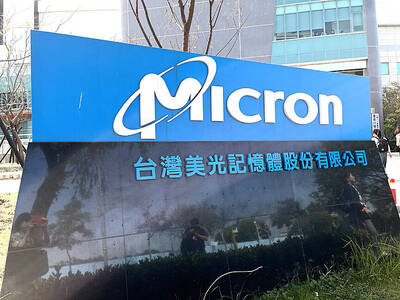
Micron Memory Taiwan and a union representing workers at its Taichung operations today said they had signed a labor-management agreement covering multiple issues, prompting both sides to withdraw from mediation scheduled for tomorrow. The joint statement did not disclose the terms of the agreement, saying the company and the union would separately communicate details to affected employees in the coming days. Idaho-based Micron, the world's third-largest memory chipmaker, employs about 15,000 people in Taiwan, a key manufacturing base where it produces DRAM and high-bandwidth memory chips used in artificial intelligence (AI) servers. Any disruption to Micron's Taiwan operations could affect already strained global

IN GOOD FAITH: Lai said he appreciates Micron’s commitment to Taiwan and that it would continue expanding its investment in the country, while also working with labor President William Lai (賴清德) yesterday called for US memory maker Micron Technology Inc and its workers to negotiate “sincerely” ahead of a possible strike by the company’s union in Taiwan. Last week, a Taiwanese union representing workers at Micron said it had secured authorization from its members to strike over a dispute concerning the company’s bonus scheme, escalating a labor conflict at the chipmaker’s largest manufacturing hub. Micron employs about 15,000 people in Taiwan and has said it invested more than NT$1.6 trillion (US$49.6 billion) in the country. Speaking in Taichung at the opening of a new Micron advanced assembly and testing facility,

China proposed adding advanced artificial intelligence (AI) technologies to its export-control list, potentially restricting overseas transfers of AI models and chip designs in an effort to keep closer control over homegrown advancements in a strategically important sector. The draft proposal covers 23 AI technologies, including large language models, agents, chip designs and computing clusters. Restricted technologies would include model weights and source code for products exceeding certain performance thresholds. Chinese AI startups have this summer made significant progress in closing the gap on US industry leaders. Models such as Moonshot (月之暗面) AI’s Kimi K3 and DeepSeek’s (深度求索) latest editions offer better pricing,

CoreWeave Inc has become caught in a tug of war between investors who see rising bond yields as a potential rally killer for the artificial intelligence (AI) trade and those who think demand for computing power will make those concerns seem passe before long. The cloud-computing services provider’s shares plunged 20 percent in the first three sessions of last week, including more than 15 percent on Wednesday, as its debt tumbled to levels that typically indicate distress. On Thursday morning, the cost of protecting CoreWeave bonds against default rose to the highest intraday level on record, while swaps priced in a


 RSS
RSS