


Enercon GmbH, the largest wind turbine supplier in Germany, last week opened its Asia-Pacific operational hub in Taiwan, eyeing the nation’s booming renewable energy market.
The regional hub began operations on Friday and aims to invest about NT$8 billion (US$264.2 million) over the next 10 years to transform its Taipei office into a marketing center.
The budget will also be used for personnel training to turn the local office into a regional research and development and maintenance center for Enercon, the company said.
Enercon accounts for more than 60 percent of land-based wind turbines built in Taiwan. The firm has installed 213 land-based wind turbines with a capacity of 463 megawatts.
Ministry of Economic Affairs Department of Investment Services Director-General Wang Jien-ping (王劍平) said during the inauguration ceremony that Enercon’s presence is welcome.
Taiwan wants to take advantage of Enercon’s experience in wind energy development to advance its bid to become a center for renewable energy production, Wang said, adding that the 10-year investment plan was affirmed when the company signed a letter of intent with the ministry earlier this month.
Enercon Taiwan Ltd (台灣艾納康) managing director Bart Linssen said that Taiwan has great potential for land-based wind turbines and the company has set its sights on the market.
In addition, Linssen said that local governments in Taiwan have voiced their support for renewable energy development, reinforcing Enercon’s determination to build a regional hub in the country.
While the government has set a goal of building 1.2 gigawatts (GW) in land-based wind turbines by 2025, Linssen said he is looking beyond that, adding that Taiwan’s market is expected to accommodate 5GW to 10GW in production capacity.
The cost of building land-based wind turbines is lower than for offshore wind turbines, paving the way for higher returns, Linssen said.
While the German firm produces a majority of the components for its wind turbines, Linssen said it would likely outsource the production of components such as blades and motors to Taiwanese suppliers.
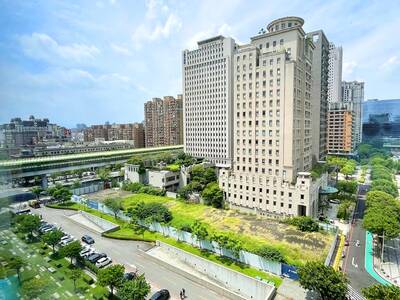
Taichung reported the steepest fall in completed home prices among the six special municipalities in the first quarter of this year, data compiled by Taiwan Realty Co (台灣房屋) showed yesterday. From January through last month, the average transaction price for completed homes in Taichung fell 8 percent from a year earlier to NT$299,000 (US$9,483) per ping (3.3m²), said Taiwan Realty, which compiled the data based on the government’s price registration platform. The decline could be attributed to many home buyers choosing relatively affordable used homes to live in themselves, instead of newly built homes in the city’s prime property market, Taiwan Realty
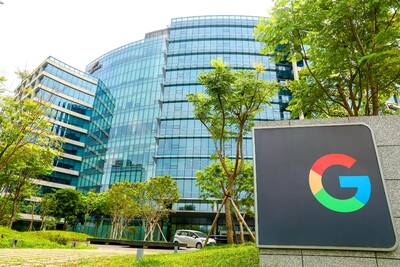
The government yesterday approved applications by Alphabet Inc’s Google to invest NT$27.08 billion (US$859.98 million) in Taiwan, the Ministry of Economic Affairs said in a statement. The Department of Investment Review approved two investments proposed by Google, with much of the funds to be used for data processing and electronic information supply services, as well as inventory procurement businesses in the semiconductor field, the ministry said. It marks the second consecutive year that Google has applied to increase its investment in Taiwan. Google plans to infuse NT$25.34 billion into Charter Investments Ltd (特許投資顧問) through its Singapore-based subsidiary Fructan Holdings Singapore Pte Ltd, and

Micron Technology Inc is a driving force pushing the US Congress to pass legislation that would put new export restrictions on equipment its Chinese competitors use to make their chips, according to people familiar with the matter. A US House of Representatives panel yesterday was to vote on the “MATCH Act,” a bill designed to close gaps in restrictions on chipmaking equipment. It would also pressure foreign companies that sell equipment to Chinese chipmaking facilities to align with export curbs on US companies like Lam Research Corp and Applied Materials Inc. The bill targets facilities operated by China’s ChangXin Memory Technologies Inc

Singapore-based ride-hailing and delivery giant Grab Holdings’ planned acquisition of Foodpanda’s Taiwan operations has yet to enter the formal review stage, as regulators await supplementary documents, the Fair Trade Commission (FTC) said yesterday. Acting FTC Chairman Chen Chih-min (陳志民) told the legislature’s Economics Committee that although Grab submitted its application on March 27, the case has not been officially accepted because required materials remain incomplete. Once the filing is finalized, the FTC would launch a formal probe into the deal, focusing on issues such as cross-shareholding and potential restrictions on market competition, Chen told lawmakers. Grab last month announced that it would acquire


 RSS
RSS