


Switzerland, which has been working to end its years-long practice of banking secrecy, on Thursday said it aimed to dramatically increase the number of countries it cooperates with toward international fiscal transparency.
The Swiss government said in a statement that it wanted to extend the automatic exchange of information (AEOI) on bank accounts to 21 more countries, including Argentina, Brazil, India, Israel and South Africa.
Such automatic information exchanges are aimed at bringing an end to Switzerland’s long-cherished banking secrecy practices and help prevent foreigners from stashing undeclared income in Swiss banks.
The government said consultations on the move would be held through to the middle of March next year and that it expected the accords to enter into force by Jan. 1, 2018 and for information exchange to begin a year later.
“The introduction of the AEOI with these countries confirms Switzerland’s international commitment to implementing the AEOI standard,” the Swiss government said.
“This will contribute to strengthening the competitiveness, the credibility and integrity of Switzerland’s financial center,” it said.
Faced with international pressure, Switzerland has been working hard to phase out its banking secrecy laws, which long made the country’s banks a magnet for wealthy foreigners wishing to hide their assets from the taxman back home.
Switzerland already has automatic information exchange agreements with 38 other countries, including with all the EU states, Gibraltar and Australia, where such exchanges are set to become the norm next year.
The Swiss parliament is meanwhile expected to give the green light before the end of the year to similar accords with Iceland, Norway, Japan, Canada, South Korea and the British crown dependencies of Jersey, Guernsey and the Isle of Man.
The AEOI system is a global standard put in place by the Organisation for Economic Cooperation and Development and is aimed at reducing the possibility of tax evasion.
Under the system, all banks must at the end of each year transmit to their national tax authorities client information, including on account holdings, dividend interest earnings and revenues from the sale of shares and certain types of insurance contracts.
For foreign residents, the information is then passed on to the tax authorities in the clients’ home countries.
The Swiss government’s plans to expand the number of countries it cooperates with were hailed by the Swiss Bankers Association, which represents all banks in the country.
“It is important that the AEOI norms are as practical and as fair as possible,” association chief Claude-Alain Margelisch told journalists in Geneva.

AI TALENT: No financial details were released about the deal, in which top Groq executives, including its CEO, would join Nvidia to help advance the technology Nvidia Corp has agreed to a licensing deal with artificial intelligence (AI) start-up Groq, furthering its investments in companies connected to the AI boom and gaining the right to add a new type of technology to its products. The world’s largest publicly traded company has paid for the right to use Groq’s technology and is to integrate its chip design into future products. Some of the start-up’s executives are leaving to join Nvidia to help with that effort, the companies said. Groq would continue as an independent company with a new chief executive, it said on Wednesday in a post on its Web
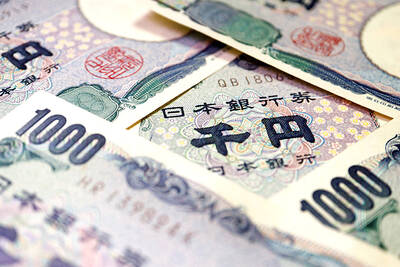
RESPONSE: The Japanese Ministry of Finance might have to intervene in the currency markets should the yen keep weakening toward the 160 level against the US dollar Japan’s chief currency official yesterday sent a warning on recent foreign exchange moves, after the yen weakened against the US dollar following Friday last week’s Bank of Japan (BOJ) decision. “We’re seeing one-directional, sudden moves especially after last week’s monetary policy meeting, so I’m deeply concerned,” Japanese Vice Finance Minister for International Affairs Atsushi Mimura told reporters. “We’d like to take appropriate responses against excessive moves.” The central bank on Friday raised its benchmark interest rate to the highest in 30 years, but Bank of Japan Governor Kazuo Ueda chose to keep his options open rather than bolster the yen,

Even as the US is embarked on a bitter rivalry with China over the deployment of artificial intelligence (AI), Chinese technology is quietly making inroads into the US market. Despite considerable geopolitical tensions, Chinese open-source AI models are winning over a growing number of programmers and companies in the US. These are different from the closed generative AI models that have become household names — ChatGPT-maker OpenAI or Google’s Gemini — whose inner workings are fiercely protected. In contrast, “open” models offered by many Chinese rivals, from Alibaba (阿里巴巴) to DeepSeek (深度求索), allow programmers to customize parts of the software to suit their

Global server shipments are expected to surge to 15 million units next year, from 4 million units this year, with artificial intelligence (AI) servers accounting for about 30 percent, driven by massive capital spending by major cloud service providers, the Market Intelligence and Consulting Institute (MIC) said on Thursday last week. Major cloud service providers — including Google’s parent company Alphabet Inc, Microsoft Corp, Amazon.com Inc and Meta Platforms Inc — are projected to budget US$450 million for capital expenditure next year, up from US$400 million this year, MIC ICT [information and communications technology] Industry Research Center director Edward Lin


 RSS
RSS