


US regulators on Friday fined Japanese auto parts manufacturer Takata Corp US$14,000 a day, accusing it of stonewalling the investigation into the company’s defective airbags.
Takata failed to fully respond to regulator requests to explain about 2.4 million pages of company documents supplied in the probe, or to provide knowledgeable staff a “walk-through” of the papers, the National Highway Traffic Safety Administration (NHTSA) said.
“Takata is neither being forthcoming with the information that it is legally obligated to supply, nor is it being cooperative in aiding NHTSA’s ongoing investigation of a potentially serious safety defect,” the NHTSA said in a letter to Takata.
TOO MUCH POWER
About 20 million vehicles produced by some of the world’s biggest automakers are being recalled due to the risk their Takata-made airbags could deploy with excessive explosive power, spraying potentially fatal shrapnel into the vehicle.
The problem has been linked to at least five deaths globally.
US regulations require Takata to explain documents that are not self-explanatory. Vincent said the company’s failure to provide adequate explanations over several months made a Feb. 4 meeting with the company “a waste of agency time and resources.”
Takata said it was “surprised and disappointed” by the NHTSA’s statement. “We strongly disagree with their characterization that we have not been fully cooperating with them,” it added.
Takata said it has released almost 2.5 million pages of documents to NHTSA in response to the agency’s orders, that it has been “in regular communication” with NHTSA staff on additional documents and that it has met regularly with NHTSA engineers to try to understand the root cause of the airbag program.
“We remain fully committed to cooperating with NHTSA in the interests of advancing auto safety for the driving public,” the company added.
Takata also said it has been working closely with automakers in areas it believes are most vulnerable.
Takata believes the airbag problem surfaces in humid, hotter regions and resisted the NHTSA’s call for a national recall of cars.
Takata will be fined a civil penalty of US$14,000 a day starting on Friday for each day the violations persists, Vincent said.
He warned the company that the NHTSA could force depositions of Takata employees in both the US and in Japan if the company did not cooperate fully in “short order.” He also said it could refer the matter to the US Department of Justice for court action.
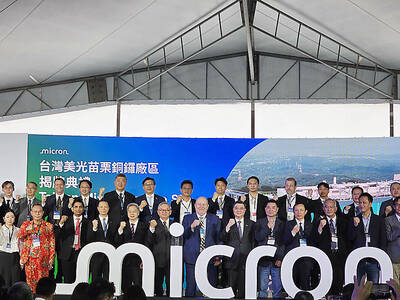
UNPRECEDENTED PACE: Micron Technology has announced plans to expand manufacturing capabilities with the acquisition of a new chip plant in Miaoli Micron Technology Inc unveiled a newly acquired chip plant in Miaoli County yesterday, as the company expands capacity to meet growing demand for advanced DRAM chips, including high-bandwidth memory chips amid the artificial intelligence boom. The plant in Miaoli County’s Tongluo Township (銅鑼), which Micron acquired from Powerchip Semiconductor Manufacturing Corp (力積電) for US$1.8 billion, is expected to make a sizeable capacity contribution to the company from fiscal 2028, the company said in a statement. It would be an extended production site of Micron’s large-scale manufacturing hub in Taichung, the company said. As the global semiconductor industry is racing to reach US$1 trillion

Singapore-based ride-hailing and delivery giant Grab Holdings Ltd has applied for regulatory approval to acquire the Taiwan operations of Germany-based Delivery Hero SE's Foodpanda in a deal valued at about US$600 million. Grab submitted the filing to the Fair Trade Commission on Friday last week, with the transaction subject to regulatory review and approval, the company said in a statement yesterday. Its independent governance structure would help foster a healthy and competitive market in Taiwan if the deal is approved, Grab said. Grab, which is listed on the NASDAQ, said in the filing that US-based Uber Technologies Inc holds about 13 percent of
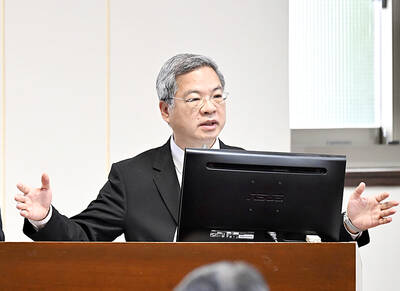
ABOVE LEGAL REQUIREMENT: The Ministry of Economic Affairs is prepared if LNG supply is disrupted, with more than the legal requirement of 11 days of inventory Taiwan has largely secured liquefied natural gas (LNG) supplies through May and arranged about half of June’s supply, Minister of Economic Affairs Kung Ming-hsin (龔明鑫) said yesterday. Since the Middle East conflict began on Feb. 28, Taiwan’s LNG inventories have remained more than 12 days, exceeding the legal requirement of 11 days, indicating no major supply concerns for domestic gas and electricity, Kung said at a meeting of the legislature’s Economics Committee in Taipei. The ministry aims to increase the figure to 14 days by the end of next year, he said. While one or two LNG or crude oil shipments for May

Taiwan’s food delivery market could undergo a major shift if Singapore-based Grab Holdings Ltd completes its planned acquisition of Delivery Hero SE’s Foodpanda business in Taiwan, industry experts said. Grab on Monday last week announced it would acquire Foodpanda’s Taiwan operations for US$600 million. The deal is expected to be finalized in the second half of this year, with Grab aiming to complete user migration to its platform by the first half of next year. A duopoly between Uber Eats and Foodpanda dominates Taiwan’s delivery market, a structure that has remained intact since the Fair Trade Commission (FTC) blocked Uber Technologies Inc’s


 RSS
RSS