


President Chain Store Corp (統一超商) yesterday opened its 5,000th 7-Eleven convenience store, in Greater Kaohsiung, a year ahead of plans, as convenience stores have increasingly become an integral part of life for Taiwanese.
Since it opened the first 7-Eleven store in Taiwan in 1980, President Chain has cornered a competitive market with a diversified operating model and a nearly 50 percent market share.
With more than 10,000 convenience stores in operation in a nation of 23 million people, sustaining profitability has become a major challenge for operators. However, the market leader yesterday said the market is not yet saturated.

Photo: Chen Yu-cheng, Taipei Times
“Lifestyles in Taiwan are in transition, and customer spending habits and preferences are changing, which means the retail sector is entering a new era of development,” the Chinese-language Apple Daily’s online news site yesterday quoted President Chain chairman Alex Lo (羅智先) as saying.
With this change in mind, Lo said the number of stores was not important, but the products and services President Chain could offer its customers are.
Lo was interviewed as the company launched its newest store in Greater Kaohsiung’s Neimen District (內門) yesterday, a day after the company reported its cumulative sales for the first half of the year had hit a record level.
Sales in the first six months totaled NT$101.44 billion (US$3.38 billion), an increase of 3.59 percent from the same period last year, the company said in an e-mailed statement.
The company, which reported NT$2.97 billion in net profit in the first quarter with earnings per share of NT$2.86, has not yet released its second-quarter profit report.
On Wednesday, domestic rival Taiwan FamilyMart Co (全家便利商店) reported sales of NT$4.91 billion last month, the highest figures for June in the company’s history, with accumulated sales in the first half rising 5 percent year-on-year to NT$27.31 billion.
President Chain attributed the strong earnings to rising sales of beverages, as well as increasing e-commerce and online shopping revenues, according to the statement.
Domestic subsidiaries such as cosmetics retailer Cosmed (康是美) and parcel delivery unit President Transnet Corp (統一速達), and overseas units including Philippine 7-Eleven and Shanghai Starbucks also reported higher sales, President Chain said.
The company said sales growth momentum should continue this month, driven by various marketing activities designed to take advantage of purchases made during the summer vacation and the FIFA World Cup.
Lo said that the company has opened stores in all the major cities and townships of the nation and would continue to open more stores.
“Sometimes, I can’t help wondering how many convenience stores Taiwan can accommodate,” Lo was quoted as saying. “Basically, the convenience store business in Taiwan is unique in the world. It is just so convenient.”
By adopting larger stores and offering more value-added services, such as online shopping and offering tickets for public transportation, the nation’s major convenience store chains have developed into the model of a one-stop shop.
In the first five months of the year, they posted total sales of NT$117.8 billion, up 5.4 percent year-on-year and accounting for 26.71 percent of the nation’s total retail sales, data from the Ministry of Economic Affairs showed last month.

Taiwanese firms have increased investment in the Philippines in recent years as Manila’s ties with Washington deepen and global supply chains continue to shift away from China, an expert at the Chung-Hua Institution for Economic Research (CIER, 中華經濟研究院) said yesterday. The Philippines had not been among Taiwanese investors’ top choices in Southeast Asia, CIER Taiwan ASEAN Studies Center director Kristy Hsu (徐遵慈) said at a seminar in Taipei. However, Taiwan’s investment in the country has grown significantly since the COVID-19 pandemic, reaching US $257 million last year, a high in recent years, she said. Although Taiwan’s total investment in the Philippines still lags
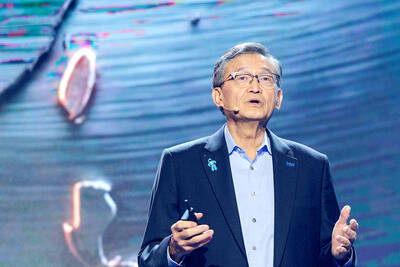
Intel Corp regards Taiwan Semiconductor Manufacturing Co (TSMC, 台積電) as a longstanding partner, as the US chipmaker would continue outsourcing production of advanced chips to TSMC, Intel chief executive officer Lip-Bu Tan (陳立武) said yesterday. “I don’t look at people as competitors. I look at the collaboration... Nvidia is also, you know, a good friend,” Tan told a news conference following his keynote speech at the Computex trade show in Taipei. “It’s a very trusted partnership for us... We are a big, top customer for them, and we’re going to continue doing that,” he said, referring to TSMC, the world’s largest foundry

Artificial intelligence (AI) agents would supplant smartphones as the center of people’s digital lives, fundamentally reshaping personal devices and driving a major computing upgrade cycle, Qualcomm Inc CEO Cristiano Amon said yesterday. In his keynote speech for this year’s Computex trade show in Taipei, Amon said that the rise of "agentic AI" — AI systems capable of reasoning, planning and carrying out tasks autonomously — would transform how people interact with technology across phones, PCs, vehicles and wearable devices. Describing the technology as the next major evolution in computing, Amon said that "2026 is the year of agents.” For decades, smartphones have sat

Hon Hai Precision Industry Co (鴻海精密) yesterday said it would work with US chipmaker Intel Corp to jointly develop and deploy next-generation artificial intelligence (AI) infrastructure and intelligent computing platforms in a move to capture booming demand for AI computing systems. Hon Hai, also known as Foxconn Technology Group (富士康), said in a statement that the partnership would combine its global manufacturing scale, system integration expertise and AI data center deployment capabilities with Intel’s strengths in processor architecture, silicon technologies and software ecosystem. The companies said they plan to work on equipment used in AI data centers, including server racks powered by


 RSS
RSS