


Formosa International Hotels Corp (FIHC, 晶華國際酒店集團), the nation’s largest listed hotel operator, beat more than 20 other global hotel operators with its successful acquisition of the “Regent” luxury hotel business for an estimated US$56 million.
The move paves the way for FIHC’s global expansion and makes it Taiwan’s first hotel operator to own an international hotel brand.
“Our mission is to build Regent into the most admired luxury hotel brand in the world, exceeding even the high expectations of Regent’s [previous] owners and guests,” FIHC chairman Steven Pan (潘思亮) said in a statement yesterday.
FIHC said it had entered into a definitive agreement with the US-based Carlson, a privately held, global hospitality and travel company, as well as Belgium’s Rezidor Hotel Group AB.
The acquisition by FIHC includes the sale of the global Regent brand and all associated intellectual property, hotel management and lease contracts for 17 hotel properties in operation and under development, as well as the Regent Seven Seas Cruises license, the statement said.
The master purchase agreement for the transaction includes customary conditions, which are expected to be fulfilled within the next month, it said.
The Regent brand is owned by Carlson, which also runs T.G.I. Friday’s restaurants and globally operates and licenses the Regent brand, including hotels, residences and cruise ships.
In 2003, Carlson expanded its relationship with Rezidor under a separate master franchise agreement to include the development rights for Regent in Europe, the Middle East and Africa.
FIHC is the owner of the Grand Formosa Regent Taipei (晶華酒店), which was opened 20 years ago on Zhongshan N Road by Regent’s founders.
According to the statement, future Regent hotels will be based on the concept of mixed-use, lifestyle development that encompasses the finest hospitality, residential and commercial components in prime urban and resort locations.
Regent plans to return to gateway cities such as Hong Kong, Tokyo, Shanghai, New York, Beverly Hills, London, Paris and Sydney. Pipeline hotels include projects in Abu Dhabi, Bali, Bangkok, Doha, Dubrovnik, Gurgaon, Kuala Lumpur and Phuket, as well as the Maldives and Puerto Rico, the statement said.
“We are confident that Regent will thrive under the direction of FIHC,” Carlson president and CEO Hubert Joly said in the press release. “The company’s thorough knowledge of the brand and access to capital are vital to the continued development of this tremendous luxury brand.”
“After a careful consideration, we came to the conclusion that FIHC provided an excellent fit to Regent’s future. It is exclusively focused on the luxury hotel segment, and committed to growing the brand internationally,” Rezidor Hotel Group president and CEO Kurt Ritter said.
Shares of Formosa International Hotels fell 0.8 percent to NT$370 yesterday on the Taiwan Stock Exchange. The stock has declined 9.87 percent so far this year, compared with the benchmark index’s 0.93 percent fall.
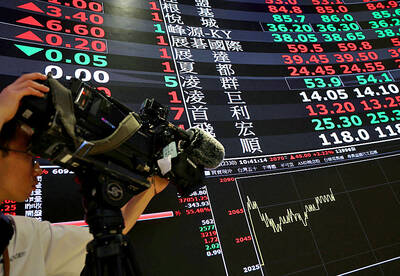
After several years flying high as Asia’s best Nvidia Corp proxy, Taiwan Semiconductor Manufacturing Co (TSMC, 台積電) is increasingly vying with other artificial intelligence (AI) stocks for investor attention. Stock traders are chasing a wider array of beneficiaries as mainstream usage of AI creates demand for hardware beyond the most-advanced chips TSMC makes for Nvidia. Subthemes from the deepening memory crunch to advances in robotics are also luring bids. At the same time, investment caps on single stocks are pushing funds to diversify, while retail investors long familiar with TSMC through its US depositary receipts are being offered a broader set of
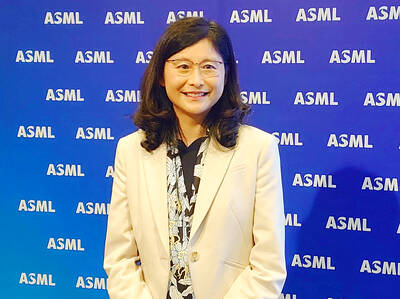
Netherlands-based semiconductor equipment supplier ASML Holding NV yesterday said that it is planning to hire an additional 1,000 people in Taiwan this year in response to growing demand from clients. ASML had previously planned to recruit 600 people this year, but that the plan has been adjusted upward, ASML vice president and ASML Taiwan general manager Grace Wang (汪佳慧) told reporters. ASML has a workforce of more than 4,500 in Taiwan, accounting for about 10 percent of its global total, Wang said. This year’s recruitment campaign would focus on adding people in the customer support, manufacturing and supply chain domains to assist ASML
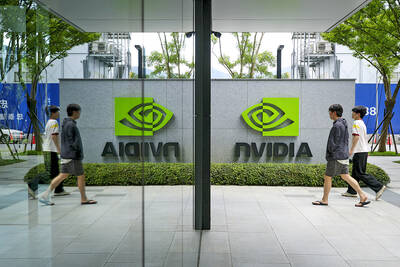
UNDER MICROSCOPE: Taiwan detained three people who allegedly conspired to buy servers in Taiwan and export them using fraudulent documentation, prosecutors said Nvidia Corp chief executive officer Jensen Huang (黃仁勳) on Saturday urged Super Micro Computer Inc to tighten up on compliance after Taiwan detained three people this week for allegedly making fraudulent declarations about artificial intelligence (AI) servers made by its US partner. The development marked the nation’s first crackdown on semiconductor smuggling, which grew after the US slapped restrictions on exports of high-end chips such as Nvidia AI accelerators to China. Nvidia is “rigorous” in explaining regulations to all of its partners, Huang told reporters after arriving in Taipei. “Ultimately Super Micro has to run their own company,” he said in response to
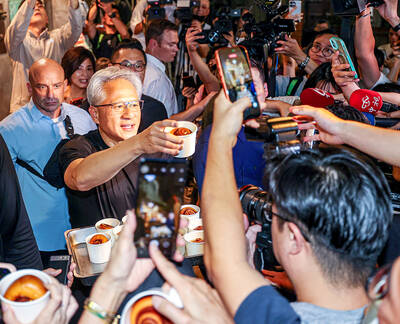
Nvidia Corp yesterday announced that CEO Jensen Huang (黃仁勳) would attend an employee meeting in Taipei tomorrow to celebrate the launch of the company’s Taiwan headquarters project. Huang would attend a gathering at the site of Nvidia’s planned headquarters in Beitou Shilin Technology Park (北投士林科技園區), the company said in a statement. After arriving in Taiwan on Saturday last week, Huang told reporters that he plans to meet with Quanta Computer Inc (廣達) chairman Barry Lam (林百里) and Taiwan Semiconductor Manufacturing Co (TSMC, 台積電) chairman C.C. Wei (魏哲家), and would attend the groundbreaking ceremony for Nvidia’s Taiwan headquarters tomorrow. Nvidia has not yet applied


 RSS
RSS