


Financial Supervisory Commission Chairman Sean Chen (陳冲) yesterday told the legislature that his commission saw a draft regulation that would govern potentially irregular banking mergers and acquisitions (M&As) as “inappropriate.”
“It requires court rulings to determine whether any of the M&As, closed during the second-stage financial reform, are illegal,” Chen told the legislature’s Finance Committee, saying that “it is inappropriate to allow the regulator to step into any M&A disputes before the court finds them illegal.”
Based on court rulings, the commission would then be entitled to impose administrative punishments on bank executives who are found guilty, he said.
Since the nation’s judicial system and administrative body already have a mechanism for victims to press charges and seek compensation in the case of irregularities associated with M&A deals, Chen said there were concerns over the necessity of the draft regulation.
“The draft regulation [if approved,] may trigger a constitutional dispute,” he said.
Chen also said the feasibility of any mandatory restoration of completed stake acquisitions is minimal, with any such stake restoration causing share price fluctuations, hurting the rights of incumbent shareholders. After Chen’s report, the Finance Committee decided to shelve review of the draft regulation, initiated by Chinese Nationalist Party (KMT) legislators Chiu Yi (邱毅) and Hsieh Kuo-liang (謝國樑) to address alleged problematic M&As that took place during former president Chen Shui-bian’s (陳水扁) second term in office.
Chiu earlier said problematic M&As include the deal between Taishin Financial Holdings Co (台新金控) and Chang Hwa Commercial Bank (彰化銀行) in 2005, China Development Financial Holding Corp (中華開發金控) raising its stake in Taiwan International Securities (金鼎證券), the board directors re-election in Mega Financial Holding Co (兆豐金控) in 2006 and two board re-elections in China Development Financial and Hua Nan Financial Holdings Co (華南金控) in 2007.
Chiu yesterday disagreed with Sean Chen, saying the commission should come up with administrative measures to address controversial M&As before legal action is necessary. In a resolution supported by his KMT peers, Chiu requested that the commission hammer out such measures within one month.
Taiwan Semiconductor Manufacturing Co (TSMC, 台積電) has approved a capital budget of US$31.28 billion for production expansion to meet long-term development needs during the artificial intelligence (AI) boom. The company’s board meeting yesterday approved the capital appropriation plan for purposes such as the installation of advanced technology capacity and fab construction, the world’s largest contract chipmaker said in a statement. At an earnings conference last month, TSMC forecast that its capital expenditure for this year would be at the higher end of the US$52 billion to US$56 billion range it forecast in January in response to robust demand for 5G, AI and
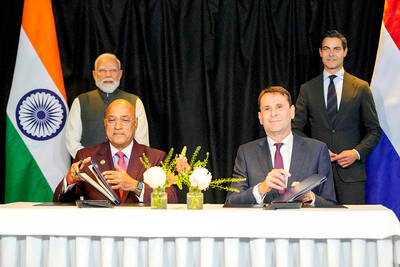
NEW MARKET: The partnership opens up India to the Dutch company, which already has a strong hold in the semiconductor market of South Korea, Taiwan and China ASML Holding NV entered into a partnership agreement with Tata Electronics Pvt Ltd aimed at ramping up India’s goal to develop domestic chip-manufacturing capabilities. The Dutch company’s technology would help power Tata Electronics’ planned 300 millimeter (mm) semiconductor foundry in Gujarat, according to a joint statement from the two companies on Saturday. The signing of a memorandum of understanding coincides with a visit by Indian Prime Minister Narendra Modi to the Netherlands, which is looking to deepen bilateral relations with New Delhi. ASML, whose top customers include Taiwan Semiconductor Manufacturing Co (台積電) and Samsung Electronics Co, makes lithography machines that can print
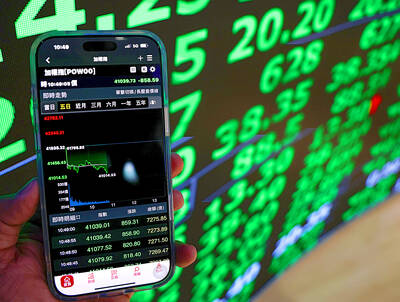
PORTFOLIO REBALANCING: The adjustments in three global equity indices reflect rising investor appetite for semiconductor and artificial intelligence-related stocks Taiwan’s weighting in major global equity indices compiled by MSCI Inc is to rise modestly following the latest quarterly review, underscoring the market’s expanding role in emerging-market portfolios, as global investors continue to favor the nation’s technology sector. Taiwan’s weighting in the MSCI Emerging Markets Index is to increase by 0.30 percentage points to 23.76 percent, after the changes take effect at the close of the May 29 session. Its weighting in the MSCI All-Country Asia ex-Japan Index is to rise 0.37 percentage points to 27.16 percent, while that in the MSCI All Country World Index is to edge up slightly to
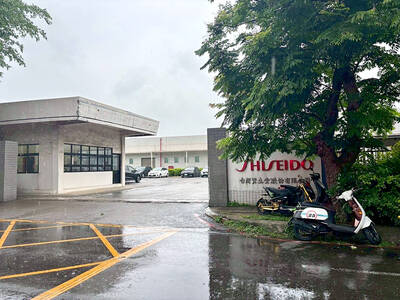
The Hsinchu County Government’s Labor Affairs Department yesterday said that it has received a plan from cosmetics brand Taiwan Shiseido Co (台灣資生堂) detailing mass layoffs at its plant in Hukou Township (湖口). While the labor authorities did not disclose the number of employees to be laid off, Japanese news media earlier in the day reported that the closure of the company’s factory in Hukou would result in 170 employees losing their jobs. Shiseido followed the law by reporting its layoff plan, the department said, adding that authorities would closely monitor negotiations between the management and affected employees and step in if any


 RSS
RSS