

The iPad may have been designed in the US, but Apple’s money-spinning products are manufactured in the high-tech factories of East Asia.
If the new tablet computer follows the iPhone and iPod by capturing the imagination of consumers around the globe, component makers in Taiwan, China and South Korea will reap the benefits.
“The iPad is likely to stimulate global demand for high-tech products and components,” said James Chen (陳政慧), a vice president at Taiwan-based display and touch panel maker Wintek Corp (勝華).
Confidentiality pacts between Apple and its suppliers means no company is willing to openly discuss who does what, but analysts are free to make informed guesses.
Wintek is widely seen as a likely supplier of iPad parts, although Chen declined to either confirm or deny the company’s involvement.
The new touchscreen device, which was unveiled last Wednesday, seeks to establish an entire new category between laptop and smartphone, but it does so by combining well-known components, most of them produced in Asia.
While the touchscreens are widely thought to be made by firms like Wintek, the chips are likely to come from companies such as Japan’s Toshiba Corp and South Korea’s Samsung Electronics Co.
South Korea’s LG Display Co is named as a probable supplier of the displays, while Taiwan’s Hon Hai Precision Industry Co (鴻海精密), a veteran Apple supplier, is believed to be in charge of assembly.
“In Taiwan, I expect Hon Hai will become the biggest beneficiary of Apple’s iPad,” said Mars Hsu, a Taipei-based analyst with Grand Cathay Securities Co (大華證券).
Hon Hai Precision was not immediately available for comment.
However, an official at Innolux Display Corp (群創光電), Hon Hai Precision’s flat panel manufacturing arm, said on condition of anonymity that the company would try its best to team up with Apple in the production of the iPad.
Meanwhile, Simplo Technology Co (新普科技) and Dynapack International Technology Corp (順達科技), both of Taiwan, have been major battery pack providers for Apple in the past, and they could maintain their role, Capital Securities Corp (群益證券) said in a report.
“They’ve already served as component suppliers to Apple’s iPhone. That means they’ve reached economies of scale and enjoy cost advantages,” Taiwan International Securities Corp (金鼎證券) analyst Michael Chiang said.
But on the big question — how much money the iPad will make for the suppliers — the jury is still out.
An official with South Korea’s LG Display said the latest Apple device was likely to revitalize the market as a whole.
“The iPad will help increase demand for new components,” he said on condition of anonymity.
Another optimist was Taiwan-based Topology Research Institute (拓璞產業研究所), which this week raised its forecast for iPad sales this year to 7 million units from 5 million previously.
In a statement, Topology said it based its higher forecast on iPad’s pricing strategy, with the cheapest version costing as little as US$499.
However, TLG Asset Management (台壽保投信) analyst Arch Shih (施博元) said it was too early to say how much iPad would do to lift contract makers’ profitability.
Shih said further volatility in US securities markets threatening to spill over into the real economy.
“A market pullback could impact global demand for high-tech products. At the moment, I’m cautious about iPad sales,” Shih said.
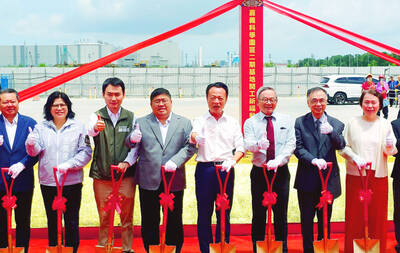
TECH CORRIDOR: The new Phase II site is expected to work with other facilities in the region and nation as TSMC looks to shape the future with its manufacturing Taiwan Semiconductor Manufacturing Co (TSMC, 台積電) would build three additional advanced packaging facilities in Phase II of the Chiayi Science Park (嘉義科學園區), National Science and Technology Council (NSTC) Minister Wu Cheng-wen (吳誠文) said yesterday. Speaking at the groundbreaking ceremony for the Phase II, Wu said the roughly 90-hectare site would be developed into an advanced packaging industry cluster led by TSMC. Two advanced packaging facilities at Phase I began mass production last month. Wu said that the Phase II development of the Chiayi Science Park would strengthen the resilience of the regional economy and help transform Chiayi County into a global production
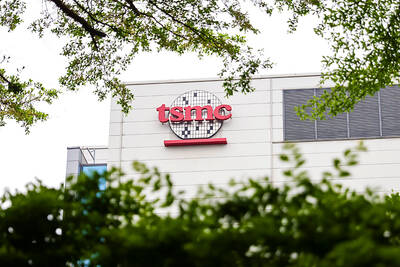
MOMENTUM: Second-quarter revenue reached NT$1.27 trillion as the June turnover surged, while TSMC’s 2nm process spending and US expansion remain focus points Taiwan Semiconductor Manufacturing Co (TSMC, 台積電) yesterday reported its highest quarterly sales amid strong global demand for artificial intelligence (AI) applications. The world’s largest contract chipmaker posted NT$1.27 trillion (US$39.5 billion) in consolidated revenue for the second quarter of this year, up 36 percent year-on-year and nearly 12 percent from a quarter earlier. The quarterly figure was bolstered by a very strong performance last month, when TSMC’s revenue was up 67.9 percent from a year earlier and rose 6.2 percent from a month earlier to NT$442.68 billion, a new monthly high, TSMC said in a statement. At its earnings conference in April, TSMC
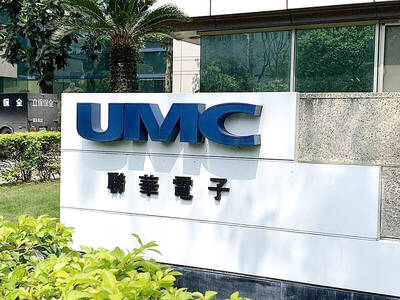
United Microelectronics Corp (UMC, 聯電), the second largest contract chipmaker in Taiwan, said yesterday that it has started mass production of silicon photonics wafers at its 12-inch wafer fab in Singapore. The first batch of silicon photonics wafers in commercial production was achieved in collaboration with Singapore-based silicon photonics fabless firm Silith Technology Pte Ltd, which took delivery of the batch of products, UMC said in a statement. UMC said the cooperation integrated Silith’s photonics design expertise with UMC’s 12-inch wafer production capacity and process capabilities to support high-volume production of the Singaporean partner’s 1.6 terabits per second (1.6T) silicon photonics platform. The
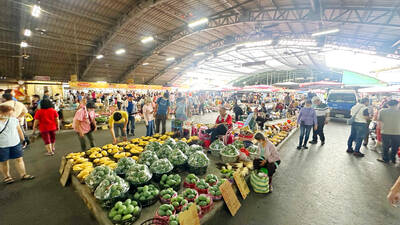
People buy mangoes at a wholesale market in Tainan’s Yujing District yesterday after Typhoon Bavi moved away from Taiwan. With the Irwin mango harvest season nearing its end, reduced output and strong demand has led the average mango price to climb to NT$67.4 per kg from about NT$35 at the beginning of this month, the Tainan Agriculture Bureau said.


 RSS
RSS