

The Taipei-based National Taiwan University of Science and Technology (NTUST, 台科大) received a NT$200 million (US$6.08 million) donation pledge on Saturday from alumnus Zhuang Yong-shun (莊永順), chairman of Aaeon Technology Co (研揚科技), the largest single donation ever made in Taiwan to a tertiary vocational training institution.
Zhuang, who is also a co-founder of Advantech Co (研華), signed the donation agreement with NTUST president Chen Shi-shuenn (陳希舜) in a ceremony held at the school.
Zhuang will provide NT$200 million for the construction of a teaching and research building scheduled to be completed late next month, while the university promised to name the structure the Aaeon Building to build a bridge of cooperation between the business and academic sectors and a platform for collaborative development of power electronics and medical equipment technology.
The ceremony was witnessed by Mao Kao-wen (毛高文), a former minister of education and former NTUST president, and Tsai Duei (蔡堆), a former minister of transportation and communications.
Zhuang graduated from the NTUST Department of Electronic Engineering in 1979 and then worked at Hewlett-Packard. Along with two Hewlett-Packard co-workers, he established Avantech Co in 1983 and 10 years later set up Aaeon Technology.
Both companies, which are among the world’s premier manufacturers of industrial personal computers and related equipment, are listed on the Taiwan Stock Exchange.
Displaying a wallet that was given to him 30 years ago by his teachers at NTUST to encourage him to earn a lot of money and give back to society, Zhuang said he was pleased to be able to fulfill his teachers’ instructions and added that he hoped other members of the public would donate money for education.
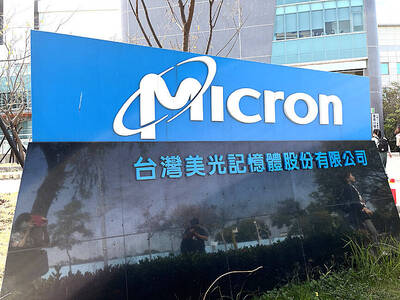
Micron Memory Taiwan and a union representing workers at its Taichung operations today said they had signed a labor-management agreement covering multiple issues, prompting both sides to withdraw from mediation scheduled for tomorrow. The joint statement did not disclose the terms of the agreement, saying the company and the union would separately communicate details to affected employees in the coming days. Idaho-based Micron, the world's third-largest memory chipmaker, employs about 15,000 people in Taiwan, a key manufacturing base where it produces DRAM and high-bandwidth memory chips used in artificial intelligence (AI) servers. Any disruption to Micron's Taiwan operations could affect already strained global

IN GOOD FAITH: Lai said he appreciates Micron’s commitment to Taiwan and that it would continue expanding its investment in the country, while also working with labor President William Lai (賴清德) yesterday called for US memory maker Micron Technology Inc and its workers to negotiate “sincerely” ahead of a possible strike by the company’s union in Taiwan. Last week, a Taiwanese union representing workers at Micron said it had secured authorization from its members to strike over a dispute concerning the company’s bonus scheme, escalating a labor conflict at the chipmaker’s largest manufacturing hub. Micron employs about 15,000 people in Taiwan and has said it invested more than NT$1.6 trillion (US$49.6 billion) in the country. Speaking in Taichung at the opening of a new Micron advanced assembly and testing facility,

China proposed adding advanced artificial intelligence (AI) technologies to its export-control list, potentially restricting overseas transfers of AI models and chip designs in an effort to keep closer control over homegrown advancements in a strategically important sector. The draft proposal covers 23 AI technologies, including large language models, agents, chip designs and computing clusters. Restricted technologies would include model weights and source code for products exceeding certain performance thresholds. Chinese AI startups have this summer made significant progress in closing the gap on US industry leaders. Models such as Moonshot (月之暗面) AI’s Kimi K3 and DeepSeek’s (深度求索) latest editions offer better pricing,

CoreWeave Inc has become caught in a tug of war between investors who see rising bond yields as a potential rally killer for the artificial intelligence (AI) trade and those who think demand for computing power will make those concerns seem passe before long. The cloud-computing services provider’s shares plunged 20 percent in the first three sessions of last week, including more than 15 percent on Wednesday, as its debt tumbled to levels that typically indicate distress. On Thursday morning, the cost of protecting CoreWeave bonds against default rose to the highest intraday level on record, while swaps priced in a


 RSS