


Qantas Airways Ltd, Australia’s largest carrier, will be subject to “additional safety checks” following three incidents within a week, the Civil Aviation Safety Authority (CASA) said yesterday.
The CASA set up a team of six to review the airline’s maintenance planning and management over the next two weeks. It follows an incident last month when a Qantas aircraft made an emergency landing in Manila after part of its fuselage came off at 8,800m. On Saturday, a flight was forced to return to Sydney soon after takeoff because of a fluid leak in a wing.
“We started thinking, during the course of last week, following the incident near Manila, whether we should do something more,” CASA spokesman Peter Gibson said in a telephone interview. “We have done all our normal safety checks, looking at what they did in response, but we thought it was prudent to do some additional safety checks.”
Qantas said a flight carrying 200 passengers to the Philippines was forced to return to Sydney on Saturday because of a hydraulic leak in a wing.
The captain of the Boeing 767-300 flight to Manila became aware of the leak in the wing’s spoiler actuator section, Qantas spokeswoman Melissa Thomson said in a telephone interview from Sydney.
“There was no safety issue at any time,” she said.
On July 25, a Qantas flight carrying 346 passengers from Hong Kong to Melbourne made an emergency landing in Manila after part of the fuselage came off. Three days later, an aircraft bound for Melbourne returned to Adelaide after the rear doors failed to close.
CASA’s team, headed by its deputy head of operations, Mick Quinn, will look at “the planning and management of maintenance” at Qantas and the “overall safety systems and the way they have been managing recent incidents,” Gibson said.
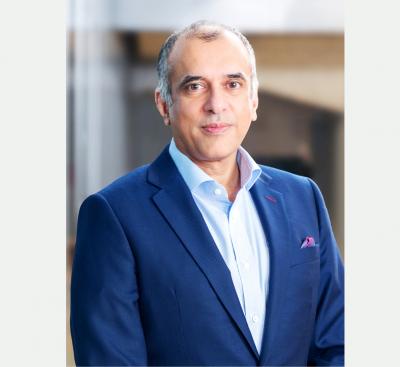
HSBC Holdings PLC is deepening its commitment to Taiwan as the economy emerges as one of the bank’s fastest-growing markets globally, driven by an artificial intelligence (AI) investment boom, expanding cross-border trade, and rising wealth creation. “The advantage that Taiwan has is a growth story linked to the semiconductor and broader AI industries, strong underlying corporate performance, and wealth creation,” said Surendra Rosha, HSBC’s co-chief executive for Asia and the Middle East, in an exclusive interview with the Taipei Times on June 2, during this year’s HSBC Taiwan Conference. That combination has helped HSBC cement its position as the most profitable international
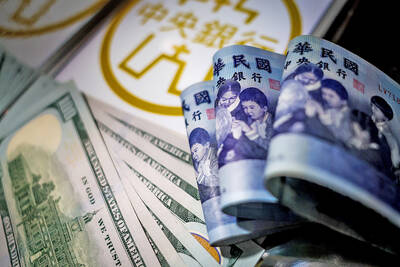
The New Taiwan dollar yesterday fell sharply against the US dollar to close at its lowest level since May 22 amid a massive outflow of funds from the country because of investors panicking over global equity markets. The NT dollar ended at NT$31.580 against the US dollar, slightly lower than its close of NT$31.568 on May 22, after moving between NT$31.5 and NT$31.648 on combined turnover of US$3.062 billion on the Taipei Foreign Exchange and the Cosmos Foreign Exchange. The NT dollar received a significant hit in the morning session, slumping as much as NT$0.173 at a time when other Asian currencies
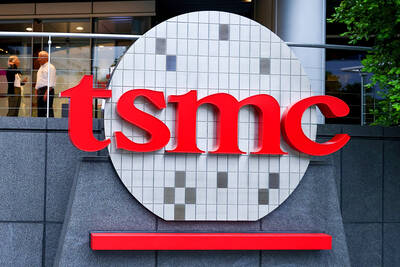
Taiwan Semiconductor Manufacturing Co (TSMC, 台積電) is now ranked ninth among the world’s 100 most valuable companies after its market capitalization more than doubled over the past year, PricewaterhouseCoopers (PwC) Taiwan said in a report last month. TSMC’s market capitalization surged 101 percent year-on-year to US$1.427 trillion as of March 31, the accounting and consulting firm’s 2026 Global Top 100 Companies by Market Capitalization report said. The gain catapulted the world’s largest contract chipmaker from 12th place to ninth in the rankings, and it was the fastest-growing among the global top 10, it said. TSMC was the only Taiwanese company among the top
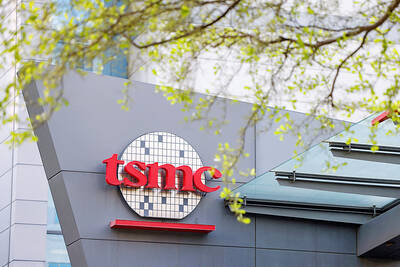
Taiwan Semiconductor Manufacturing Co (TSMC, 台積電) yesterday reported record revenue of NT$416.975 billion (US$13.17 billion) for last month, putting the world’s largest contract chipmaker on track to set a record for quarterly revenue. Last month’s figure surpassed March’s record NT$415.19 billion and represented increases of 1.5 percent from April and 30.1 percent from a year earlier. For the first five months of the year, TSMC generated NT$1.96 trillion in revenue, up 30 percent year-on-year, it said in a statement. TSMC has forecast second-quarter revenue of between US$39 billion and US$40.2 billion, representing sequential growth of about 10 percent and year-on-year growth of about


 RSS
RSS