


The central bank yesterday said it would shuffle its top-ranking officials after the retirement of Deputy Governor Hsu Yi-hsiung (徐義雄).
The bank's clearing and settlement bureau chief, Yang Chin-lung (
Yang, 55, earned a master's degree from National Chengchi University and a doctorate in economics from Birmingham University in Britain. He joined the central bank in 1989.
Before taking the helm at the clearing and settlement bureau, Yang served as an economic research fellow, a manager at the foreign exchange bureau and the director of the central bank's representative office in London.
Yang has made significant contributions in establishing real-time lump sum settlement systems and improved the bills financing credit management system, the statement said.
Treasury bureau chief Yu Chin-tang (
Yan, 52, specializes in macroeconomic research, international financing and Taiwan-China economic ties. He joined the central bank in 1993.
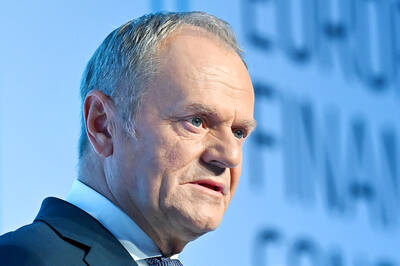
Poland is betting on a flood of investments and technology transfers from Taiwanese companies to reengineer its US$1 trillion economy. Polish Prime Minister Donald Tusk said yesterday that Poland will no longer be “just an assembly hub” as it pursues further investments from the likes of Foxconn Technology Group (富士康). The firm, whose full name is Hon Hai Precision Industry Co (鴻海精密), last month agreed to build electric vehicles (EVs) in the European Union nation and now could be a partner in a semiconductor venture, he said. The government’s aim is to boost manufacturing and the country’s high-tech chops in an era
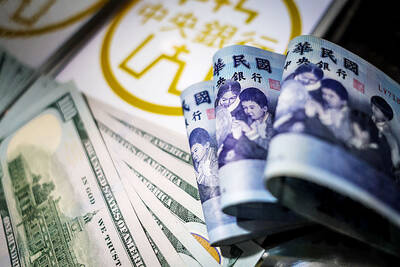
Taiwan remained the sixth-largest net creditor nation in the world last year, despite a fall of more than 10 percent in its net international investment position (NIIP) over the year, the central bank said yesterday. The NIIP is the difference between a country’s external financial assets and its external financial liabilities. Taiwan’s external financial assets hit US$3.27 trillion at the end of last year, up US$275.75 billion or 9.2 percent from a year earlier, the central bank said in its annual NIIP report. The growth largely reflected an increase in holdings of overseas marketable securities by residents in Taiwan, as well as a
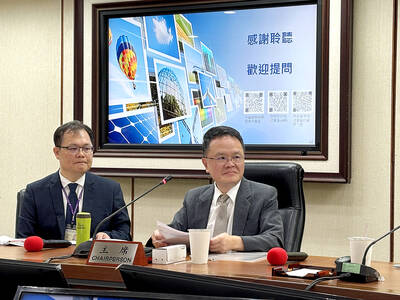
BAD FAITH LITIGATION? The two companies, owned by a California-based private equity firm, could be seeking licensing fees or a settlement payout with the suit Taiwan Intellectual Property Office (TIPO) Director-General Liao Cheng-wei (廖承威) said yesterday he suspected that two firms suing contract chipmaker Taiwan Semiconductor Manufacturing Co (TSMC, 台積電) for patent infringement are “patent trolls.” A patent troll refers to a company that buys patents not for manufacturing products, but to sue other companies for compensation, accusing them of using its patents. Patent trolls, formally called Non-Practicing Entities or Patent Assertion Entities, were responsible for more than 50 percent of lawsuits in the US last year, costing targeted businesses tens of billions of US dollars a year, according to the US-based LegalCharity Web site. Asked whether

RESTRICTION BREACH: ASML said that it denies ‘unfounded rumors regarding non-compliance with export controls concerning China,’ and enforces controls strictly US Secretary of Commerce Howard Lutnick in a series of recent meetings outlined concerns to Dutch chip-equipment giant ASML Holding NV’s senior leaders that one of its top-of-the-line machines might have made its way into China, in violation of US-led export restrictions. In the meetings, Lutnick expressed concern to ASML executives over the company’s extreme ultraviolet lithography (EUV) machines, people familiar with the talks said. EUV systems are used by firms such as Taiwan Semiconductor Manufacturing Co (台積電) to manufacture processors for the likes of Nvidia Corp and Apple Inc. ASML has never been allowed to ship them to China because of curbs


 RSS
RSS