


Lyu appointed to Mega job
The Ministry of Finance yesterday appointed former minister without portfolio Joseph Lyu (呂桔誠) as the replacement for outgoing Mega Financial Holding Co (兆豐金控) chairman Cheng Shen-chih (鄭深池), a ministry statement said.
Lyu will double as chairman of the firm's subsidiary, Mega International Commercial Bank (兆豐國際商銀), the statement said.
The ministry also appointed Kaohsiung City Government Finance Bureau chief Ray Dawn (董瑞斌) to be Mega Financial's president and the chairman of subsidiary Mega Bills Finance Co (兆豐票券), the statement said.
Mega's incumbent president, Mckinney Tsai (蔡友才), will move to head Mega Investment Trust Corp (兆豐國際投信), it said.
The three nominations are expected to be approved at the firm's board meeting today.
Election result boosts shares
Taiwan's share prices closed 1.79 percent higher yesterday after a landslide victory by the opposition Chinese Nationalist Party (KMT) in weekend parliamentary elections, dealers said.
The weighted index closed up 144.10 points at 8,173.41, having traded in a range of 8,260.88 to 8,097.68 on turnover of NT$168.10 billion (US$5.19 billion).
The tourism sector was up 6.92 percent, cement added 6.54 percent, financials rose 5.64 percent, construction was up 5.16 percent, textiles advanced 5.16 percent and transport rose 2.36 percent.
The electronics sector was down 0.79 percent.
The KMT's win raised hopes for better cross-strait economic ties, giving a boost to tourism-related stocks, dealers said.
Frank Lin, senior vice president at Fubon Securities (富邦證券), said investors were willing to build their investments after the KMT's unexpectedly strong showing.
"Investors are pinning their hopes on better cross-strait relations, no matter who wins the presidential election in March," Lin said.
He said that investors expected more Chinese visitors would be given permission to enter Taiwan.
If that materializes, Lin said "it will boost domestic demand not only for hotels, but also for other related services."
An increase in domestic demand would also help increase the value of assets, he added.
Gold hits record in Hong Kong
Hong Kong gold prices yesterday closed above US$900 for the first time as investors search for a safe haven amid fears of a US economic slowdown and stock market turmoil.
The precious metal closed at US$908 an ounce after passing the US$900 mark at around 2:30pm -- up US$15.50 an ounce from Friday's close of US$892.50, dealers said.
The price had broken through the US$900 mark during trading in New York on Friday following a speech by Federal Reserve Chairman Ben Bernanke that was thought to indicate there could be more US interest rate cuts.
Formosa Plastics optimistic
Formosa Plastics Group (台塑), Taiwan's biggest diversified industrial company, expects revenue to rise to a record this year as it expands production.
Revenue will climb from last year's NT$2 trillion (US$62 billion), CEO William Wong (王文淵) told reporters in Mailiao Township (麥寮), Yunlin County, yesterday, without giving an estimate. Sales last year increased 20 percent from 2006, he said.
Formosa Plastics is expanding output to meet demand for its products from manufacturers that make goods including drinking bottles, toys and garments.
"The market was exceptionally good last year as sales in countries such as Vietnam, the US and China all rose quite a lot," Wong said.
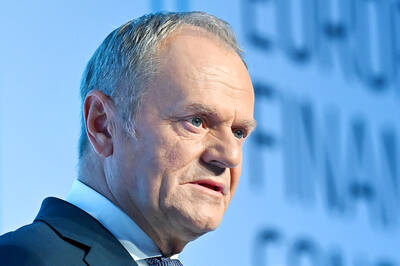
Poland is betting on a flood of investments and technology transfers from Taiwanese companies to reengineer its US$1 trillion economy. Polish Prime Minister Donald Tusk said yesterday that Poland will no longer be “just an assembly hub” as it pursues further investments from the likes of Foxconn Technology Group (富士康). The firm, whose full name is Hon Hai Precision Industry Co (鴻海精密), last month agreed to build electric vehicles (EVs) in the European Union nation and now could be a partner in a semiconductor venture, he said. The government’s aim is to boost manufacturing and the country’s high-tech chops in an era
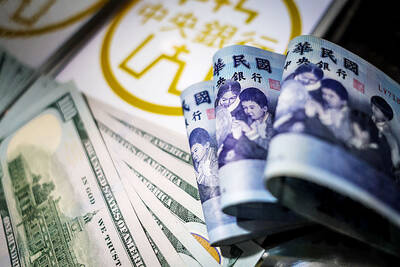
Taiwan remained the sixth-largest net creditor nation in the world last year, despite a fall of more than 10 percent in its net international investment position (NIIP) over the year, the central bank said yesterday. The NIIP is the difference between a country’s external financial assets and its external financial liabilities. Taiwan’s external financial assets hit US$3.27 trillion at the end of last year, up US$275.75 billion or 9.2 percent from a year earlier, the central bank said in its annual NIIP report. The growth largely reflected an increase in holdings of overseas marketable securities by residents in Taiwan, as well as a

RESTRICTION BREACH: ASML said that it denies ‘unfounded rumors regarding non-compliance with export controls concerning China,’ and enforces controls strictly US Secretary of Commerce Howard Lutnick in a series of recent meetings outlined concerns to Dutch chip-equipment giant ASML Holding NV’s senior leaders that one of its top-of-the-line machines might have made its way into China, in violation of US-led export restrictions. In the meetings, Lutnick expressed concern to ASML executives over the company’s extreme ultraviolet lithography (EUV) machines, people familiar with the talks said. EUV systems are used by firms such as Taiwan Semiconductor Manufacturing Co (台積電) to manufacture processors for the likes of Nvidia Corp and Apple Inc. ASML has never been allowed to ship them to China because of curbs

BAD FAITH LITIGATION? The two companies, owned by a California-based private equity firm, could be seeking licensing fees or a settlement payout with the suit Taiwan Intellectual Property Office (TIPO) Director-General Liao Cheng-wei (廖承威) said yesterday he suspected that two firms suing contract chipmaker Taiwan Semiconductor Manufacturing Co (TSMC, 台積電) for patent infringement are “patent trolls.” A patent troll refers to a company that buys patents not for manufacturing products, but to sue other companies for compensation, accusing them of using its patents. Patent trolls, formally called Non-Practicing Entities or Patent Assertion Entities, were responsible for more than 50 percent of lawsuits in the US last year, costing targeted businesses tens of billions of US dollars a year, according to the US-based LegalCharity Web site. Asked whether


 RSS
RSS