

World equity markets spiraled lower yesterday as Asia and Europe took their cue from a pre-weekend Wall Street slump sparked by renewed US economic fears, credit concerns and record high oil prices.
Investors were rattled by a steep US decline on Friday, when worries about the outlook for the world's largest economy grew amid poor earnings news on the 20th anniversary of the New York market crash.
Taiwan share prices closed sharply lower yesterday, with the benchmark TAIEX closed down 251.09 points, or 2.61 percent, at 9,360.63, on turnover of NT$149.30 billion (US$4.58 billion). Shares plunged as much as 3.5 percent during the day.
Elsewhere in Asia, Hong Kong shares suffered their biggest fall in one day in more than seven years, while Tokyo, Seoul and other major bourses also dropped sharply.
The European single currency also hit a record high US$1.4347. A strong euro makes eurozone exports more expensive for buyers using weaker currencies, and therefore weighs on European shares.
Frankfurt, London and Paris stock markets slid by more than 1 percent on Monday.
"After having triggered a downturn across the region today, Wall Street holds the key if the markets can quickly stabilize," Jih Sun Securities Investment (日盛投顧) deputy manager Wilson Lien (連偉勝) said.
The Taiwan market, in particular, will depend on how technology shares on NASDAQ and those included in the Philadelphia Semiconductor Index perform in the immediate term, he said.
The plunge on Wall Street has sent shockwaves at a time when local technology stocks have started showing signs of picking up momentum and possibly leading the market toward the year's high of 9,807 points attained in late July, Lien said.
Across Asia, Tokyo led the way lower, dropping more than 3 percent in early deals as a stronger yen weighed heavily on exporters. Asia's largest market managed to recover some of its losses in late trade to end down 2.24 percent.
Elsewhere, Seoul lost 3.36 percent, Manila gave up 3.98 percent and Jakarta slumped 3.8 percent.
Singapore ended 2.81 percent lower, Shanghai slipped 2.59 percent and Sydney finished trade with a loss of 1.9 percent.
The US dollar also suffered fresh losses after G7 finance chiefs refrained from voicing increased concern about currencies, which markets took as a green light to drive the greenback to a new record low against the euro.
The yen shot higher, hitting Japanese exporter shares, as the latest stock market rout prompted investors to unwind risky bets funded by selling the Japanese unit.
In Taipei, the NT dollar closed at NT$32.570 over the US dollar.

IN GOOD FAITH: Lai said he appreciates Micron’s commitment to Taiwan and that it would continue expanding its investment in the country, while also working with labor President William Lai (賴清德) yesterday called for US memory maker Micron Technology Inc and its workers to negotiate “sincerely” ahead of a possible strike by the company’s union in Taiwan. Last week, a Taiwanese union representing workers at Micron said it had secured authorization from its members to strike over a dispute concerning the company’s bonus scheme, escalating a labor conflict at the chipmaker’s largest manufacturing hub. Micron employs about 15,000 people in Taiwan and has said it invested more than NT$1.6 trillion (US$49.6 billion) in the country. Speaking in Taichung at the opening of a new Micron advanced assembly and testing facility,

China proposed adding advanced artificial intelligence (AI) technologies to its export-control list, potentially restricting overseas transfers of AI models and chip designs in an effort to keep closer control over homegrown advancements in a strategically important sector. The draft proposal covers 23 AI technologies, including large language models, agents, chip designs and computing clusters. Restricted technologies would include model weights and source code for products exceeding certain performance thresholds. Chinese AI startups have this summer made significant progress in closing the gap on US industry leaders. Models such as Moonshot (月之暗面) AI’s Kimi K3 and DeepSeek’s (深度求索) latest editions offer better pricing,
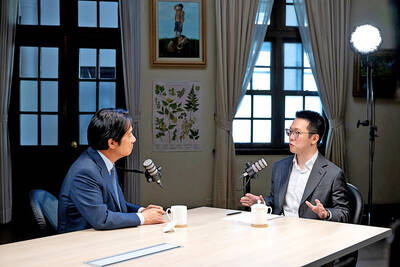
Taiwan should not rule out any energy source or abandon environmental sustainability in favor of ideology and short-term benefits, President William Lai (賴清德) said in an interview, calling for a “professional assessment” of whether nuclear power should be reintroduced into Taiwan’s energy mix. In an online interview with influencer Yu Ting-hao (游庭皓) that aired yesterday, Lai reiterated his position on nuclear power. SHIFT Lai’s remarks marked a shift from the Democratic Progressive Party’s (DPP’s) longstanding opposition to nuclear power. As premier from 2017 to 2019, Lai pushed for more gas-fired power capacity while sticking to the DPP’s nuclear free homeland ideology and rejected the
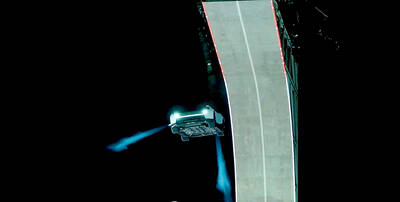
JUST FOR SHOW: The new-generation sports car, which would not begin production until 2028, finally gives Tesla a showpiece after years of missed Roadster deadlines Tesla unveiled a redesigned Roadster powered with rocket-style thrusters on Thursday and said it would start production in 2028, more than a decade after it first showed a next-generation version of its electric sports car. The white two-seater vehicle, developed in collaboration with CEO Elon Musk’s rocket company SpaceX, drove upside down on a ramp using a suction system, turned in the air and landed using built-in thrusters. Later in the event it used the thrusters to jump over a truck and other vehicles, twisting in the air during the maneuver. Some watchers saw the collaboration as Musk drumming up interest in


 RSS