

The 10-member ASEAN probably will not reach a free-trade agreement with the US, ASEAN Secretary-General Ong Keng Yong said in Singapore yesterday.
"I don't think we can have an FTA with the US," Ong said. "The US is terribly distracted by other things, especially in the Middle East."
The US signed a trade and investment framework agreement with ASEAN last August that was aimed at boosting economic ties with the region and possibly leading to a free-trade deal in the future.
"At some point, we could build toward an ASEAN-wide FTA," Susan Schwab, the US trade representative, said in an interview published in Singapore's Straits Times newspaper yesterday. "I do not think any of us has ruled that out. But at this stage of the game, it is premature talking about it."
The US-ASEAN ties are not at a low point even though top US representatives are skipping two major ASEAN-initiated events in the next few weeks, Ong said.
Support from the US, ASEAN's largest source of foreign direct investment, is crucial for the region's political stability, he said.
US Secretary of State Condoleezza Rice will not attend a key security and foreign policy meeting with ASEAN in Manila next week, Ong said.
He also confirmed that US President George W. Bush will miss a meeting of the 10 ASEAN leaders in Singapore in September.
Meanwhile, a free-trade agreement with China is on track to be completed in 2010, and officials are attempting to complete a chapter on investment by this year that would create the world's largest free-trade area, Ong said.
ASEAN is aiming to create its own free trade area, or AFTA, by 2010, with EU-style economic, but no currency, integration by 2015.
ASEAN ministers will meet in Manila this week to try to agree on a legal and binding charter on their members' conduct, a document that also calls for the promotion of human rights and democracy.
Ong said that the draft of the document is 90 percent complete.
It will not include a provision for sanctions on its members, he said.
Formed in 1967, ASEAN's annual GDP is worth around US$1 trillion.
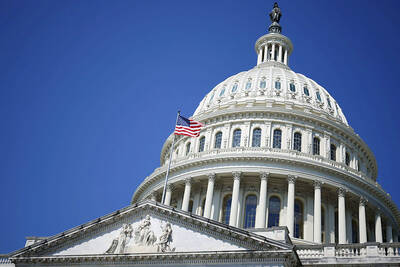
INFRINGEMENT: The investigation comes after a complaint from Vicor Corp, with the company seeking a limited exclusion order as well as cease-and-desist orders, the ITA said The US International Trade Commission (USITC) has launched a Section 337 investigation naming Taiwanese technology companies, including Hon Hai Precision Industry Co (鴻海), Delta Electronics Inc (台達電) and Quanta Computer Inc (廣達), as respondents. The Ministry of Economic Affairs (MOEA) pledged assistance if needed. The USITC said on Friday in a statement that it had voted to institute an investigation under Section 337 of the US Tariff Act of 1930 into certain vertical power delivery systems, related components and computing devices incorporating such systems. The investigation covers 20 companies from Taiwan, China, Germany and the US, the commission said, adding that it
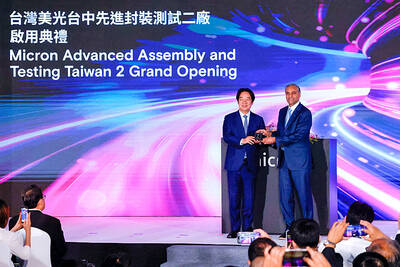
IN GOOD FAITH: Lai said he appreciates Micron’s commitment to Taiwan and that it would continue expanding its investment in the country, while also working with labor President William Lai (賴清德) yesterday called for US memory maker Micron Technology Inc and its workers to negotiate “sincerely” ahead of a possible strike by the company’s union in Taiwan. Last week, a Taiwanese union representing workers at Micron said it had secured authorization from its members to strike over a dispute concerning the company’s bonus scheme, escalating a labor conflict at the chipmaker’s largest manufacturing hub. Micron employs about 15,000 people in Taiwan and has said it invested more than NT$1.6 trillion (US$49.6 billion) in the country. Speaking in Taichung at the opening of a new Micron advanced assembly and testing facility,
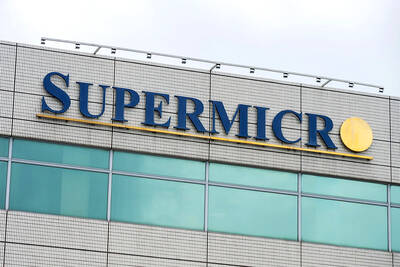
A man charged along with Super Micro Computer Inc co-founder Yih-Shyan “Wally” Liaw (廖益賢) of conspiring to send cutting-edge chips to China in violation of US export controls pleaded guilty, court documents said. Ting-Wei “Willy” Sun (孫廷瑋), a former outside contractor described by US authorities as a “fixer” who allegedly aided in the sales, pleaded guilty on Thursday at a hearing in federal court in New York as part of an agreement with prosecutors, court filings showed. Prosecutors claimed the men were part of a scheme to send Nvidia Corp-powered servers to an unnamed Southeast Asian company and then divert them to
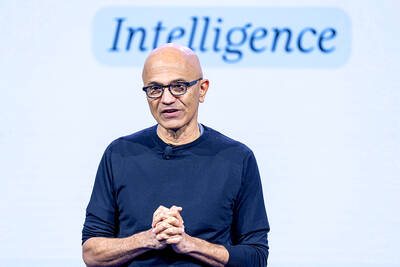
Microsoft Corp chief executive officer Satya Nadella said companies should treat powerful artificial intelligence (AI) models as potential insider threats, assume they could be compromised and create an “emergency brake” system to prevent agentic models from going rogue. Nadella said that those deploying advanced AI should not rely on assurances from model makers. “We must assume a model is compromised and contain it from the start,” Nadella wrote on Saturday in a post on X. “Think of it like an emergency brake. An authorized person should always be able to pause or shut down a model mid-task.” The statement comes as Anthropic PBC


 RSS
RSS