


Shares of Ruentex Development Co (
Shares of Ruentex advanced by 1.18 percent to close at NT$25.8 on the Taiwan Stock Exchange yesterday.
The project includes a station complex and a multifunction building required by the Taiwan Railway Administration.
Ruentex plans to include in the complex a business hotel, in collaboration with Ambassador Hotel Ltd (
Prior to the Songshan station project, Ruentex also won the BOT project to revamp Nankang Railway Station at the end of last year.
The company hopes to add more value to the land it is developing by turning the stations into tourism and business centers, instead of just transportation hubs, Liu said.
Ruentex is expected to start construction after the administration completes the underground rail project at the station, due by the end of 2010. The company has the right to operate the business facilities for 50 years after construction is complete.
Ruentex outbid Radium Life Tech Co (
The administration is expected to pocket more than NT$3 billion from the project, including a NT$120 million royalty for development of the land, a NT$1.2 billion royalty for operating the complexes for 50 years and a rent of NT$20 million to NT$30 million per year.
In addition to the BOT projects, Ruentex is also teaming up with Chunghwa Telecom Co (
The two signed an agreement on Wednesday to jointly construct luxury apartment buildings on a 2,332-ping (7,695.6m2) site in Wanhua District in Taipei.
Taiwan Semiconductor Manufacturing Co (TSMC, 台積電) yesterday reported record revenue of NT$416.975 billion (US$13.17 billion) for last month, putting the world’s largest contract chipmaker on track to set a record for quarterly revenue. Last month’s figure surpassed March’s record NT$415.19 billion and represented increases of 1.5 percent from April and 30.1 percent from a year earlier. For the first five months of the year, TSMC generated NT$1.96 trillion in revenue, up 30 percent year-on-year, it said in a statement. TSMC has forecast second-quarter revenue of between US$39 billion and US$40.2 billion, representing sequential growth of about 10 percent and year-on-year growth of about
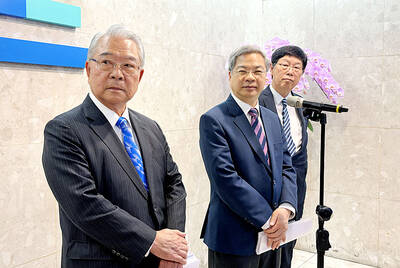
PATENT PROBE: US lawmakers called for a ban on imports of chips made by TSMC if they are found to infringe on US patents, with a preliminary ruling expected soon Minister of Economic Affairs Kung Ming-hsin (龔明鑫) yesterday expressed confidence in Taiwan Semiconductor Manufacturing Co’s (TSMC, 台積電) compliance with patent regulations after reports linked the company to a patent infringement lawsuit in the US. US Representative Ryan Zinke, and US senators Tim Sheehy, Roger Marshall and Bernie Moreno urged the US International Trade Commission in a May 22 letter to ban imports of chips made by TSMC if they are found to infringe on US patents, Axios reported on Wednesday. An administrative law judge is expected to issue a preliminary ruling this month, with the commission potentially making a final decision in

Infineon Technologies AG is preparing to open its largest single investment, a 5 billion euro (US$5.8 billion) semiconductor factory built with the help of EU subsidies, as the bloc seeks to boost chip production. The power chip fab, which is an extension of the German company’s Dresden campus, is scheduled to open on July 2, Infineon chief operating officer Alexander Gorski said this week at the site. The project is a major recipient of EU Chips Act funds, receiving about 1 billion euros in subsidies. The new plant represents a rare success for the bloc’s flagship semiconductor law, which was drawn up during

Taiwanese authorities are considering much stricter export controls on artificial intelligence (AI) chip sales to China to further align with US measures, according to people familiar with the matter, an effort to address semiconductor smuggling that risks drawing a rebuke from Beijing. The idea is to give authorities more legal tools to address diversion of advanced hardware, like AI servers with Nvidia Corp chips, from Taiwan to China. Such sales are already banned under US regulations unless companies get Washington’s permission, per curbs the US first imposed in 2022 to prevent Beijing from using advanced Nvidia processors to gain a military


 RSS
RSS