


Nearly one in six Britons would refuse a COVID-19 vaccine if and when one becomes available, and a similar number are unsure whether they would get one, a survey showed.
The findings come amid a significant rise in anti-vaccination sentiment on social media and represent a threat to efforts to contain the disease.
“Our hope for a return to normal life rests with scientists developing a successful vaccine for coronavirus,” said Imran Ahmed, chief executive of the Center for Countering Digital Hate (CCDH), a non-profit organization that commissioned the research. “But social media companies’ irresponsible decision to continue to publish anti-vaccine propaganda means a vaccine may not be effective in containing the virus. The price for their greed is a cost paid in lives.”
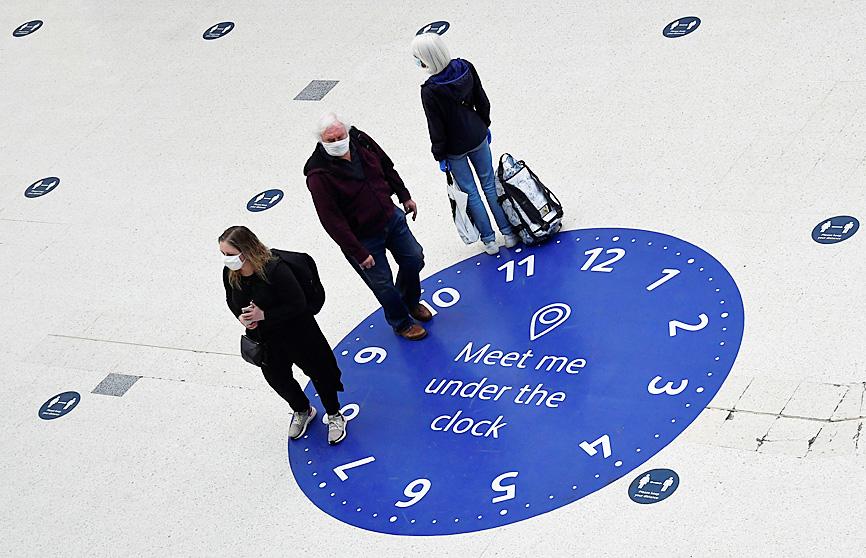
Photo: Reuters
According to the polling carried out by YouGov for CCDH, 16 percent of British adults “probably” or “definitely” would avoid a COVID-19 vaccine.
The poll of 1,663 people found differences between those who get the majority of their news from social media and those who rely more on traditional media: The latter were 9 percentage points more likely to say they would definitely or probably get the vaccine.
The 150 largest anti-vaccination social media pages and YouTube channels tracked by CCDH have collected about 8 million more followers since the beginning of the COVID-19 crisis, and the 400 outlets in the sample have a combined 55 million followers.
Some of those pages have published false conspiracy theories, including that Bill Gates created the pandemic, that vaccines cause COVID-19 and that tests for a coronavirus vaccine have caused women to become infertile.
The majority of the followers are on Facebook, despite the company officially opposing anti-vaccination content.
In July last year, the company announced policies to reduce the spread of posts with “exaggerated or sensational health claims.”
“People come together on Facebook to talk about, advocate for, and connect around things like nutrition, fitness and health issues. But in order to help people get accurate health information and the support they need, it’s imperative that we minimize health content that is sensational or misleading,” a Facebook product manager said at the time.
As well as so-called organic sharing, Facebook and Twitter have enabled advertising opposing vaccination, despite bans on such promotions on both sites.
Those adverts come from influencers, including David Wolfe, described by the CCDH as “an anti-vaccine wellness guru,” who promoted a popular panacea, colloidal silver, as “my #1 recommendation under the current crisis.”
“Other adverts featured Judy Mikovits’ anti-vaxx conspiracy theories, who featured in the notorious Plandemic film, and adverts placed by Robert F Kennedy Jr’s Children’s Health Defense campaign that promote health misinformation about both vaccines and 5G mobile phone signals,” the group said.
Advertisers can target their promotions at users who Facebook’s algorithm has decided might have interests such as “vaccine-preventable diseases” or who have liked the page “Talk About Curing Autism.”
On Twitter, advertising categories such as “antivaxx” and “natural immunity” are available for all to use.
“This sophisticated ecosystem has grown by exploiting weaknesses in each social media company’s policies on anti-vaxx and health misinformation,” Ahmed said. “Each platform plays a role in feeding and growing the whole.
“Full-time anti-vaxx campaigners doubled their reach by broadcasting their message on YouTube channels that peddle conspiracy theories and false cures. In turn, these campaigners lend their brand and audience of activists to a thriving industry of anti-vaxx entrepreneurs using Facebook as a shopfront,” he said.
“Both groups have benefited from the reach of professional conspiracists on YouTube and from a network of Facebook groups that turns vaccine skeptics into true believers using psychological hacks like the dopamine hit for ‘likes’ and the fear of abuse for nonconformity,” Ahmed added.

Republican US lawmakers on Friday criticized US President Joe Biden’s administration after sanctioned Chinese telecoms equipment giant Huawei unveiled a laptop this week powered by an Intel artificial intelligence (AI) chip. The US placed Huawei on a trade restriction list in 2019 for contravening Iran sanctions, part of a broader effort to hobble Beijing’s technological advances. Placement on the list means the company’s suppliers have to seek a special, difficult-to-obtain license before shipping to it. One such license, issued by then-US president Donald Trump’s administration, has allowed Intel to ship central processors to Huawei for use in laptops since 2020. China hardliners

Conjoined twins Lori and George Schappell, who pursued separate careers, interests and relationships during lives that defied medical expectations, died this month in Pennsylvania, funeral home officials said. They were 62. The twins, listed by Guinness World Records as the oldest living conjoined twins, died on April 7 at the Hospital of the University of Pennsylvania, obituaries posted by Leibensperger Funeral Homes of Hamburg said. The cause of death was not detailed. “When we were born, the doctors didn’t think we’d make 30, but we proved them wrong,” Lori said in an interview when they turned 50, the Philadelphia Inquirer reported. The

RAMPAGE: A Palestinian man was left dead after dozens of Israeli settlers searching for a missing 14-year-old boy stormed a village in the Israeli-occupied West Bank US President Joe Biden on Friday said he expected Iran to attack Israel “sooner, rather than later” and warned Tehran not to proceed. Asked by reporters about his message to Iran, Biden simply said: “Don’t,” underscoring Washington’s commitment to defend Israel. “We are devoted to the defense of Israel. We will support Israel. We will help defend Israel and Iran will not succeed,” he said. Biden said he would not divulge secure information, but said his expectation was that an attack could come “sooner, rather than later.” Israel braced on Friday for an attack by Iran or its proxies as warnings grew of

IN PURSUIT: Israel’s defense minister said the revenge attacks by Israeli settlers would make it difficult for security forces to find those responsible for the 14-year-old’s death Israeli Prime Minister Benjamin Netanyahu on Saturday condemned the “heinous murder” of an Israeli teenager in the occupied West Bank as attacks on Palestinian villages intensified following news of his death. After Benjamin Achimeir, 14, was reported missing near Ramallah on Friday, hundreds of Jewish settlers backed by Israeli forces raided nearby Palestinian villages, torching vehicles and homes, leaving at least one villager dead and dozens wounded. The attacks escalated in several villages on Saturday after Achimeir’s body was found near the Malachi Hashalom outpost. Agence France-Presse correspondents saw smoke rising from burned houses and fields. Mayor Amin Abu Alyah, of the


 RSS
RSS