


Japan, the Czech Republic and nine of Taiwan’s diplomatic allies on Tuesday voiced their support for Taiwan’s inclusion in the World Health Assembly (WHA) after it was not invited to the annual conference for a sixth straight year.
In a prerecorded address played during the third day of the WHA in Geneva, Switzerland, Japanese Minister of Health, Labor and Welfare Shigeyuki Goto said the world needed to learn from successful examples of public health responses in tackling the COVID-19 pandemic, “such as Taiwan.”
“We should not make any geographical vacuums created by leaving specific regions behind in addressing global health issues such as infection control. This will serve the purpose of preventing the spread of infection worldwide,” Goto said.
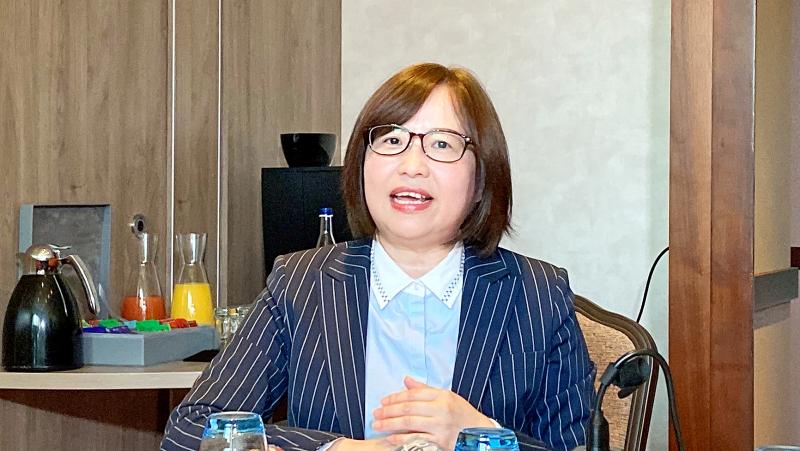
Photo: CNA
Vaclav Balek, the Czech Republic’s permanent representative to the UN Office in Geneva, said in his in-person address that in the global fight against COVID-19, “no one can be left behind.”
“This is the reason why the Czech Republic fully supports Taiwan to be granted observer status to the World Health Assembly,” Balek said.
Speakers representing nine diplomatic allies — Haiti, St Kitts and Nevis, Nauru, Eswatini, St Vincent and the Grenadines, St Lucia, Palau, Tuvalu and Belize — all used parts of their respective addresses to make similar appeals.
The Taiwan issue was not brought up by speakers representing two other nations that officially recognize Taiwan.
The speaker from Honduras did not mention Taiwan in his address, while the representative from the Marshall Islands was about to raise the issue before his prerecorded address was cut off because he exceeded his time limit, a Ministry of Foreign Affairs source said.
Deputy Minister of Health and Welfare Lee Li-feng (李麗芬), who is in Geneva heading a delegation despite Taiwan’s exclusion from the WHA, told the Central News Agency that the government was still grateful to Honduras and the Marshall Islands because they joined with other allies in initiating a joint proposal to invite Taiwan to the WHA as an observer.
The WHA on Monday decided not to put that proposal on this year’s agenda, which sealed Taiwan’s exclusion from the meeting.
The WHA — the WHO’s decisionmaking body — is holding its annual gathering until Saturday and national representatives are attending in-person for the first time since the emergence of COVID-19.
Taiwan was able to send delegations to participate in the WHA as an observer from 2009 to 2016 under the designation “Chinese Taipei,” when relations between Beijing and Taipei were warmer during the Chinese Nationalist Party (KMT) administration of then-president Ma Ying-jeou (馬英九).
Since 2017, Taiwan has been excluded from the WHA due to opposition from China.

A group of Taiwanese-American and Tibetan-American students at Harvard University on Saturday disrupted Chinese Ambassador to the US Xie Feng’s (謝鋒) speech at the school, accusing him of being responsible for numerous human rights violations. Four students — two Taiwanese Americans and two from Tibet — held up banners inside a conference hall where Xie was delivering a speech at the opening ceremony of the Harvard Kennedy School China Conference 2024. In a video clip provided by the Coalition of Students Resisting the CCP (Chinese Communist Party), Taiwanese-American Cosette Wu (吳亭樺) and Tibetan-American Tsering Yangchen are seen holding banners that together read:

UNAWARE: Many people sit for long hours every day and eat unhealthy foods, putting them at greater risk of developing one of the ‘three highs,’ an expert said More than 30 percent of adults aged 40 or older who underwent a government-funded health exam were unaware they had at least one of the “three highs” — high blood pressure, high blood lipids or high blood sugar, the Health Promotion Administration (HPA) said yesterday. Among adults aged 40 or older who said they did not have any of the “three highs” before taking the health exam, more than 30 percent were found to have at least one of them, Adult Preventive Health Examination Service data from 2022 showed. People with long-term medical conditions such as hypertension or diabetes usually do not
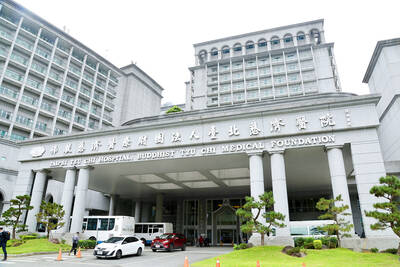
POLICE INVESTIGATING: A man said he quit his job as a nurse at Taipei Tzu Chi Hospital as he had been ‘disgusted’ by the behavior of his colleagues A man yesterday morning wrote online that he had witnessed nurses taking photographs and touching anesthetized patients inappropriately in Taipei Tzu Chi Hospital’s operating theaters. The man surnamed Huang (黃) wrote on the Professional Technology Temple bulletin board that during his six-month stint as a nurse at the hospital, he had seen nurses taking pictures of patients, including of their private parts, after they were anesthetized. Some nurses had also touched patients inappropriately and children were among those photographed, he said. Huang said this “disgusted” him “so much” that “he felt the need to reveal these unethical acts in the operating theater
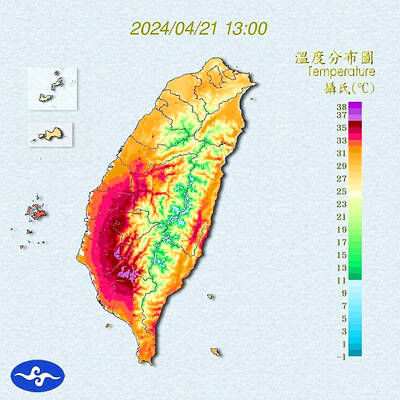
Heat advisories were in effect for nine administrative regions yesterday afternoon as warm southwesterly winds pushed temperatures above 38°C in parts of southern Taiwan, the Central Weather Administration (CWA) said. As of 3:30pm yesterday, Tainan’s Yujing District (玉井) had recorded the day’s highest temperature of 39.7°C, though the measurement will not be included in Taiwan’s official heat records since Yujing is an automatic rather than manually operated weather station, the CWA said. Highs recorded in other areas were 38.7°C in Kaohsiung’s Neimen District (內門), 38.2°C in Chiayi City and 38.1°C in Pingtung’s Sandimen Township (三地門), CWA data showed. The spell of scorching


 RSS
RSS